Mould in rental homes nearly always comes back to one thing: moisture staying in the house for too long.
In New Zealand, I see it most often in bedrooms, wardrobes, the corners of ceilings, and around aluminium windows, where cold surfaces and still air meet.
After seeing firsthand in various climates, the pattern is familiar: tenants notice the mould, landlords notice the marks, but the real issue is usually how moisture is moving, or not moving, through the home.
Once you read the pattern properly, the fix becomes much clearer and less frustrating.
Quick Summary
- Mould in rentals is usually a moisture pattern, not a random one-off issue
- Bedrooms, wardrobes, and window areas tend to show the first signs because airflow is weakest there
- Condensation, trapped air, and cold surfaces often work together in the same room
- The shape and location of mould usually tells you more than the colour does
- Ventilation helps most when it improves air movement through the whole house, not just one room
- Heating matters because warmer surfaces are less likely to hold condensation
- Daily habits can reduce moisture load, but some rental homes still have layout and airflow problems built in
Why Mould Shows Up So Often in Rentals
Rental homes often have a few things happening at once: cooler rooms, furniture pushed hard against outside walls, doors kept shut for privacy, and moisture from showers, cooking, and drying clothes staying indoors longer than people realise. That combination gives mould an easy place to settle.
I see this in older homes and in newer ones that are tighter but still have patchy extraction or weak airflow.
That is one reason the same broad patterns show up in mould across NZ homes, even when the houses themselves look very different.

The first visible signs are often small, a black line on silicone, spotting behind curtains, a musty wardrobe corner, or paint that always looks tired near the ceiling edge. By the time those signs are obvious, the moisture pattern has usually been there for a while.
What the Pattern Usually Tells Me
The location matters. Mould behind a bed on an exterior wall points me in a different direction from mould above a bathroom window, and both are different again from a damp wardrobe in the coldest bedroom.
A lot of people mix up condensation, dampness, and leaks, but the pattern is different in each case. The distinction between condensation, dampness, and leaks matters because an incorrect diagnosis keeps the house in the same cycle.
| What you can see | What it usually points to | What I look at next |
|---|---|---|
| Fine spotting on windows and nearby curtains | Regular condensation on cold surfaces | Night-time airflow, window performance, indoor moisture load |
| Mould behind furniture or inside wardrobes | Still air trapped against a cold wall | Furniture spacing, wall temperature, room heating |
| Persistent marking in one ceiling corner | Cold bridge or weak air movement | Ceiling shape, nearby extraction, overall house pressure |
| Patchy staining that grows after rain | Possible leak path rather than standard condensation | Whether the patch follows weather events |
In rentals, bedrooms are a major trouble spot because people sleep with the door closed, windows latched, curtains drawn, and the room cooling down for hours.
That is why condensation often shows itself first on bedroom walls and joinery, long before the rest of the house looks obviously wet.
Where Ventilation Changes the Result
Ventilation does not work by magic; it works by changing the moisture balance inside the house. When stale, damp indoor air is replaced more consistently, surfaces stay drier, and the same rooms stop carrying the whole moisture load on their own.

In many New Zealand homes, a positive pressure system can help when the roof cavity air is suitable, filtered, and pushed gently through the house in a way that actually reaches bedrooms and living areas. I am talking about a whole-house airflow change, not a noisy fan dumped in one corner.
That broader idea sits at the heart of what ventilation really does, which is to manage air movement before moisture settles into surfaces.
But ventilation is not a free pass. It works best when the home also has reasonable heating, working extraction in wet areas, and doors or transfer paths that let air keep moving.
If one bedroom is always cold, always shut, and packed with furniture against outside walls, even a decent system will be asked to do too much.
Heat pumps matter here as well, not because they remove every moisture issue on their own, but because warmer room surfaces are less likely to pull condensation out of the air. In practice, the best results usually come when ventilation and heating work together.
Small Behaviour Changes That Shift the Moisture Load
In rental homes, people often assume the house either works or it does not. Real homes are messier than that. The building plays a part, but daily moisture habits can still push a borderline room into a constant mould pattern.
The biggest pressure points are usually simple:
- drying washing indoors without a clear moisture path out of the house
- leaving bathroom steam to drift through hallways and bedrooms
- cooking without lids or extraction, especially in smaller kitchens
- keeping beds, drawers, or wardrobes tight against colder outside walls
- letting one room stay much colder than the rest of the house
None of that means the tenant caused the whole issue. It means moisture load adds up fast in a rental, especially in winter, and a marginal house can tip over with ordinary day-to-day use.
The same thing shows up again and again in rental condensation patterns, where normal living creates more indoor moisture than the home can clear.
When the Issue Is the House, Not the Habit
Some rental homes keep producing mould even when the occupants are doing the sensible things. When I see repeated return in the same corners, the same wardrobe, or the same side of the house, I stop looking for one-off behaviour and start looking harder at the building itself.
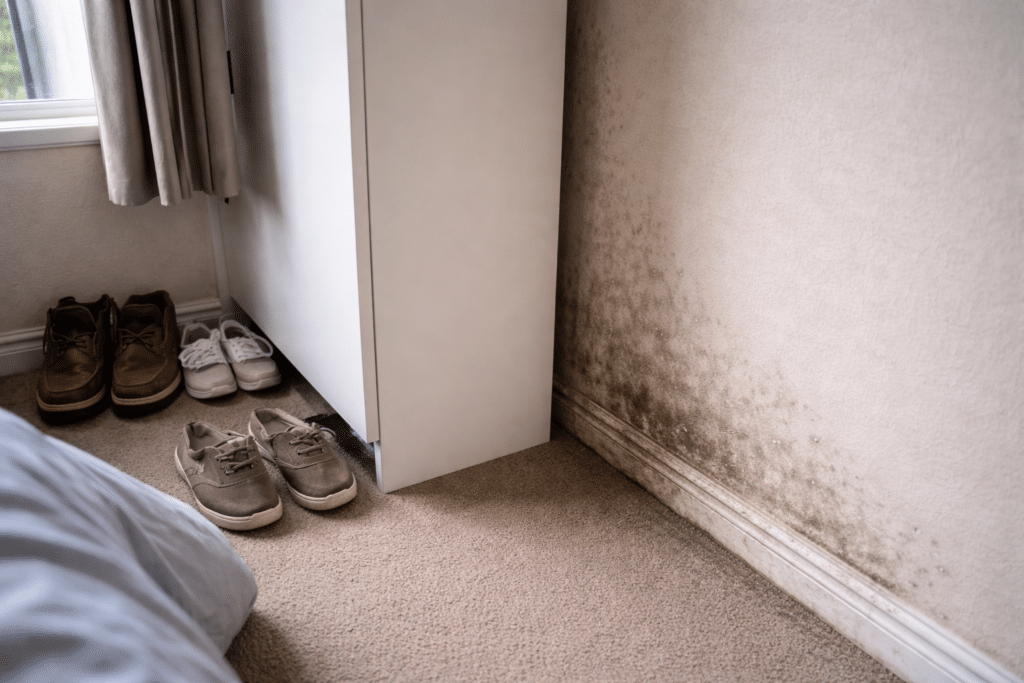
Typical clues include rooms that never seem to warm up, windows that run with water every winter morning, and mould returning after surface cleaning because the wall behind the furniture is still cold and still stagnant.
That repeated cycle is the same reason mould comes back in homes where the visible mark gets treated but the moisture pattern does not change.
At that point, the conversation should move away from the stain and toward the conditions that keep recreating it, temperature, air path, surface cold, and whether moisture from kitchens and bathrooms is spreading into the rest of the house.
Common Questions in Rental Homes
These are the questions I hear most often when mould keeps showing up in the same rental rooms.
Why is mould usually worse in bedrooms?
Bedrooms stay shut for long periods, hold overnight moisture, and often have the weakest airflow in the house. Add a colder outside wall, curtains closed, and little heat, and that room starts carrying more condensation than people expect.
Does wiping the mould fix the issue?
It fixes the mark you can see, not the moisture pattern that created it. If the room still cools down hard, traps air behind furniture, or collects window condensation most mornings, the same area usually reappears later.
Can ventilation solve every mould problem in a rental?
No, because ventilation is one part of the picture. It can shift indoor moisture very effectively in the right house, but it cannot make up for every cold surface, every leak path, or every room layout that blocks air movement.
How do I tell whether it is condensation or something more localised?
Condensation usually shows up where the house is coldest and least ventilated, and it often appears across more than one room or surface type. A more localised issue tends to stay in one area, follow weather events, or look different from the wider pattern in the home.
In the end, mould in rentals is rarely about one dramatic cause. It is usually a quieter chain of small things, moisture made indoors, surfaces cooling down, and air not moving where it needs to. Once that chain is understood, the next step becomes more practical as well.