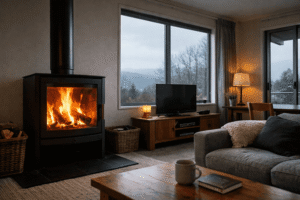
This is a question that comes up regularly, especially from homeowners who run a wood burner through winter and still notice condensation on their windows in the morning.
The logic seems sound, you are burning something, combustion produces water vapour, so surely the fire is adding moisture to the air?
The answer is more nuanced than a simple yes or no. Having worked across energy auditing, ventilation, heating systems, renewables and energy efficiency, including time with biomass heating systems overseas, I can say that the type of wood burner and how it is installed make all the difference.
A properly flued wood burner actually helps reduce indoor moisture, while an open fire moistens the air somewhat if you can find one. Basically, you’ll only find them in public land huts or on farms, generally these days.
Quick Summary
- A properly installed, flued wood burner does not add moisture to the indoor air because combustion gases and water vapour are vented outside through the flue
- The heat from a wood burner warms surfaces and air, which actually helps reduce condensation by keeping the home above the dew point, radiating heat like the sun
- Wood burners are one of the better heating options for condensation control because they provide sustained radiant heat without adding moisture
- The rooms furthest from the burner may still get condensation because the heat does not reach those spaces effectively
- Combining a wood burner that produces enough heat for a heat transfer system through to bedrooms, with good ventilation, gives the best results for whole-house moisture management
- Open fires draw large volumes of indoor air up the chimney, which can create draughts that pull cold, damp air in through gaps elsewhere
How a Flued Wood Burner Handles Moisture
When wood burns, the combustion process does produce water vapour along with carbon dioxide and other gases. In a modern, properly flued wood burner, all of those combustion products are drawn up through the flue and vented outside the house.
The water vapour from burning never enters the indoor air because the flue system keeps the exhaust path sealed from the living space.
This is the critical distinction. A flued wood burner is a closed combustion system. The fire draws air from the room (or an external air supply in some models), burns the wood, and sends all byproducts up and out through the flue. The only things that stay in the room are the heat radiating from the burner’s body and the hot flue pipe.
That heat is actually beneficial for condensation control. Warmer air can hold more moisture without depositing it on surfaces, and warmer walls and windows are less likely to reach the dew point where condensation forms.
In homes where condensation gets worse through winter, a well-run wood burner in the main living area can make a noticeable difference to the humidity balance.

Open Fires Are a Different Story
An open fireplace works differently from a closed wood burner, and the moisture dynamics are less favourable.
An open fire draws a large volume of air from the room up the chimney to sustain combustion. That creates negative pressure inside the house, which pulls cold outside air in through gaps, cracks, and any openings it can find.
That incoming air may be cold and damp, especially on a wet winter night. The net effect is that the room near the fire feels warm, but the rest of the house gets colder and damper as outside air infiltrates.
Open fires also have much lower heating efficiency than closed wood burners because a large portion of the heat goes straight up the chimney.
The combination of high air draw, cold air infiltration, and low efficiency makes open fires a poor choice for moisture management.
The Firewood Factor
The quality of your firewood has a real impact on how well the burner performs and how much moisture it absorbs. Wet or unseasoned wood contains a high water content, sometimes up to 50% by weight.
When you burn it, a lot of energy goes into evaporating the water rather than heating the room, and the result is more smoke, cooler combustion, and more moisture in the exhaust gases.
If the flue is drawing properly, that extra moisture still goes up and out. But if the flue is cool or partially blocked, or if the fire is smouldering rather than burning cleanly, some of that moisture-laden smoke can drift back into the room.
I see this occasionally in homes where the burner is run on low with damp wood, the glass doors fog up, and the fire is not producing the clean, dry heat it should be.
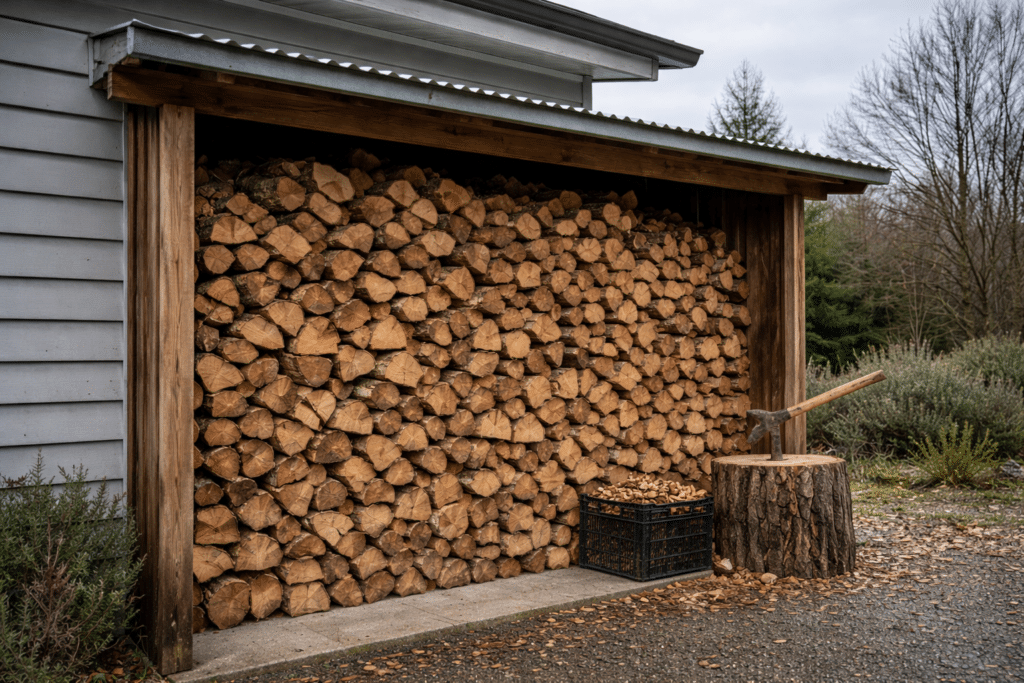
Well-seasoned firewood with a moisture content below 20% burns hotter, cleaner, and more efficiently. The fire produces more usable heat, less smoke, and the flue draws strongly because the exhaust gases are hot. That means better heating, less wasted energy, and no moisture entering the living space.
Wood Burners vs Other Heating for Condensation
Not all heating is equal when it comes to moisture. Where a wood burner sits relative to other common NZ heating options is worth understanding if condensation is a concern.
| Heating Type | Adds Moisture? | Notes |
|---|---|---|
| Flued wood burner | No | Combustion gases vented outside, provides dry radiant heat |
| Heat pump | No | Warms air without any combustion, no moisture added |
| Unflued gas heater | Yes, significantly | Produces up to 1 litre of water per hour directly into the room |
| Open fire | No directly, but causes cold air infiltration | High air draw creates negative pressure, pulling damp air in |
| Electric panel heater | No | Warms surfaces but limited reach, no moisture impact |
The standout problem in this list is the unflued gas heater, which produces water vapour as a direct byproduct of combustion inside the room.
A flued wood burner and a heat pump both warm without adding moisture, making them the better choices for homes dealing with condensation problems.
The Limitation: Heat Distribution
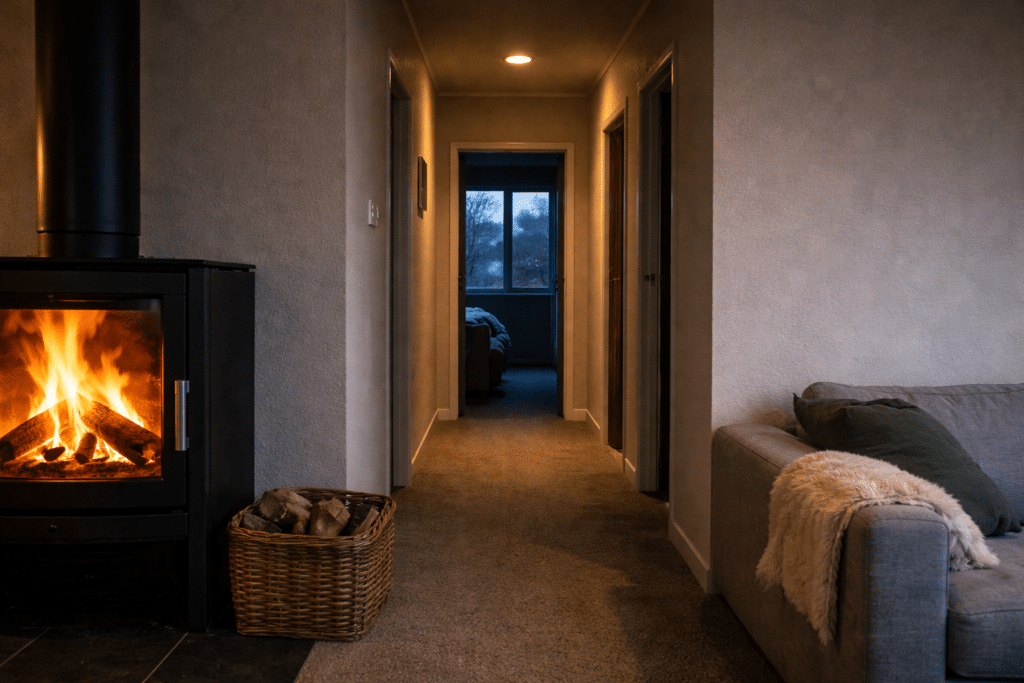
The one area where wood burners fall short for condensation control is heat distribution. A wood burner heats the room it is in very effectively, but the warmth does not travel easily through doorways and down hallways to bedrooms and bathrooms at the other end of the house.
That means the living room might be warm and dry while the bedrooms are still cold, and bedroom condensation still builds overnight because the surfaces never warmed up.
This is why I always look at the home as a whole. A wood burner handles the main living space well, but the rest of the house often needs a ventilation system to keep air moving so warmth and drier air can reach every room.
Getting the Most Out of Your Wood Burner
If you are running a wood burner and want to minimise condensation throughout the house, these practical steps make the biggest difference:
- Burn well-seasoned wood with a moisture content below 20%, it produces more heat and less smoke
- Let the fire burn cleanly rather than damping it down to smoulder, clean combustion means hotter flue temperatures and better draw
- Keep internal doors open when the burner is running so warm air can circulate through the house
- Use a fan or ventilation system to help distribute heat to rooms the burner cannot reach directly
- Have the flue inspected and cleaned regularly so it draws properly and exhaust gases vent efficiently
A wood burner that is well maintained, fuelled with dry wood, and supported by good airflow through the home is one of the better heating setups for condensation control in New Zealand.
Frequently Asked Questions
Does a wood burner dry out the air too much?
In very well-sealed homes running a large burner at high output, humidity can drop noticeably. In most NZ homes this is rarely a problem, and the reduction in humidity is generally beneficial for condensation control during winter.
Why do my windows still fog up when the fire is running?
The burner warms the room it is in, but bedrooms and other rooms may still be cold. Condensation forms on cold surfaces, so if those distant rooms are not benefiting from the heat, their windows will still fog up. Keeping doors open and improving airflow through the house helps distribute warmth more evenly.
Is a wood burner better than a heat pump for condensation?
Both are good options because neither adds moisture. A heat pump has the advantage of being able to heat individual rooms where it is installed, while a wood burner provides strong radiant heat in one main area. The best approach depends on the home's layout and which rooms need the most help.
Can I use a wood burner in a new build?
Yes, many new builds include a wood burner as the primary or secondary heat source. In airtight new homes, a burner with an external air supply is often the better choice because it draws combustion air from outside rather than from the sealed living space.