Window Condensation, Glazing and Frames Explained
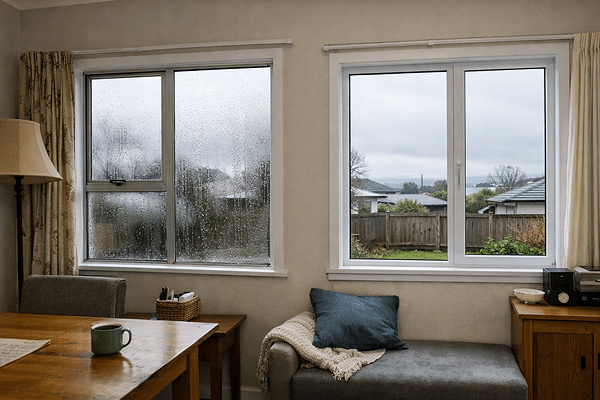
The type of window in your home has a bigger impact on condensation than most people realise. Single glazing versus double glazing, aluminium frames versus timber, thermally broken versus standard: each combination performs differently in terms of how much moisture collects on the glass and frame during winter.
After more than a decade working across ventilation, energy auditing and building performance in NZ homes, I have seen every window type in every condition.
The differences are real, measurable, and worth understanding, especially if you are weighing up an upgrade or trying to figure out why your windows are streaming while your neighbour’s are dry.
Quick Summary
- Single-glazed aluminium windows are the worst performers for condensation because both the glass and frame conduct cold rapidly
- Double glazing significantly reduces condensation on the glass by keeping the inner pane warmer
- The frame material matters as much as the glazing, because aluminium frames without a thermal break still conduct cold and attract condensation
- Timber frames can insulate better than aluminium and are less prone to frame condensation (but often have gaps from degradation and condensation moisture damage)
- Thermally broken aluminium frames have an insulating strip that reduces cold transfer through the frame
- No window type eliminates condensation entirely if indoor humidity is too high
- Windows are the symptom, indoor humidity and ventilation are the root cause
Why Windows Get Condensation
Condensation forms when warm, humid indoor air comes into contact with a surface cold enough to lower the air’s dew point. The moisture in the air turns to liquid water on that surface.
Windows are almost always the first place condensation appears because glass is a poor insulator and loses heat faster than walls, ceilings, or floors.
This table summarises how common window types compare in terms of condensation performance.
| Window Type | Glass Condensation | Frame Condensation | Overall Rating |
|---|---|---|---|
| Single-glazed aluminium | Very heavy | Very heavy | Poor |
| Single-glazed timber | Very heavy | Light | Poor (glass is still cold) |
| Double-glazed aluminium (standard) | Light to moderate | Heavy | Mixed (frame lets it down) |
| Double-glazed thermally broken aluminium | Minimal | Light | Good |
| Double-glazed timber | Minimal | Minimal | Good |
| Double-glazed Low-E with thermal break | Very minimal | Minimal | Excellent |
The colder the glass or frame surface, the less moisture the air needs to carry before condensation starts forming.
That is why the type of glazing and the frame material make such a practical difference; they determine how cold the inner surface gets on a winter night, and that directly controls how much condensation you see in the morning. This is the same mechanism that drives condensation across NZ homes more broadly.
Glazing Types and Condensation
The number of glass panes and the gap between them is the single biggest factor in how much condensation forms on the glass itself.
Single Glazing
A single pane of glass has almost no insulating value. On a cold winter night, the inside surface of a single-glazed window can drop to within a few degrees of the outside temperature.
That makes it the coldest surface in the room by a wide margin, and it starts collecting condensation the moment indoor humidity rises even slightly.
Single-glazing is still the most common window type in older NZ homes, and it is the primary reason so many houses have streaming windows in winter. Also, people tend not to open windows in winter, unlike some European countries.
The glass is cold, the air is humid, and the condensation is heavy. In older homes with minimal insulation, single-glazed windows are often the worst condensation surface in the entire building.
Double Glazing
Double glazing uses two panes of glass with an air gap (or gas-filled gap) between them. That gap acts as insulation, keeping the inner pane significantly warmer than it would be with single glazing.
The warmer the inner surface stays, the less likely it is to reach the dew point, and the less condensation forms on the glass.
The improvement is substantial. In most conditions, double glazing reduces visible glass condensation by 60 to 80 percent compared to single glazing.
It does not eliminate it entirely, because if indoor humidity is very high, the inner pane can still get cold enough to attract moisture, but the difference is immediately noticeable.
Low-E and Argon-Filled Double Glazing
Some double-glazed units include a low-emissivity (Low-E) coating on the glass and argon gas in the gap instead of air. The Low-E coating reflects heat back into the room, and argon insulates better than air.
These upgrades keep the inner pane warmer, further reducing condensation and improving overall thermal performance.
They are increasingly common in new NZ builds and are a worthwhile upgrade when replacing windows.
Frame Materials and How They Perform
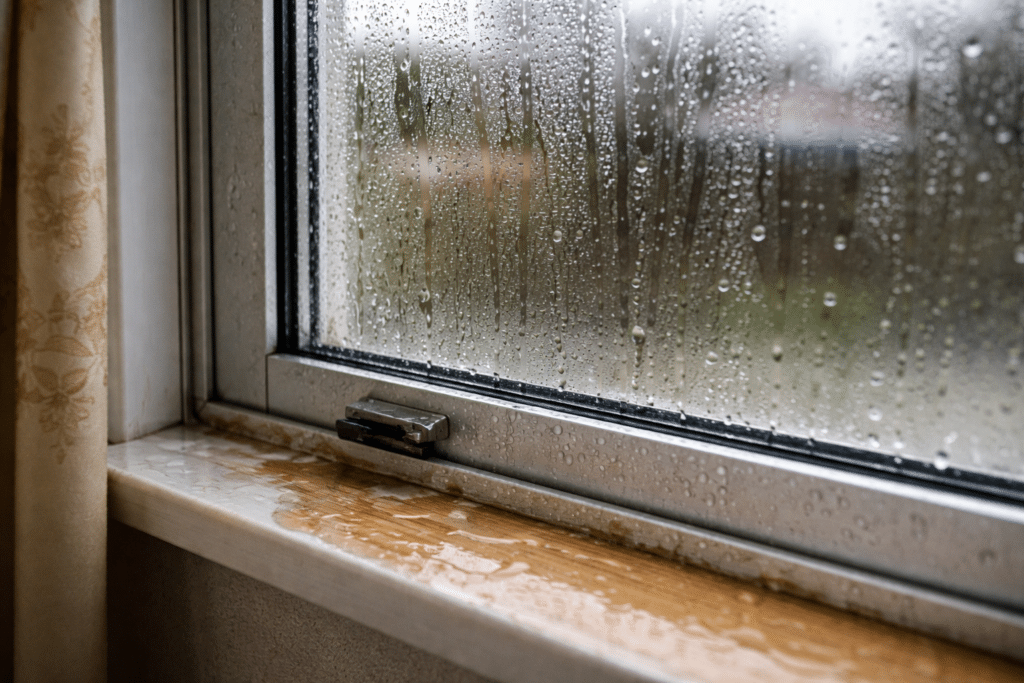
Most people focus on the glass, but the frame is just as important for condensation. A window can have excellent double glazing and still produce heavy condensation on the frame if the frame material conducts cold efficiently.
Aluminium Frames (Standard)
Aluminium is by far the most common frame material in NZ homes. It is durable, low-maintenance, and relatively affordable. The problem is that aluminium is an excellent conductor of cold.
The frame transfers outside temperatures straight through to the inside surface, which means the frame itself gets very cold in winter and becomes a condensation target.
I regularly see homes where the double-glazed glass is clear and dry, but the aluminium frame around it can be dripping with condensation.
The glass is doing its job, but the frame is undermining it by staying cold enough to attract moisture from the air.
In bedrooms where humidity builds overnight, frame condensation can be just as heavy as what you would see on single-glazing.
Thermally Broken Aluminium
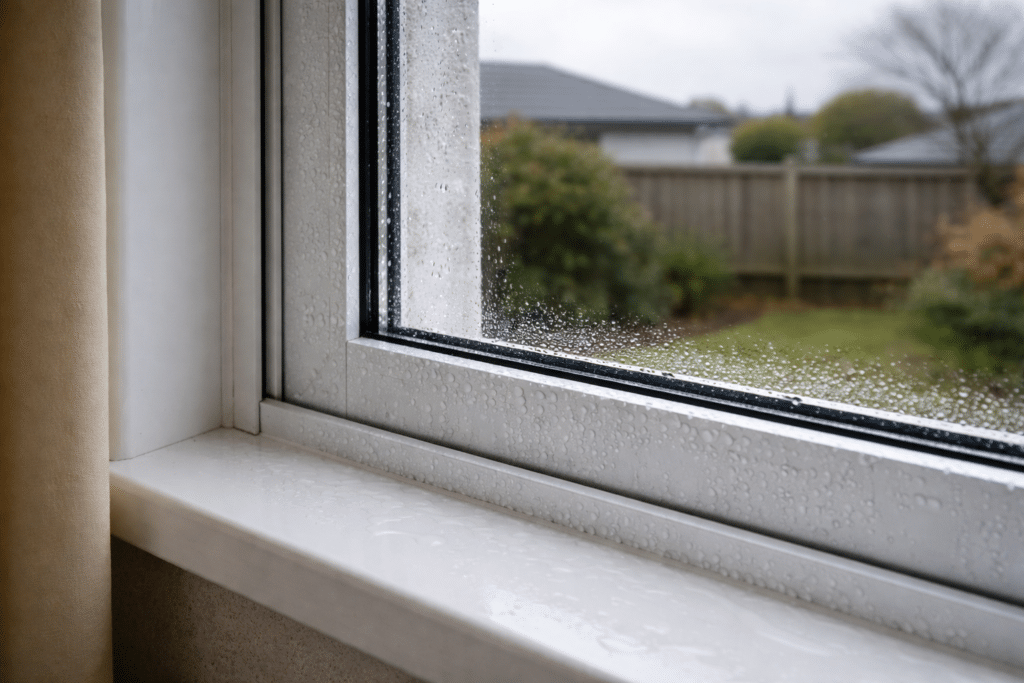
A thermally broken aluminium frame has an insulating strip built into the frame profile that separates the outer and inner sections. That strip interrupts the cold path through the metal, keeping the inside surface of the frame warmer.
The result is significantly less frame condensation, and when paired with double glazing, the entire window assembly performs well.
Thermally broken frames cost more than standard aluminium, but the improvement in condensation performance is meaningful. They are becoming more common in new builds and are worth considering when replacing windows in a home with persistent moisture issues.
Timber Frames
Timber is a natural insulator, so timber window frames stay warmer on the inside than aluminium frames.
Condensation on timber frames is much less common, and when it does occur, it tends to be lighter than what you see on metal.
The trade-off is that timber requires more maintenance, including painting and treatment, and it can absorb moisture over time if condensation from the glass pools on the frame and is not wiped away.
Windows Are Not the Whole Answer
Better windows reduce condensation on the glass and frames, but they do not control the humidity inside the home. If indoor moisture levels stay high from cooking, showering, and drying clothes, that moisture will still find somewhere to settle, it just moves from the windows to walls, corners, and ceilings instead.
I have visited homes with brand-new double glazing throughout that still had condensation problems, because the ventilation was inadequate and humidity had nowhere to go.
The windows were performing well, but the moisture in the air was settling on other cold surfaces instead. Better glazing needs to be paired with proper airflow and consistent heating to deliver lasting results.
Frequently Asked Questions
Will double glazing stop all condensation?
It significantly reduces condensation on the glass, but it will not eliminate it entirely if indoor humidity is too high. Double glazing keeps the inner pane warmer, which raises the threshold before condensation forms, but it still needs adequate ventilation and heating to work effectively.
Why is my double-glazed window frame wet but the glass is dry?
That is a classic sign of standard aluminium framing without a thermal break. The glass is insulated by the double-glazed unit and stays warm, but the aluminium frame conducts cold straight through and becomes the new condensation target. Thermally broken frames solve this problem.
Is it worth upgrading from single to double glazing?
For condensation control, the improvement is substantial. Double glazing reduces visible glass condensation significantly and helps keep the home warmer with less heating. The investment usually pays for itself over time through reduced moisture damage and lower energy costs.
What about secondary glazing or retrofit options?
Secondary glazing, where an additional pane is fitted inside the existing window, can improve thermal performance and reduce condensation. It is less effective than a full double-glazed unit, but it is more affordable and can be a practical option for older homes where full window replacement is not in the budget.