Most people know what a damp, cold home feels like. That heavy air, the musty smell, the clammy feeling that clings to everything.
Alot of the issues can’t easily be tested or checked.
But far fewer people have a clear picture of what a well-managed home actually feels like by comparison.
After more than a decade working across ventilation and building performance in NZ homes, I think defining the target is just as important as identifying the problems.
A home that manages moisture and airflow well has a very distinct feel.
The air is lighter, the rooms warm up quickly, and you notice the absence of all the things that make a damp home uncomfortable. It is a practical, achievable standard, not a luxury.
Quick Summary
- A well-managed home feels dry and the air feels light when you walk in, even in winter
- The home heats up quickly and holds warmth because the air is not saturated with moisture absorbing the heat energy
- There are no musty or mouldy smells in any room, including bedrooms and wardrobes
- Windows may show a light mist on the coldest mornings but do not stream with water
- Bedding feels dry, carpet does not feel damp underfoot, and wardrobes do not smell stale
- The home does not need to be new or expensive to achieve this, it needs good airflow, consistent heating, and managed humidity
- The difference between a damp home and a dry one is often a few practical changes rather than a major renovation
It Should Feel Dry
The single biggest difference between a well-managed home and a damp one is the feeling of the air when you walk through the door. In a dry home, the air feels light and clean. In a damp home, the air feels heavy, thick, and slightly oppressive.
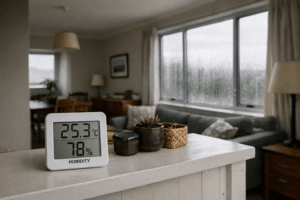
That difference comes down to relative humidity, and in practical terms, it is between indoor air at 45 to 55 per cent versus 70 per cent and above.
When a home is managing moisture well, you notice it in the details. The windows are clear in the morning, the walls feel dry to the touch, the carpet does not feel clammy underfoot, and the bedding feels crisp when you get into bed. These are all indicators that the air is carrying a manageable amount of moisture rather than being saturated.
In many NZ homes, people have simply got used to the damp feeling and accepted it as normal. When the moisture balance shifts, even modestly, the change in comfort is immediately noticeable.
I have had homeowners tell me they felt the difference within the first two or three days of improving their home ventilation, often before any visible signs like window condensation had changed.

It Should Be Easy to Heat
One of the clearest signs that a home is managing moisture well is how it responds to heating. In a dry home, the heat pump or fire warms the room quickly, and the warmth holds.
In a damp home, the heating runs and runs, but the room never quite feels comfortable, because the humid air is absorbing a portion of the heat energy and making the room feel cooler than the thermostat says it is.
A well-managed home at 18 degrees will feel warmer and more comfortable than a damp home at 22 degrees. Drier air allows your body to regulate temperature more efficiently, and it means the heating you are paying for actually warms the room rather than being absorbed by the moisture in the air.
The heating should also hold once you turn it off. In a dry, well-insulated home, surfaces stay warm longer because they are not losing energy to moisture evaporation.
In a damp home, the temperature drops rapidly after the heating stops, surfaces cool, and condensation starts forming within hours as the cold surfaces attract moisture from the air. That rapid cool-down is a sign that the home is working against itself.

It Should Not Smell Musty or Mouldy
A dry, well-ventilated home has no noticeable smell. That might sound like an odd benchmark, but the absence of smell is actually a very reliable indicator that the home is managing moisture properly.
Musty smells develop when moisture sits in carpets, curtains, bedding, and building materials long enough for organic compounds to build up. If you cannot smell anything when you walk into a room, the materials in that room are dry enough that those compounds are not forming.
The test I always suggest is to step outside for a few minutes and then walk back in. Your nose adjusts quickly to the air inside your own home, so you stop noticing smells that are actually there.
Coming back in from fresh outdoor air resets your sense of smell, and any mustiness or staleness becomes immediately obvious.
Wardrobes are another reliable test. Open a wardrobe that has been closed for a few days and take a breath. In a dry home, the air inside smells neutral. In a damp home, you will notice a stale, musty quality that indicates humidity has been building in the enclosed space.
What the Benchmarks Look Like in Practice
It helps to have concrete reference points for what a well-managed home looks like, compared to one struggling with moisture.
| Indicator | Well-Managed Home | Damp Home |
|---|---|---|
| Morning windows | Clear or light mist, clears quickly | Streaming water, pooling on sills |
| Indoor air feel | Light, clean, comfortable | Heavy, clammy, oppressive |
| Heating response | Warms quickly, holds warmth | Slow to warm, never quite comfortable |
| Bedroom smell | Neutral, no noticeable odour | Musty, stale, builds through the week |
| Bedding | Crisp and dry at bedtime | Slightly damp, heavy feeling |
| Wardrobe contents | Dry, no mould on leather or fabric | Stale smell, mould on shoes or bags |
| Wall corners | Clean, dry, no discolouration | Dark patches, mould establishing |
Most homes fall somewhere on a spectrum between these two columns. The goal is not perfection, it is to shift the home far enough toward the left column that the signs of excess moisture are no longer present and the home feels genuinely comfortable.
How to Get There
The path from a damp-feeling home to a dry-feeling one is almost always the same three changes working together.
Improve Airflow
Getting air moving through the home is the most effective single change. A whole-house ventilation system does this continuously and automatically, replacing stale, humid air with drier, filtered air throughout the house.
Even simple habits like leaving bedroom doors slightly ajar at night, opening windows for 15 minutes each morning, and running bathroom extraction fans properly after every shower all help reduce the humidity that makes a home feel damp.
Heat Consistently
Steady, moderate heating through the evening and overnight keeps surfaces warm enough that condensation does not form and the home holds its comfort.
The goal is not to heat hard for an hour; it is to maintain a consistent temperature that prevents the sharp cool-down that triggers moisture on surfaces and makes the home feel cold again by morning.

Manage Daily Moisture Sources
The moisture from cooking, showering, and drying clothes adds up quickly. Using lids on pots, running the rangehood, keeping bathroom doors closed after showers, and drying clothes outside are all free changes that reduce the total humidity load.
These habits compound over time, and for many homes, they are enough to shift the feel of the house noticeably.
In older homes with less insulation, the effort required is greater because the building loses heat faster, and surfaces stay colder. But even in those homes, the same three changes produce real improvements.
The home may not reach the same standard as a new, well-insulated build, but the shift from damp and uncomfortable to noticeably drier and warmer is achievable and worth pursuing.
Frequently Asked Questions
Does a home need to be new to feel dry and warm?
Not at all. Newer homes with better insulation and glazing have an advantage, but older homes can achieve a significant improvement through ventilation, consistent heating, and managed daily habits. The home does not need to be perfect to feel comfortable.
How quickly will I notice a difference if I make changes?
Most people notice a difference within a few days. The air feels lighter, morning window condensation reduces, and the musty smell starts clearing. Full improvement can take a few weeks as materials like carpet and curtains dry out and release embedded moisture.
What humidity level should I aim for?
Between 40 and 60 percent relative humidity is the comfortable range. A simple hygrometer from any hardware store will show you where your home sits. Consistently above 65 percent indicates the home is carrying too much moisture and the signs described in this article will start showing up.
Is the musty smell always a moisture problem?
In most cases, yes. Musty smells are produced by organic compounds that develop when moisture sits in materials for extended periods. Reducing humidity and improving airflow eliminates the conditions that produce the smell.