
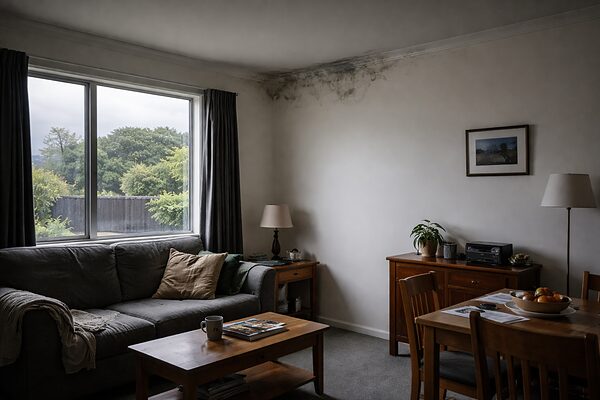
Ceiling mould is one of the things homeowners tend to notice late. It starts in a corner, a faint grey-green smudge that you might not even register for weeks. Then it spreads, and suddenly there is a visible patch that no amount of wiping seems to fix permanently.
After more than a decade in ventilation and moisture control across NZ homes, I have learned that ceiling mould tells a very specific story.
The location, the shape, the timing, all of it points back to how moisture and temperature interact in that particular room. Once you can read those patterns, the right fix becomes obvious.
Quick Summary
- Ceiling mould forms because warm moist air rises and condenses on the coldest overhead surface
- Corners where exterior walls meet the ceiling are the most common starting point because they are thermal bridges
- Bathrooms, bedrooms, and kitchens are the rooms most likely to develop ceiling mould
- The pattern of mould on the ceiling tells you whether the cause is condensation, a leak, or poor insulation
- Mould that starts in corners and spreads inward is almost always condensation-driven
- A single brown stain that appears after rain is more likely a roof leak than a condensation issue
- Improving ventilation and keeping the room consistently warm are the most effective long-term fixes
Why Ceilings Get Mould
Warm air rises. That is the starting point for understanding ceiling mould. In any room where moisture is present in the air, the warmest, most humid air moves upward and meets the ceiling. If the ceiling surface is cold enough, the air drops below its dew point and deposits moisture on that surface.
In a well-insulated home with good airflow, that moisture gets dispersed before it has time to settle. But in homes where insulation is thin or uneven, or where air sits still for extended periods, the moisture accumulates on the ceiling surface and stays there long enough for mould to establish.
This is closely tied to the broader pattern of condensation in NZ homes, where cold surfaces throughout the house attract moisture from humid indoor air.
Ceilings are just one of those surfaces, but they are often the hardest to reach and the easiest to overlook.
Reading the Patterns: What Ceiling Mould Tells You
This is the visual inspection part, and it is where most of the useful information comes from. The way mould appears on a ceiling tells you a lot about the cause, and that matters because the fix is different depending on whether you are dealing with condensation, a leak, or an insulation problem.
Mould Starting in Corners and Edges
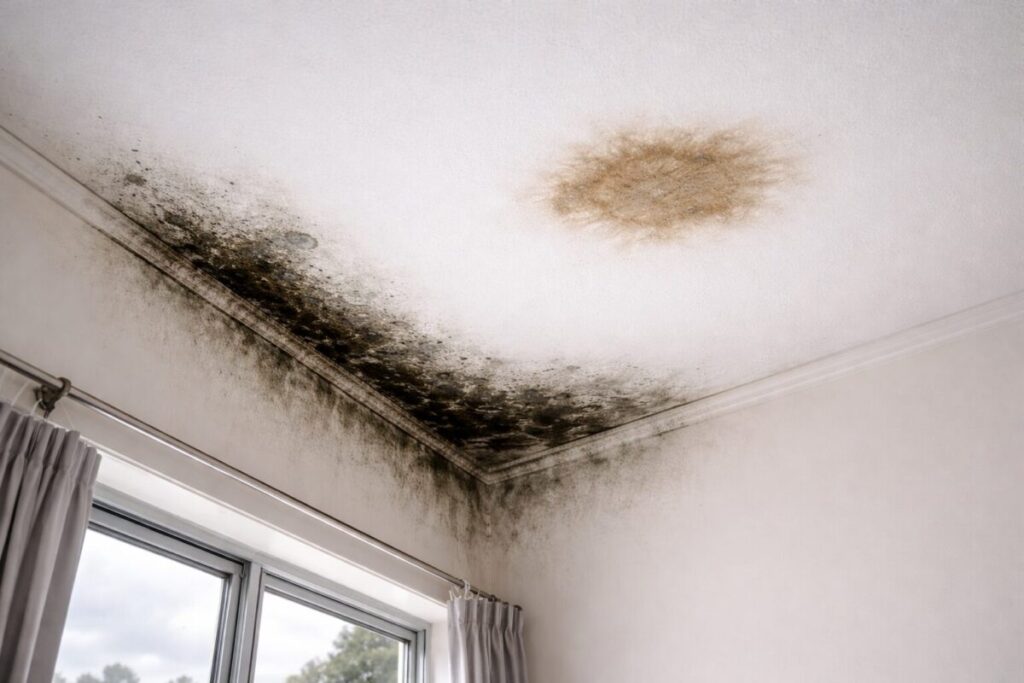
This is the most common pattern I see. Mould appears first in the corner where the ceiling meets one or two exterior walls, then gradually spreads inward along the ceiling edge.
That corner is a thermal bridge, a point where cold transfers through the building structure more efficiently, making it the coldest spot on the ceiling.
If the mould follows the ceiling edges and is concentrated in corners, you are almost certainly looking at a condensation issue.
The room has high humidity, the ceiling surface is cold, and the corner is where those two factors intersect most intensely.
Mould in a Defined Patch or Circle
A defined patch of mould or discolouration in the middle of a ceiling, especially if it is brown-tinged or has a clear edge, often points to a leak rather than condensation.
Roof leaks can be slow and intermittent, dripping only during certain wind-driven rain events, and the moisture soaks into the ceiling material and creates a localised damp zone.
If the patch appears or darkens after rainfall and stays in one specific area, it is worth investigating the roof above that point. A lot of people confuse condensation with leaks, but the fix for each is completely different.
Mould Along Straight Lines or Grid Patterns
This one is interesting because it often catches people off guard. If you see mould forming in parallel lines or a faint grid pattern on the ceiling, it usually indicates uneven insulation above.
The lines correspond to the ceiling joists, which transfer cold differently to the spaces between them.
Where insulation is missing, compressed, or shifted, the ceiling surface above those gaps is colder, and mould grows there first.
This is more common in older homes where batts may have been disturbed by work in the roof cavity, or where insulation was never evenly laid in the first place.
Quick Visual Guide
This table summarises the main ceiling mould patterns and what each one typically indicates.
| Pattern | Most Likely Cause | Key Clue |
|---|---|---|
| Mould in corners, spreading along edges | Condensation | Worse in winter, follows cold surfaces |
| Defined patch or brown stain, mid-ceiling | Roof leak | Appears or darkens after rain |
| Lines or grid pattern | Uneven insulation | Pattern aligns with ceiling joists |
| Widespread mould across whole ceiling | Severe humidity with poor ventilation | Typically in bathrooms or poorly ventilated rooms |
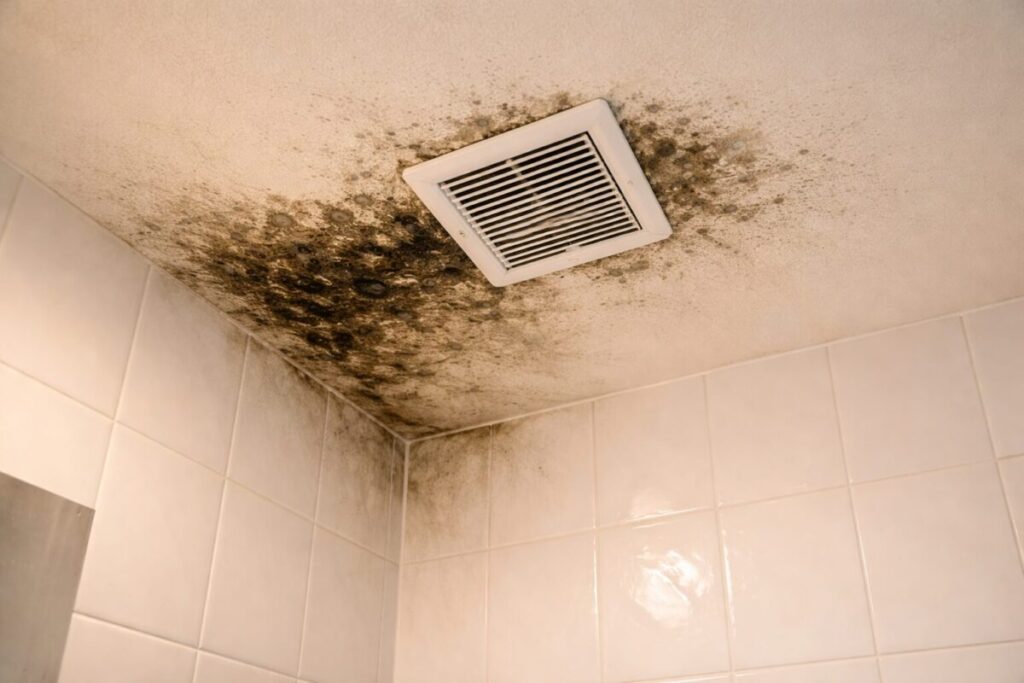
| Mould around a ceiling vent or fan | Extraction issue or ducting leak | Moisture being deposited near the vent rather than removed |
Which Rooms Get Ceiling Mould Most
Not every room is equally at risk. The rooms that produce the most moisture or have the least airflow are where ceiling mould shows up first.
Bathrooms
Bathrooms are the number one room for ceiling mould. Hot showers push large volumes of steam directly upward, and if the extractor fan is weak, poorly positioned, or not run long enough, that moisture hits the ceiling and stays there. I see bathroom moisture problems translating into ceiling mould more than any other single cause.
Bedrooms
Bedrooms develop ceiling mould more slowly than bathrooms, but it tends to be more persistent because the overnight moisture cycle repeats every single night. Two adults breathing in a closed room for eight hours pushes humidity high enough for moisture to settle on the ceiling, particularly in corners. Bedroom mould often starts on walls and then extends onto the ceiling edges as conditions persist.
Kitchens
Cooking without lids and without a rangehood running pushes steam straight up. In kitchens with low ceilings or limited ventilation, the ceiling surface directly above the stove can develop mould if this happens regularly, especially through winter when windows stay closed and the moisture has no exit path.
How to Fix Ceiling Mould Long-Term
Cleaning mould off a ceiling is a temporary measure. It removes what is visible, but if the conditions have not changed, the mould returns. The long-term fix always comes back to three things.
Improve Ventilation
Getting air moving is the most effective change for ceiling mould. A whole-house ventilation system pushes drier air through every room, displacing the humid stale air that rises and settles on ceilings.
In bathrooms, running the extractor fan for at least 15 minutes after every shower makes a significant difference. Even leaving doors ajar to allow air circulation between rooms helps.
Keep Ceilings Warmer
If the ceiling surface stays warmer, it is less likely to reach the dew point where moisture condenses.
Consistent heating through the evening and overnight helps, and ensuring ceiling insulation is adequate, evenly distributed, and not compressed or displaced makes a lasting difference.
In older homes, checking that batts have not shifted or been disturbed is a quick win that can reduce ceiling condensation noticeably.
Reduce Indoor Moisture
Every litre of moisture you prevent from entering the air is a litre that will not end up on your ceiling. Use lids when cooking, run extraction fans properly, dry clothes outside, and keep bathroom doors closed during and after showers. These are simple habit changes, but they shift the moisture balance enough to make a real difference.
Frequently Asked Questions
Is ceiling mould always caused by condensation?
No. While condensation is the most common cause, ceiling mould can also result from a roof leak, displaced insulation, or ducting problems with extraction fans. The pattern of the mould usually tells you which cause is most likely.
Can I just paint over ceiling mould?
Painting over mould without fixing the moisture issue is a temporary cosmetic fix. The mould will grow through the paint within weeks or months because the conditions that created it have not changed. Clean the surface, fix the moisture problem, then repaint once the area has been dry.
How do I tell if ceiling mould is from a leak or condensation?
Condensation mould typically starts in corners and follows edges, is worse in winter, and affects multiple spots. A leak usually causes a single defined patch or brown stain that appears or worsens after rainfall. If the stain is localised and weather-dependent, investigate the roof above.
Will better ceiling insulation stop the mould?
Better insulation helps by keeping the ceiling surface warmer, which reduces condensation. It is most effective when combined with improved ventilation and moisture control. Insulation alone will not fix the problem if indoor humidity stays high.