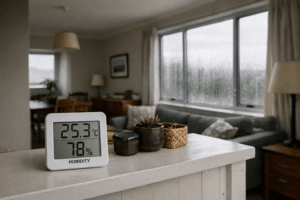
Not all mould looks the same, nor does it all behave the same. One of the most common questions I get when visiting homes is whether the dark patches in the corner are “the bad mould” or just surface mould that can be wiped off. It is a fair question, because the answer changes how you deal with it.
The practical difference between the two comes down to how deep the mould has gone, what is feeding it, and whether the underlying moisture issue has been there for weeks or months.
Quick Summary
- Surface mould sits on top of a material and can usually be wiped away with a damp cloth
- Black mould has penetrated into the surface and often leaves staining even after cleaning
- The colour of mould alone does not reliably tell you what type it is, because surface mould can also appear dark
- What matters most practically is how deep the mould has gone and whether it comes back after cleaning
- Both types are caused by the same conditions: persistent moisture, poor airflow, and cold surfaces
- Surface mould is a warning sign that conditions are right for deeper mould to establish if nothing changes
- Fixing the moisture and airflow problem is the only way to stop either type from returning
What Surface Mould Looks Like
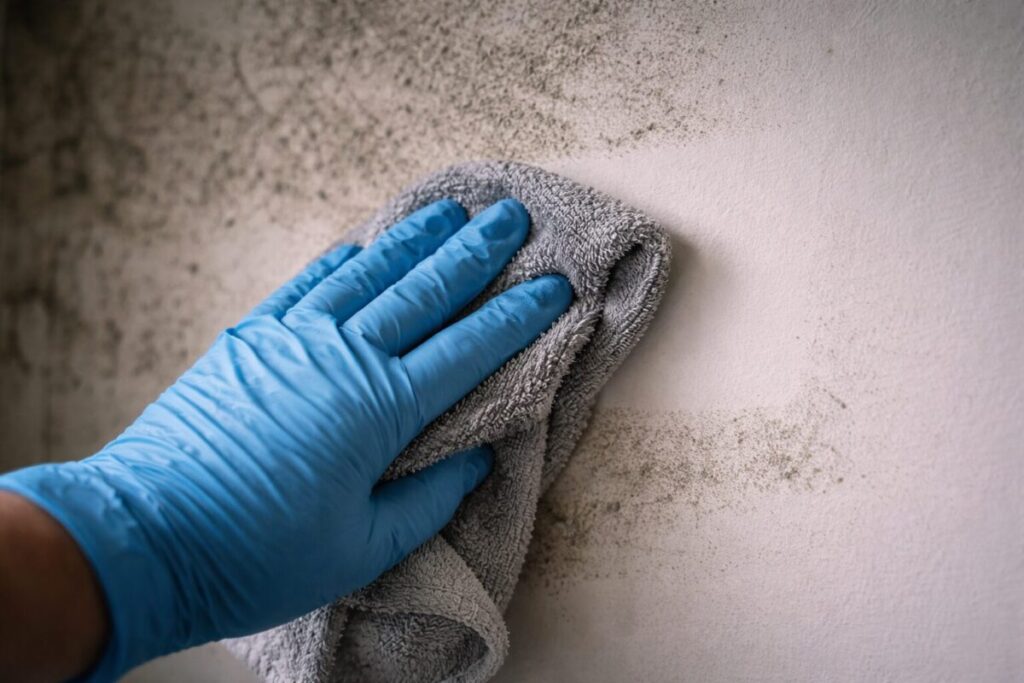
Surface mould is the early stage. It grows on top of a material rather than into it, and it tends to appear as a thin, patchy layer that you can wipe off relatively easily with a damp cloth or a mild cleaning solution. It might look grey, green, white, or even dark in colour depending on the surface and the conditions.
You will often see surface mould on painted walls, on window frames where condensation pools repeatedly, on bathroom tiles, and on the surface of curtains or blinds in rooms with poor ventilation. It tends to appear in spots where moisture lingers but has not been present long enough to penetrate deeper.
The key feature of surface mould is that it cleans off and the material underneath looks intact. There is no staining, no softening, and no visible damage to the paint or surface once the mould is removed.
If it comes back within a few weeks, that tells you the moisture conditions have not changed, but the mould itself was only sitting on top.
What Black Mould Looks Like
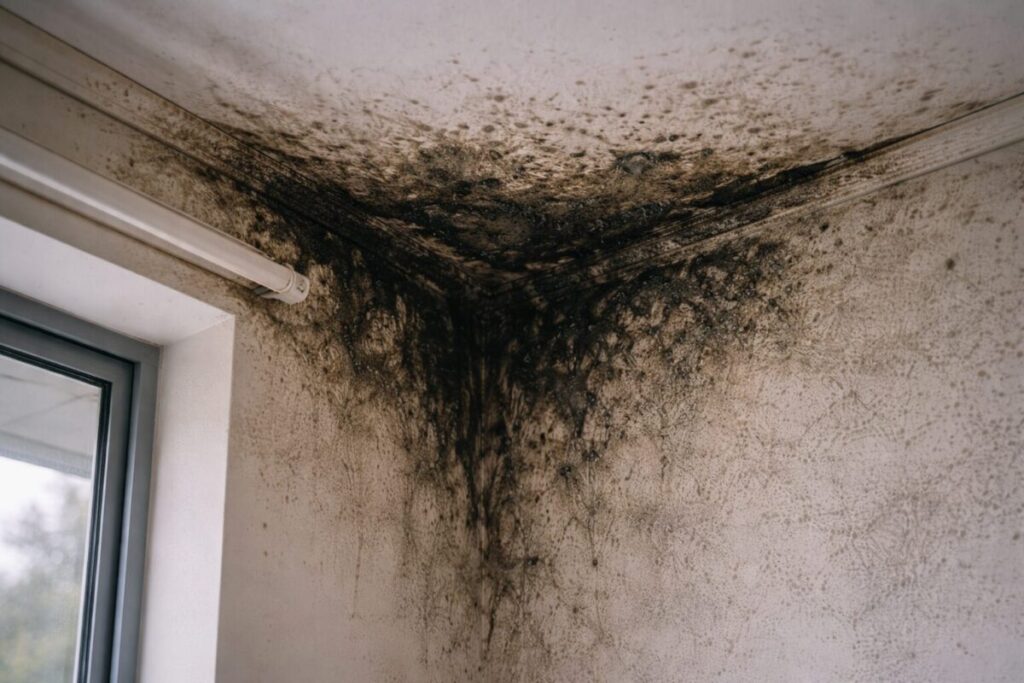
Black mould is what happens when moisture has been present for a longer period and the mould has had time to establish roots, called hyphae, into the material itself. It typically appears as dense, dark patches that look almost wet or oily, and it does not wipe off easily.
When you try to clean it, you may remove the visible growth but the staining remains, and the surface underneath often feels soft or damaged.
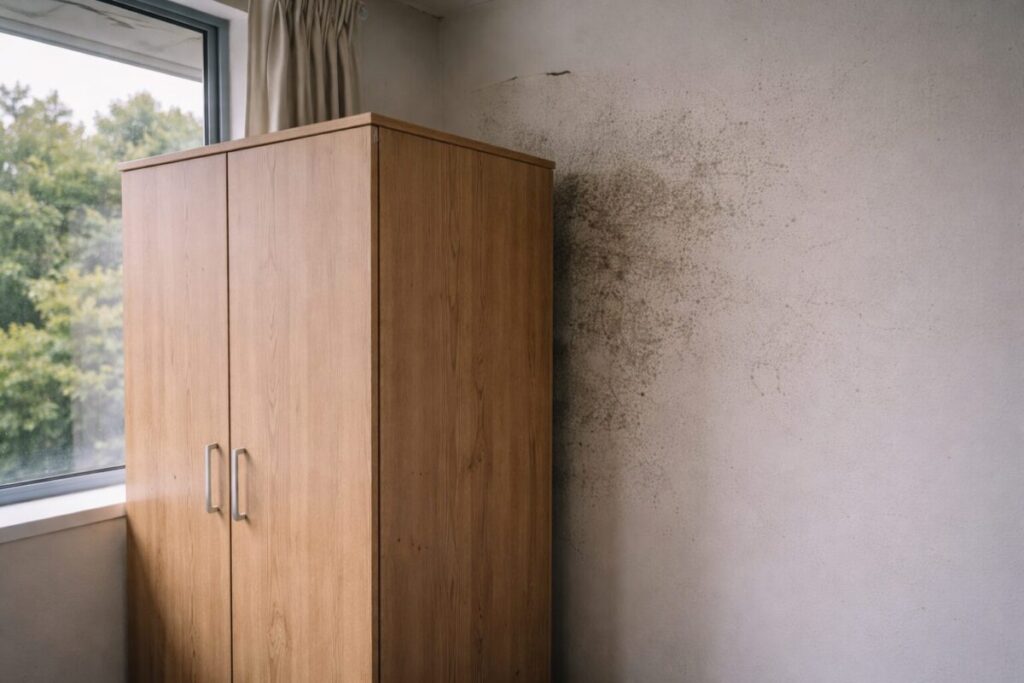
The most common places I find established black mould in NZ homes are in the upper corners of exterior walls where two cold surfaces meet, on ceilings in rooms with persistent moisture, behind wardrobes and furniture pushed against outside walls, and around window frames in bedrooms where condensation has been building up over multiple winters.
Black mould often has a noticeable musty smell even before you see it. If a room has that heavy, stale odour and you cannot find an obvious source, it is worth checking behind furniture and in enclosed spaces where airflow does not reach.
How to Tell the Difference
The colour alone is not a reliable indicator. Surface mould can appear dark, and established mould is not always jet black. What matters more is how it behaves when you interact with it, and what the surface looks like underneath.
| Feature | Surface Mould | Black Mould (Established) |
|---|---|---|
| Appearance | Thin, patchy, may look dusty or powdery | Dense, dark, often looks wet or oily |
| How it feels | Wipes off easily with a damp cloth | Resistant to wiping, staining remains |
| Surface underneath | Clean and intact after removal | Stained, soft, or visibly damaged |
| Smell | Mild or no smell | Often has a strong musty odour |
| How long it took | Weeks of moisture exposure | Months of sustained moisture |
| Recurrence | Returns quickly if conditions persist | May require surface repair even after moisture is fixed |
The simple test I use is this: wipe the patch with a damp cloth. If the mould comes off cleanly and the wall or surface looks normal, you are likely dealing with surface mould. If the stain stays, the paint feels soft, or the surface looks discoloured even after cleaning, the mould has gone deeper.
Why It Matters for How You Respond
Surface mould is a warning signal. It is telling you that the moisture balance in that room is off and that conditions are ripe for something more persistent to take hold. If you catch it early and address the moisture, you can prevent it from progressing to the established stage.
Established black mould is a sign that the moisture problem has been present for a longer period. Cleaning the visible mould is only part of the equation, because the hyphae may remain embedded in the material.
Even after the surface is cleaned, the mould can re-emerge if the conditions that created it are still in place. That is the pattern people describe when they say mould keeps coming back no matter how many times they scrub it.
In both cases, the priority is the same: fix the moisture problem first. Cleaning without addressing humidity and airflow is a temporary measure at best.
What Actually Causes Both Types
Whether mould stays on the surface or goes deeper, the root cause is always the same. It needs moisture, a surface to grow on, and enough time without disturbance.
In New Zealand homes, the most common source of that moisture is condensation from poor ventilation and high indoor humidity, not water getting in from outside.
The usual drivers are rooms with poor airflow where doors stay closed, furniture blocking air circulation along exterior walls, condensation that builds up in homes with single glazing and minimal insulation, and bathrooms or kitchens where moisture is produced in large volumes without adequate extraction.
The difference between surface mould and black mould is really just a question of time. Surface mould is what you get after a few weeks of persistent dampness.
Leave those conditions in place for months and the mould progresses, pushes deeper into paint and plaster, and becomes much harder to deal with.
Preventing Both Types
Prevention is identical for surface mould and black mould because the cause is the same. The goal is to keep indoor humidity low enough and air moving well enough that moisture does not sit on surfaces long enough for mould to establish.
The most effective approach combines three things: improving ventilation through the home so moist air is replaced with drier air, maintaining consistent heating to reduce cold surfaces where condensation forms, and reducing the amount of moisture being produced indoors through habits like using extraction fans, drying clothes outside, and cooking with lids on.
Pulling furniture away from exterior walls by even 50mm helps enormously in bedrooms and living areas. That small gap lets air circulate behind wardrobes and dressers, which removes the still, damp conditions that mould thrives in.
Frequently Asked Questions
Is all dark mould black mould?
No. Mould can appear dark for a number of reasons, including the surface it is growing on and the level of moisture present. The colour alone does not tell you how established the mould is. The better test is whether it wipes off easily and whether the surface underneath is intact.
Can surface mould turn into black mould?
Yes. If the moisture conditions persist, surface mould will deepen over time and push into the material. What starts as a light patch you can wipe off can become an established colony within a few months if nothing changes.
Do I need to repaint after removing black mould?
Often, yes. If the mould has stained the paint or softened the surface, cleaning alone will not restore the finish. Repainting after the moisture issue is resolved gives a clean starting point, but painting over active mould without fixing the cause will just lead to the same problem returning.
Why does mould appear in the same spot every winter?
Because that spot has the right combination of cold surface, poor airflow, and moisture exposure. Exterior wall corners, behind furniture, and ceiling edges are classic repeat spots because the conditions there do not change from year to year unless ventilation or heating habits improve.