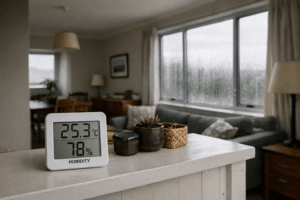
Many New Zealand homes feel colder and damper than the thermostat indicates. What people notice is not just temperature; it is the mix of cool surfaces, trapped indoor moisture, and stale air that never quite clears.
It odd that the ‘feeling’ can vary so much between houses, I’ve audited thousands for energy efficiency also.
The home holds moisture overnight, the windows stay cold, and rooms feel heavy by morning.
Quick Summary
- Cold and damp usually come from low surface temperature, indoor moisture, and weak air movement working together.
- A house can feel clammy even when there is no leak, because everyday living adds moisture indoors.
- Winter makes the problem more obvious because windows stay colder and homes stay shut for longer.
- Bedrooms often feel worst in the morning because people add moisture overnight while doors and windows stay closed.
- Older houses and some newer airtight homes can both struggle, just for different reasons.
- Heating changes comfort, but warmth on its own does not always clear a damp feeling.
- The homes that feel best usually have warmth, airflow, and moisture control working together.
Cold Air is One Factor
When people say a home feels damp, they are often describing a comfort problem before they are describing visible water. The air feels heavy, fabrics feel cool, and the room seems slow to warm up.
That is why so much of what people call condensation in NZ homes shows up as a comfort issue first and a visible moisture issue second.
Temperature matters, but surface temperature matters just as much. If the windows, walls, and corners stay cold, moisture in the indoor air settles on them more easily.
Many households confuse that pattern with actual dampness or leaks, even though the cause indoors can be completely different.
Where the Moisture Comes From
Most of the moisture inside a house comes from normal household activities. People breathe, shower, cook, dry washing, and move warm air from one room to another.
In a house that does not clear that moisture well, the amount builds quietly through the day and lingers overnight.
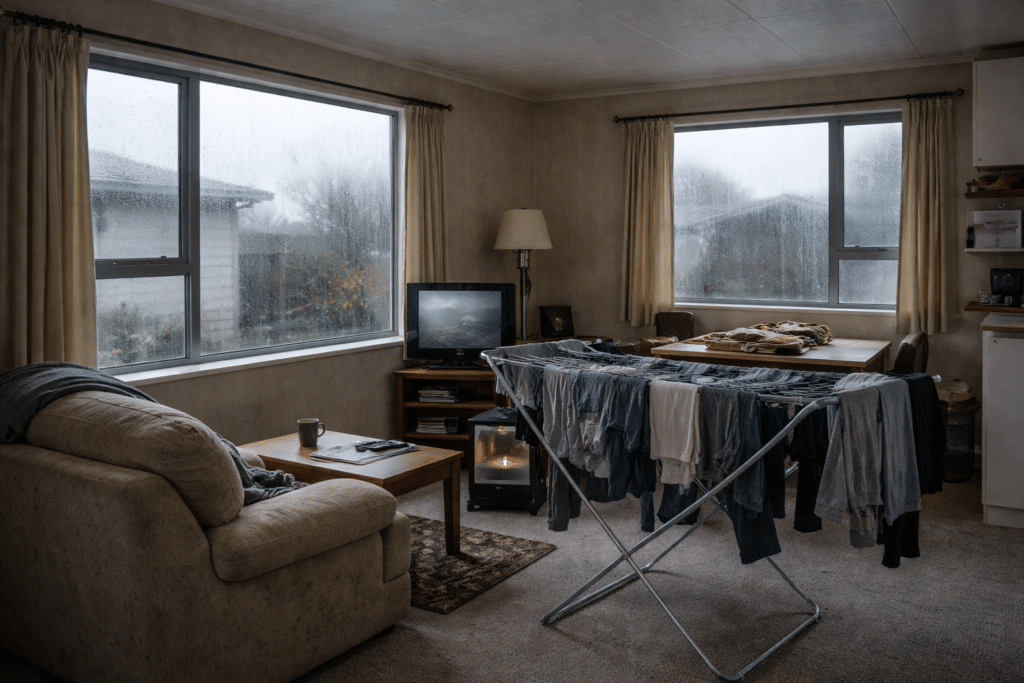
I often find people are surprised by how ordinary the source is. They expect a dramatic problem, but in reality it is the daily rhythm of living in a closed house during winter.
Once indoor air is carrying more moisture than the cold surfaces can handle, the house starts to feel cold in a different way.
| Source | What Happens | Why It Matters in Winter |
|---|---|---|
| Breathing and sleeping | Moisture builds overnight | Bedrooms stay shut and windows stay cold |
| Showers and bathing | Warm wet air moves into the house | Moisture spreads fast if it hangs around |
| Cooking | Steam rises into cooler rooms | Moisture drifts beyond the kitchen |
| Drying clothes indoors | Water leaves fabrics into the air | The load often lasts for hours |
That seasonal pattern is a big part of why winter moisture patterns catch people out. The house is doing less natural drying, and the moisture people generate every day has fewer easy escape paths.
Why Winter Makes It Worse
Winter shrinks the margin for error. Outdoor air is colder, windows spend longer at a low surface temperature, and people naturally shut the house up earlier in the day. The same amount of everyday moisture that barely matters in summer can linger for hours in winter.
Sun angle matters too. Shaded rooms, south-facing bedrooms, and parts of the house that do not catch much direct warmth tend to stay cooler for longer.
That is why the home can feel fine one season and noticeably heavier in the next, even though the daily routines inside it have not changed very much.
Why Some Homes Struggle More Than Others
Not all cold and damp homes are old villas with draughts. I see the issue in weatherboard houses, brick units, 1990s homes, and newer townhouses as well. The difference is usually how the house handles moisture, not whether it is old or new on paper.
Some older homes lose heat quickly and have very cold surfaces, so moisture shows itself fast. Some newer homes hold warmth better, but they also hold indoor air more tightly, which means moisture can linger if the house does not have enough movement through it. Different house types, same basic tension.
Windows and Frames Hold the Evidence
Windows are usually the clearest clue because they are often the coldest surface in the room. You can see it clearly in how aluminium frames and glazing behave on a winter morning, especially in bedrooms and living areas with closed curtains.
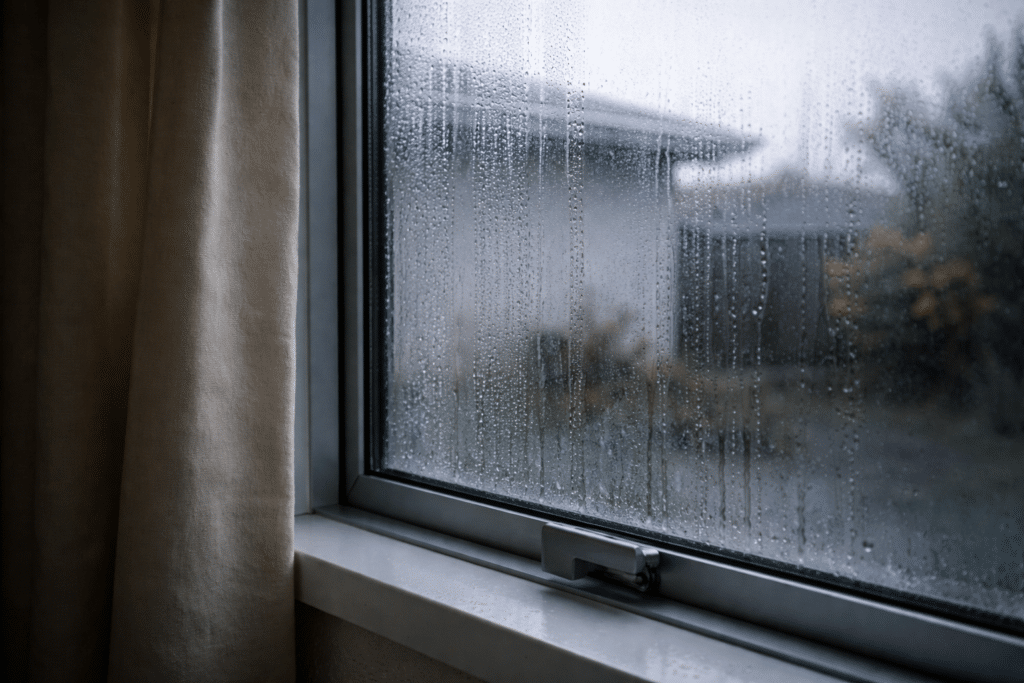
When the glass is cold enough, moisture leaves the air and lands on the glass first. That does not mean the window caused the problem on its own. It usually means the window is showing you what the room air was already carrying.
Bedrooms Trap Overnight Moisture
Bedrooms are small moisture factories at night. One or two people sleeping with the door shut can shift the feel of a room by morning, especially when curtains are drawn and there is very little air movement. The room may not look dramatic, but it can feel flat, cool, and slightly sticky.
This is one reason people say the house feels fine in the afternoon but unpleasant when they wake up. Overnight, the house has had hours to collect moisture while the coldest surfaces have remained at their lowest temperatures.
Quiet Corners Stay Cooler for Longer
The corners behind furniture, around curtains, and near exterior walls often stay cooler for longer than the middle of the room. They do not see much air movement, so they lag behind even when the rest of the house has warmed a little. That temperature difference is enough to change how a room feels.
Why Heating Alone Does Not Fully Change the Feel
A heater can warm the air quite quickly, but warm air does not automatically resolve trapped moisture. If the room air stays damp and the cold surfaces are still lagging behind, the house can feel warm and clammy at the same time, which people notice straight away.
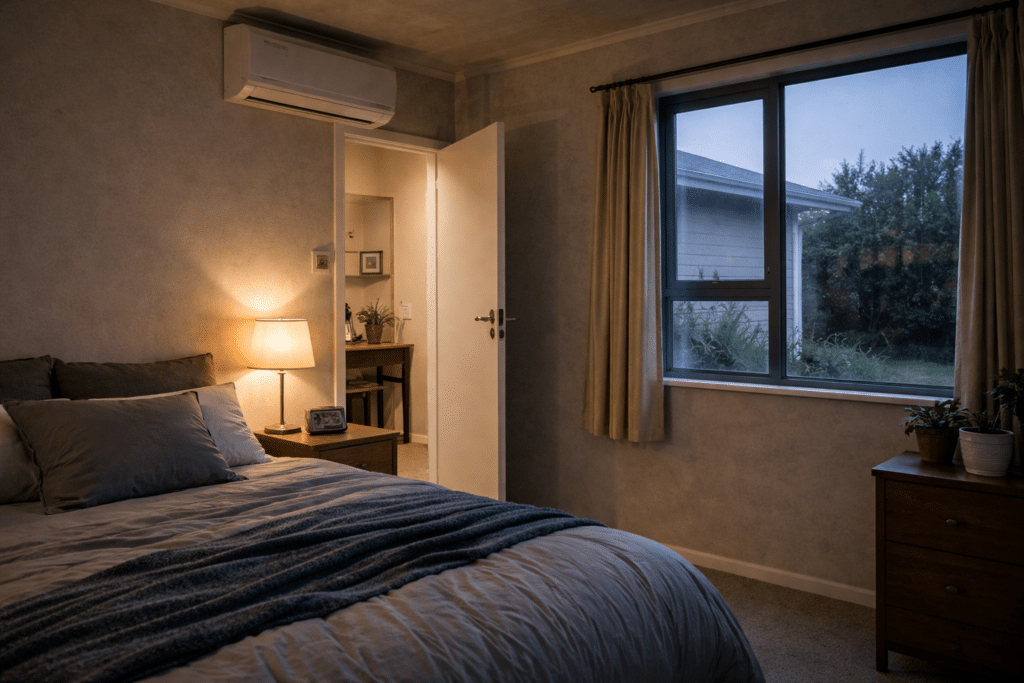
This is why a short burst of heat can only briefly improve comfort. The best results usually come when the heat is steady enough to lift surface temperatures as well, and when what ventilation actually does is understood properly. Ventilation is not just about fresh air; it is about moving moisture out before it settles into the feel of the house.
What Usually Changes the Feel of the House
The homes that feel driest and easiest to live in tend to have three things working together. There is some consistent warmth, moisture is not allowed to spread unchecked from wet rooms and indoor drying, and air is moving gently enough through the home to stop rooms from going stale.
That does not mean every house needs the same setup. It means the balance matters. Once warmth, moisture, and airflow start working together instead of fighting each other, the house usually feels lighter, less sticky, and quicker to recover each morning.
Frequently Asked Questions
These are the questions I hear most often when a house feels cold and clammy, even with no obvious leak.
Why can a home feel damp when nothing is leaking?
Because a lot of indoor moisture comes from ordinary daily living. Breathing, showering, cooking, and drying clothes all add moisture to the air. When that moisture meets cold surfaces and weak airflow, the home starts to feel damp even though no water is entering from outside.
Why are bedrooms often the worst room in the morning?
Bedrooms usually stay closed for hours while people are sleeping inside them. That adds moisture overnight at exactly the time windows, walls, and curtains are at their coldest. By morning, the room can feel noticeably heavier than the rest of the house.
Do newer homes avoid this problem?
Not always. Some newer homes hold warmth better than older ones, but they can also hold indoor moisture more tightly if air is not moving well enough. A newer house can feel less draughty and still end up feeling damp at certain times of year.
Why does a heated home still feel clammy?
Because warmth and dryness are not the same thing. If the air has picked up moisture and surfaces are still cool, the room may feel warmer but not fresher. That is why comfort changes most when heating, moisture control, and airflow start working together.