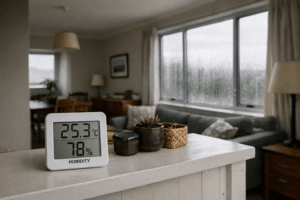
It is the first thing many people see when they wake up in winter, windows streaming with water, sills pooling with moisture, and that familiar feeling of stepping into a room that feels damp before the day has even started.
The short answer is no, your windows should not be wet every morning. It is common, but common does not mean acceptable.
Wet windows every day are a clear signal that indoor humidity is too high relative to the glass’s temperature, indicating the home is not managing moisture well enough. It’s not always the house’s fault; behaviour inside the home is a major factor sometimes.
Quick Summary
- Windows that are wet every morning indicate indoor humidity is consistently too high for the home to manage
- Condensation forms on glass because it is the coldest surface in the room and reaches the dew point first
- Single-glazed aluminium windows are the worst affected because both the glass and frame conduct cold rapidly
- Bedrooms are the most common room for morning window condensation because doors stay closed and breathing adds moisture all night
- A light mist on glass during the coldest mornings is tolerable, but streaming water every day is a sign of a problem
- Improving ventilation, maintaining consistent heating, and reducing indoor moisture sources are the three practical fixes
- The windows themselves are rarely the problem; they are showing you what is happening with humidity and airflow in the home
Why Windows Get Wet Overnight
The mechanism is straightforward. Warm, humid indoor air holds moisture as water vapour. When that air touches a surface cold enough to drop it below its dew point, the vapour turns to liquid water.
Windows are almost always the first surface to show this because glass is a poor insulator and loses heat faster than walls, ceilings, or floors.
Overnight, the temperature outside drops, the glass cools, and the indoor air, which has been accumulating moisture from breathing, showering, and cooking throughout the day, meets that cold surface and deposits its moisture as condensation.
By morning, you are looking at the peak combination of maximum humidity and minimum surface temperature. The broader pattern of window condensation follows the same physics in every NZ home.
What Level of Window Moisture Is Tolerable
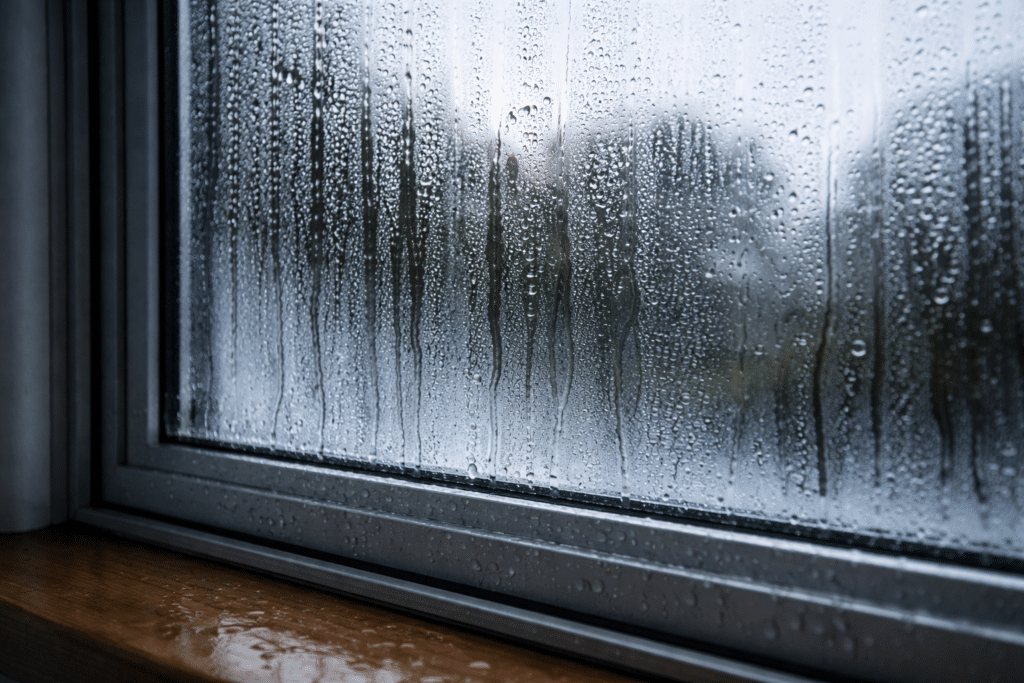
Not all morning window moisture is a crisis. There is a practical difference between a light mist on the glass during the coldest week of winter and heavy streaming water every single morning from May through September.
| What You See | What It Means | Action Needed |
|---|---|---|
| Light mist on glass, clears by mid-morning | Mild condensation during coldest conditions | Monitor, basic habits usually sufficient |
| Mild condensation during the coldest conditions | Indoor humidity is elevated | Improve ventilation and check extraction habits |
| Heavy streaming water every morning | Significant humidity and airflow problem | Active ventilation, consistent heating, source control |
| Water running down walls as well as windows | Severe moisture imbalance | Whole-house approach needed urgently |
The key indicator is persistence and severity. If the condensation is occasional and light, the home is coping reasonably well. If it is heavy and happens every morning, the moisture balance is tipped and damage will start accumulating on sills, frames, and surrounding surfaces.
Which Windows Get Hit Worst
Not every window in the house will show the same amount of condensation. The worst-affected windows are the ones in the coldest rooms with the least airflow and the most moisture production.
Bedroom Windows
Bedrooms are consistently the worst room for morning window condensation. The door stays closed all night, curtains trap cold air against the glass, and two adults breathing for eight hours add over a litre of moisture to the air. By morning, that small, sealed room has been sitting at high humidity for hours, and the window shows it. I see this in bedrooms where condensation builds overnight in almost every home I visit during winter.
South-Facing Windows
Windows that face south receive the least direct sunlight, which means the glass stays colder for longer through the morning. While north-facing windows warm up quickly as the sun hits them, south-facing glass can remain cold well into the day, giving condensation more time to form and sit.
Single-Glazed Aluminium Windows
The type of window makes an enormous difference. Single-glazed aluminium frames are the worst performers because both the glass and the metal frame conduct cold straight through. Double-glazed windows with thermally broken frames produce far less condensation because the inner surface stays warmer. If your single-glazed windows are streaming every morning while a neighbour’s double-glazed windows are dry, the glazing type is a significant part of the difference.
What Happens If You Ignore It
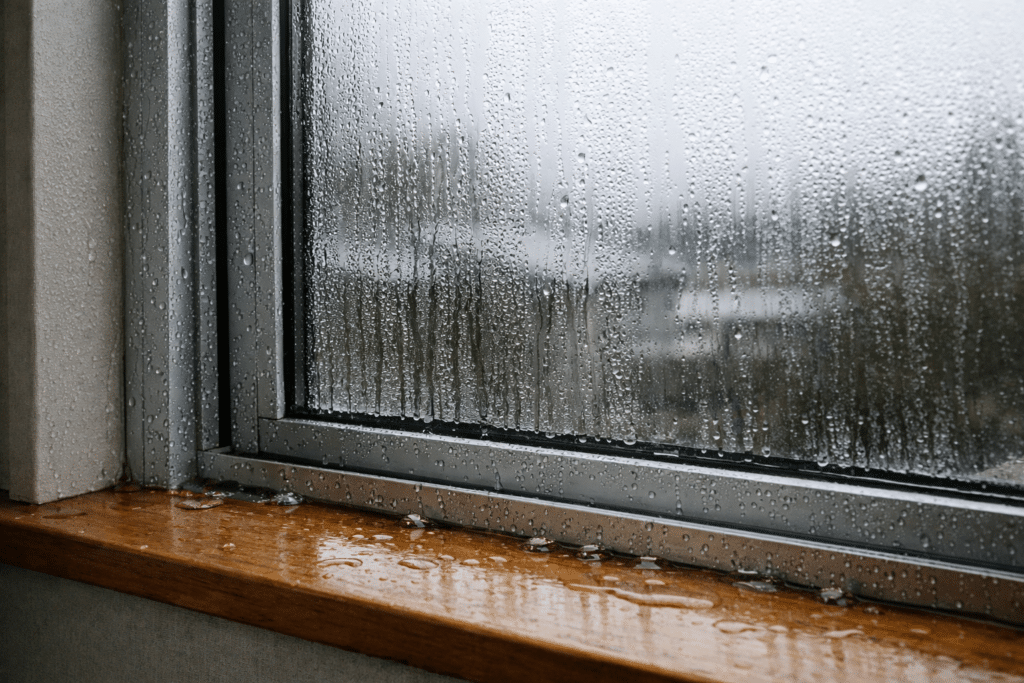
Many people wipe the windows in the morning and move on, which removes the visible water but does not change the conditions that produced it. Over time, daily condensation causes real damage that builds slowly and can become expensive to fix.
Water that pools on timber sills and frame corners soaks into the wood and softens it over months. Paint on walls near windows begins to peel and bubble from persistent moisture sitting behind the paint film.
Mould establishes around frame edges and on the wall below the window where condensation wicks into the plaster. Curtains that sit against wet glass absorb moisture and develop mould along the bottom edge.
The cumulative cost of this damage, replacing rotten sills, repainting walls, treating mould, replacing curtains, often exceeds the cost of addressing the moisture issue that caused it in the first place.
How to Stop Windows Being Wet Every Morning
The fix is not about the windows themselves. It is about changing the moisture and temperature conditions inside the home so that less condensation forms in the first place. There are three approaches that consistently work.
Get Air Moving
This is the most effective change. A whole-house ventilation system continuously exchanges humid indoor air for drier filtered air, lowering the moisture level across every room, including closed bedrooms, overnight. Even simpler steps make a difference: leaving bedroom doors slightly ajar at night allows air to circulate, and opening windows for 15 minutes each morning flushes out the overnight humidity before it settles into materials.
Keep Surfaces Warmer
Condensation needs a cold surface. If you can keep glass and walls slightly warmer overnight, less moisture settles. A heat pump running at a steady 18 degrees through the evening and into the night is more effective than heating hard for an hour and switching off.
The goal is not warmth for comfort alone; it is to keep surfaces above the dew point so moisture stays in the air rather than condensing on the glass.

Reduce the Moisture Going In
Every litre of moisture you prevent from entering the air is a litre that will not end up on your windows. Using extraction fans when showering and cooking, keeping bathroom doors closed after showers so steam does not migrate through the house, drying clothes outside rather than on indoor racks, and avoiding unflued gas heaters all reduce the total humidity load that the home has to manage.
These are free or very low-cost changes, and together they often make a visible difference in morning window condensation within days.
Frequently Asked Questions
Should I wipe my windows every morning?
Wiping removes the water, which stops it from soaking into sills and frames, so it is worth doing as a short-term measure. But it does not reduce the humidity causing the condensation, so the moisture will return the next morning unless the underlying conditions change.
Will double glazing stop my windows from being wet?
Double glazing significantly reduces condensation on the glass because the inner pane stays much warmer than in single-glazed windows. It may not eliminate it entirely if indoor humidity is very high, but the improvement is substantial. The frames matter too; aluminium without a thermal break can still attract condensation even when the glass is dry.
Why are bedroom windows worse than living room windows?
Bedrooms accumulate more moisture overnight because occupants breathe moisture into a sealed space with the door closed and curtains trapping cold air against the glass. Living rooms typically have more airflow, are heated in the evening, and do not have people sleeping in them for eight hours.
Is morning window condensation worse in some parts of New Zealand?
Yes. Regions with colder winters see heavier morning condensation because the temperature gap between indoor air and the glass surface is greater. Humid coastal regions also see more condensation because the air carries more moisture to begin with. The specific challenges vary by location, but the mechanics and the fixes are the same everywhere.