Some plants do absorb moisture from the air through their leaves, and some have been shown to take in airborne compounds. But there are practical limits to what a few potted plants can achieve in a damp NZ home.
After more than a decade working across ventilation and moisture control in NZ homes, I take a balanced view on this.
Plants can be a helpful addition to a home that already has its moisture basics in order, but they are not a substitute for proper ventilation and heating. Here is how to think about it practically.
Quick Summary
- Some indoor plants absorb moisture from the air through their leaves, which can contribute to slightly lower humidity in the room
- The effect is modest, a few plants in a room will not solve a condensation problem on their own
- Plants that thrive in humid conditions are the best candidates because they actively draw moisture from the air
- Overwatering indoor plants can add more moisture to the air than the plant absorbs, making the problem worse
- Plants work best as a supplement to proper ventilation and consistent heating, not as a replacement
- Placing moisture-absorbing plants near condensation-prone areas like windows and bathrooms is more effective than scattering them randomly
- The real solution to condensation and mould is always airflow, heating, and reducing moisture at the source
How Plants Interact With Indoor Moisture
Plants take in water through their roots and release some of it back into the air through their leaves in a process called transpiration. That sounds like it would add moisture, and to some degree it does.
But certain plants also absorb moisture directly from the air through their foliage, particularly species that evolved in humid environments like tropical forests.
The balance between moisture absorbed and released depends on the plant species, pot size, how much you water it, and the room’s humidity.
In a room with already high humidity, some plants will absorb more from the air than they release. In a dry room, the opposite can happen.
The important thing to understand is that the scale of this effect is small. A few potted plants are not going to make a measurable dent in a home where condensation is driven by high indoor humidity from cooking, showering, and drying clothes. They are a gentle nudge in the right direction, not a fix for the underlying problem.
Plants Known to Absorb Humidity
These are the species most commonly recommended for rooms with higher humidity. They are plants that naturally thrive in moist environments and actively draw water from the air through their leaves.
| Plant | Why It Helps | Best Placement |
|---|---|---|
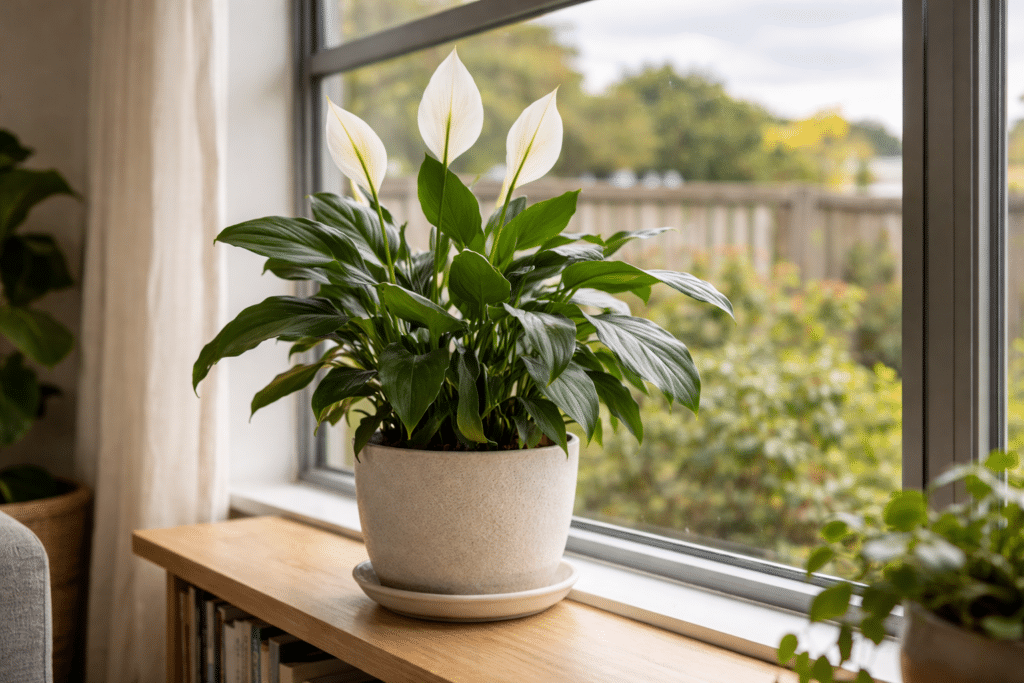
| Peace lily (Spathiphyllum) | Absorbs moisture through broad leaves, thrives in humid conditions | Bathrooms, bedrooms, areas near windows |
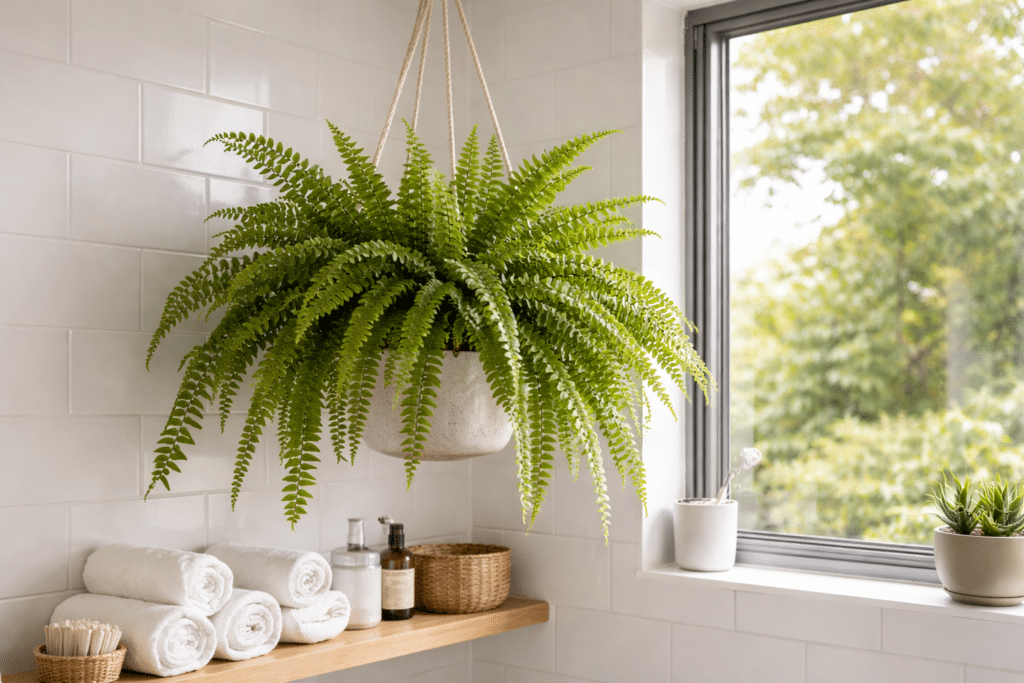
| Boston fern (Nephrolepis exaltata) | Naturally draws moisture from humid air through fronds | Bathrooms, kitchens, hanging near windows |
| English ivy (Hedera helix) | Absorbs airborne moisture, grows well in cooler NZ conditions | Bedrooms, living areas, near exterior walls |
| Spider plant (Chlorophytum comosum) | Hardy, adaptable, absorbs some moisture, easy to maintain | Any room, tolerates low light |
| Tillandsia (air plants) | Absorb all their water from the air, no soil needed | Bathrooms, kitchens, any humid spot |
| Reed palm (Chamaedorea seifrizii) | Absorbs humidity through large leaf area, tolerates shade | Living rooms, hallways |
Of these, Boston ferns and peace lilies are the ones I see most often in NZ homes that are actively managing moisture. Both are readily available, easy to care for in New Zealand’s climate, and genuinely suited to the humid conditions found in bathrooms and bedrooms through winter.
Where to Place Plants for Best Effect
If you are going to use plants to help with moisture, placement matters more than quantity. Putting a fern on a shelf in the driest room in the house is not going to achieve much.
Placing it in the bathroom, where showers create the highest humidity, gives the plant the best chance to draw moisture from the air where it is most concentrated.
The rooms where moisture-absorbing plants make the most sense are bathrooms, kitchens, and bedrooms, where condensation builds up overnight from breathing. Positioning the plant near a window or on a sill where condensation forms gives it direct access to the most humid air in the room.
Avoid clustering too many plants in one room, because the combined transpiration from all those plants can actually add more moisture to the air than they absorb, especially if they are being watered regularly.
Two or three well-chosen plants per room is a reasonable number that stays on the helpful side of the balance.
The Overwatering Trap
This is the single biggest mistake people make when trying to use plants for moisture control. Overwatering indoor plants means the soil stays saturated, and that wet soil constantly evaporates moisture into the room.
The plant might be absorbing some humidity through its leaves, but the pot of wet soil beside it is putting more back into the air than the plant takes out.
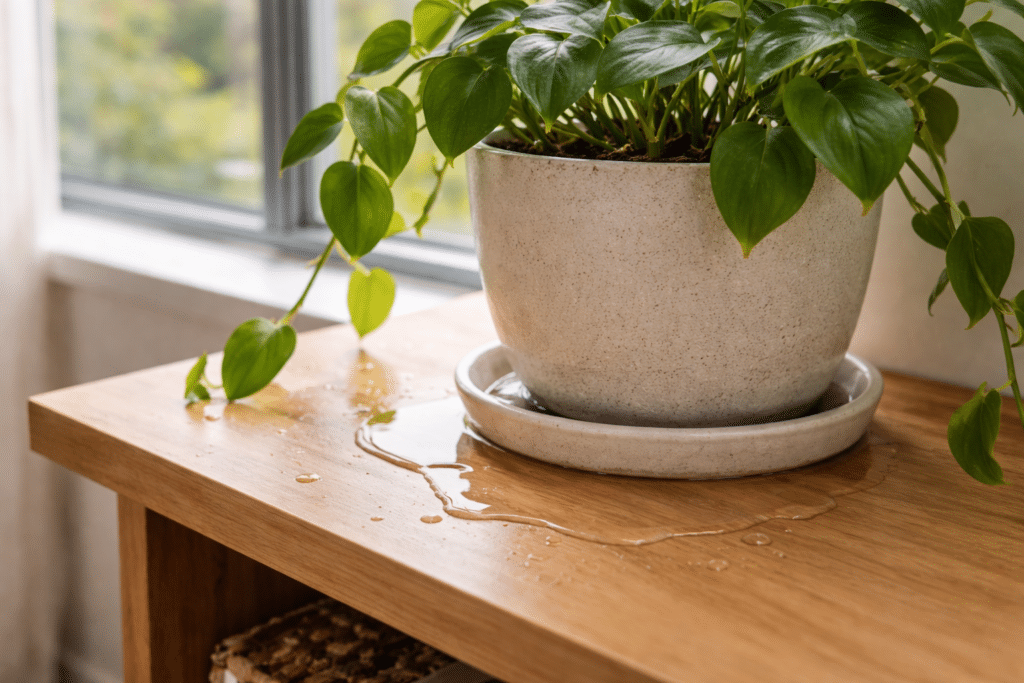
The net effect of an overwatered plant in a damp room is more moisture, not less. The same issue applies to saucers that sit full of water under pots, and to pots without drainage that hold standing water at the bottom.
If you want plants to work in your favour for moisture, water them moderately, ensure pots have proper drainage, and empty saucers after watering. The goal is to let the plant draw moisture from the air rather than from a constantly wet root zone.
What Plants Cannot Do
This is where honest expectations matter. Plants cannot replace ventilation. They cannot warm cold surfaces. They cannot extract the litres of moisture produced daily by cooking, showering, and breathing.
A home where every window is streaming with condensation, and mould is establishing in the corners, needs proper ventilation and airflow, not more pot plants.
I have visited homes where someone has filled a damp room with plants hoping it would solve the moisture problem, and the room was actually worse because the watering and transpiration added to the humidity load. The intention was good, but the approach bypassed the real issue: moist, stale air had no way to leave the home.
The reason mould keeps returning in NZ homes is always the same: humidity stays high, airflow stays poor, and cold surfaces stay damp. Plants do not change any of those fundamentals in a meaningful way.
The Right Way to Think About It
The best use of indoor plants for moisture management is as one small piece of a larger approach. If your home already has good bathroom extraction, consistent heating, and reasonable ventilation, then adding a few humidity-absorbing plants to the dampest rooms can provide a gentle ongoing contribution to keeping moisture in check.
Think of it the same way you would think about opening a window for ten minutes in the morning. It helps, it is worth doing, and it adds up over time.
But it is not the thing that solves the problem on its own. The foundation has to be right first, and the plants are a layer on top.
Frequently Asked Questions
Can plants remove mould from a room?
Plants do not remove existing mould. Some species may help reduce the humidity that allows mould to grow, but only modestly. Once mould is established on a surface, it needs to be physically cleaned, and the moisture conditions need to change before it will stop returning.
How many plants do I need to make a difference?
Two to three moisture-absorbing plants per room is a reasonable number. More than that can tip the balance the wrong way because of transpiration and watering. The effect is subtle regardless of numbers, so do not expect dramatic results from plants alone.
Will plants in the bathroom reduce condensation?
Plants suited to humid conditions, like Boston ferns and peace lilies, can absorb some of the moisture from bathroom steam. The effect is modest and works best alongside a properly functioning extractor fan. Plants cannot replace mechanical extraction in a room that produces as much moisture as a bathroom.
Are there plants I should avoid in a damp home?
Plants that need heavy watering or that sit in trays of water can add to the moisture problem rather than reduce it. Large-leafed tropical plants with high transpiration rates can also release significant moisture. Stick with species known to absorb humidity and water them moderately.