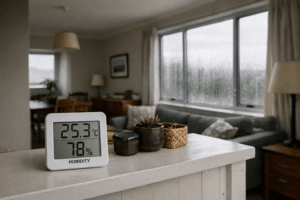
The short answer is yes, condensation is extremely common in New Zealand homes. But common and normal are two different things, and accepting it as inevitable is where most people get stuck.
I’ve been surprised after seeing hundreds of houses and testing structural moisture how some houses that are 100 years old have hardly any and some new build houses have lots
After more than a decade working across ventilation and building performance in NZ homes, I can tell you that condensation is predictable, explainable, and in most cases very fixable.
There are three main factors that determine how much condensation a home experiences: the environment the house is in, the people living in its behaviour, and moisture-producing areas like bathrooms and kitchens.
Once you understand how those three interact, the path to reducing condensation becomes much clearer.
Quick Summary
- Condensation is common in NZ homes, but it is not something you have to accept as permanent
- New Zealand’s maritime climate means outdoor air often carries high humidity, which raises the baseline for indoor moisture
- The building itself, its insulation, glazing, ventilation, and age, determines how well it handles that moisture
- People add significant moisture through breathing, showering, cooking, and drying clothes
- Bathrooms and kitchens are the biggest single-room contributors to whole-house humidity
- Improving ventilation, maintaining consistent heating, and managing daily habits are the three practical levers that reduce condensation in any NZ home
Factor One: The Environment
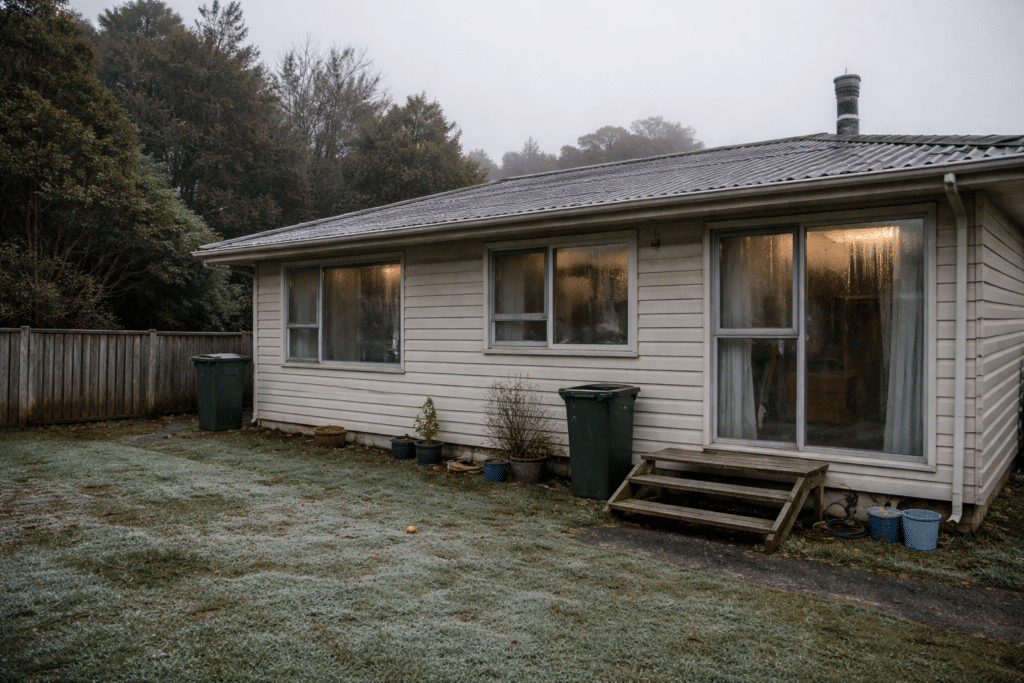
New Zealand sits in a maritime climate zone, which means relatively high ambient humidity for much of the year. The air outside already carries a fair amount of moisture, and that sets the starting point for what happens inside the home.
In regions with higher rainfall and coastal exposure, the baseline humidity is even higher, which means homes in those areas have less margin before indoor moisture tips into condensation territory.
The building itself is part of this environmental equation. A home’s insulation, glazing type, ventilation, and overall construction all determine how well it manages the moisture in the air.
Older homes with single glazing and no wall insulation have cold surfaces that attract condensation readily, while newer builds with better thermal performance can handle more humidity before condensation appears.
The time of year matters too. Condensation gets significantly worse in winter because the temperature gap between warm indoor air and cold surfaces widens, homes are sealed up tighter, and natural ventilation from open doors and windows drops to almost nothing.
Factor Two: The People Living Inside
Every person in a home adds moisture to the air simply by being there. Breathing alone contributes roughly 0.2 to 0.3 litres of water per person per hour, which adds up to a significant volume over the course of a day and especially overnight when the house is closed up.
A family of four sleeping through an eight-hour night produces roughly 1 to 1.5 litres of moisture from breathing alone, spread across the bedrooms.
That is before anyone has showered, cooked, or done a load of washing. In homes with more occupants relative to their size, the moisture load climbs even faster, which is one reason condensation in rental properties can be particularly challenging.
Beyond breathing, the daily habits of the people in the home have a direct impact on how much moisture enters the air:
- Showering with the bathroom door open sends steam straight into the hallway and other rooms
- Cooking without lids or a rangehood pushes moisture from the kitchen throughout the home
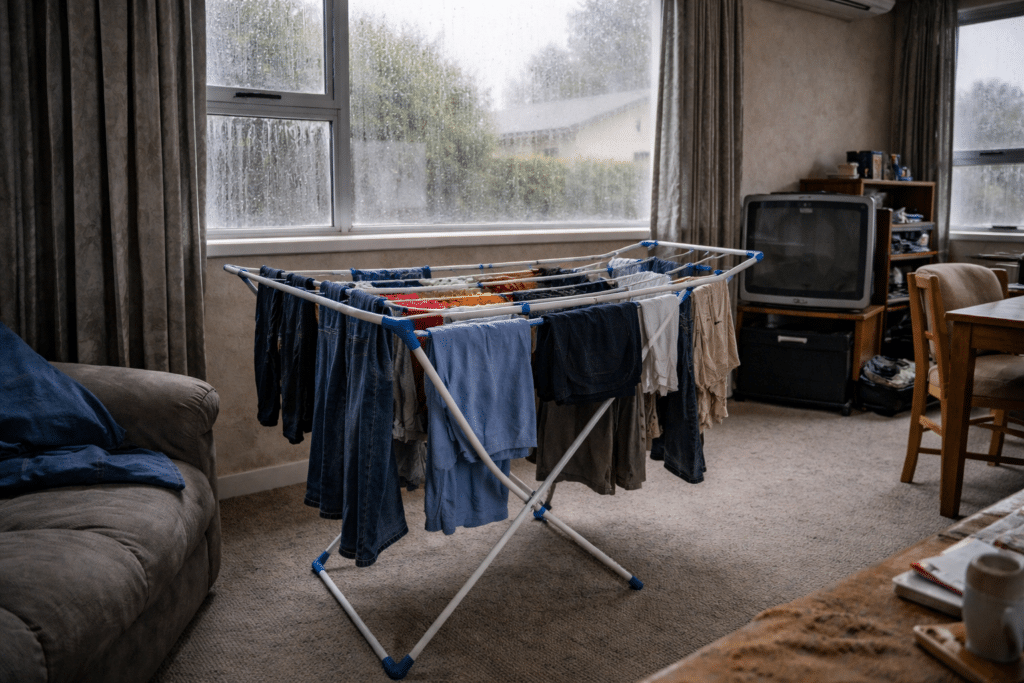
- Drying clothes on an indoor rack can add up to 5 litres of moisture per load
- Running unflued gas heaters adds up to a litre of water vapour per hour directly into the room
None of these habits are unusual. They are normal parts of daily life in most NZ households. The issue is not that people are doing anything wrong, it is that the home often cannot manage the moisture being produced, especially in winter when there is no ventilation helping to carry it away.
Factor Three: Moisture-Producing Areas
Bathrooms and kitchens are the two rooms that produce the most concentrated bursts of moisture, and how well those rooms are managed has a ripple effect through the entire home.
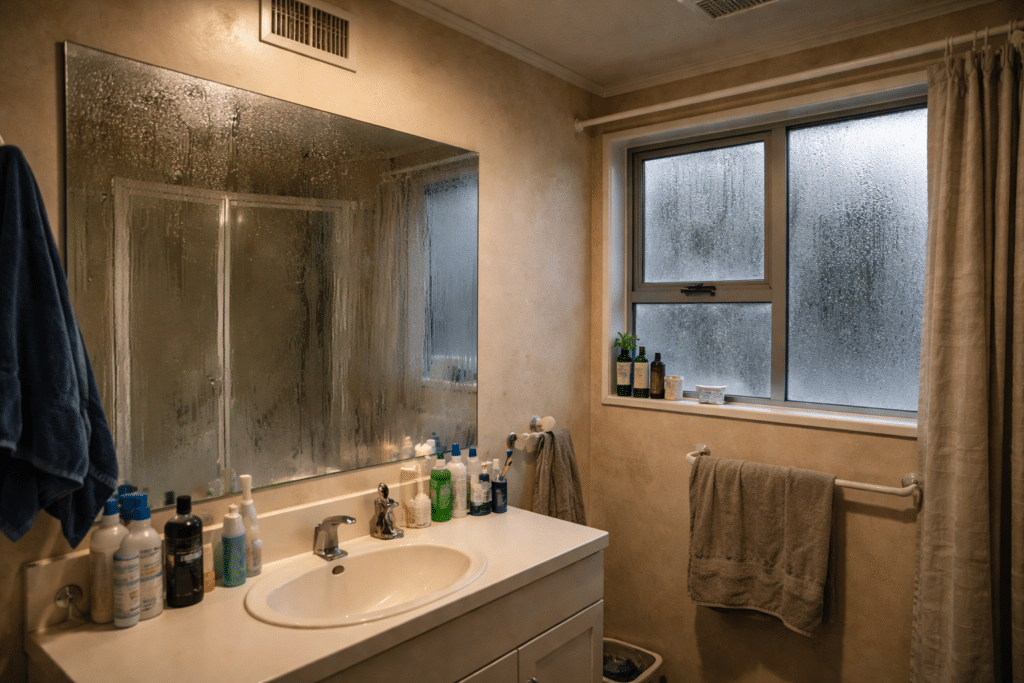
A single hot shower can add over a litre of moisture in under ten minutes. Bathrooms and cooking together can contribute 5 to 8 litres per day in a typical household, and if extraction is not running properly, that moisture migrates into every other room in the house.
The hallway, the bedrooms, the living areas, all absorb humidity that originated in the bathroom or kitchen hours earlier.
The kitchen is a persistent contributor because cooking happens multiple times a day, and gas cooking in particular adds combustion moisture on top of what evaporates from the food.
A rangehood that actually vents outside and gets used every time makes a measurable difference, but I regularly see homes where the rangehood is never turned on or where it recirculates filtered air back into the room rather than extracting it.
| Factor | What It Contributes | What You Can Control |
|---|---|---|
| Environment (climate and building) | Ambient humidity, cold surfaces, insulation level | Glazing upgrades, insulation, ventilation systems |
| People (occupants and habits) | Breathing moisture, daily activities, clothes drying | Habits, extraction use, drying clothes outside |
| Moisture-producing rooms | Concentrated humidity from showers and cooking | Extraction fans, lids on pots, rangehood use, closed doors |
When Condensation Crosses From Normal to a Problem
A small amount of condensation on windows first thing in the morning, particularly during the coldest part of winter, is common even in well-managed homes.
That level of condensation clears quickly as the house warms up and air starts moving, and it does not cause lasting damage.
Condensation becomes a problem when it is persistent, heavy, or widespread. Windows streaming with water every morning, damp patches on walls that do not dry, mould establishing in corners and on ceilings, musty smells that build through the season, these are signs that the moisture balance in the home has tipped past what normal daily management can handle.
The distinction matters because the response is different. Light morning condensation on a cold window can usually be managed with simple habits. Persistent, whole-house condensation needs more systematic changes to airflow, heating, and moisture control to bring things back into balance.
What You Can Actually Change
You cannot change New Zealand’s climate, and you cannot stop people from breathing. But you can change how the home manages moisture, and that is where the results come from. The three practical levers are always the same.
Improve Ventilation
Moving humid air out and bringing drier air in is the most effective change for most homes. A whole-house ventilation system does this continuously and automatically, which is particularly useful overnight when bedrooms are sealed and moisture from breathing accumulates.
Even simple steps like opening windows for 15 minutes each morning and running bathroom fans properly make a noticeable difference.
Heat Consistently
Cold surfaces are where condensation forms. Keeping the home at a steady, moderate temperature through the evening and overnight prevents walls and windows from dropping to the dew point.
A heat pump running at 18 degrees consistently is more effective than heating hard for an hour and switching off, because the goal is keeping surfaces warm rather than warming the room briefly.
Manage Daily Habits
Using extraction fans every time you shower or cook, keeping bathroom doors closed during and after showers, drying clothes outside whenever possible, and avoiding unflued gas heaters are all free changes that reduce the moisture load inside the home.
These habits compound over time and shift the balance away from conditions that produce condensation.
Frequently Asked Questions
Is some condensation acceptable?
A light mist on windows during the coldest mornings in winter is common even in well-ventilated homes. What is not acceptable is heavy, persistent condensation that leaves windows streaming, walls damp, and mould establishing. If the condensation clears quickly as the house warms up, the home is managing reasonably. If it persists through the day, the moisture balance needs attention.
Do new builds get condensation too?
Yes. New builds are more airtight than older homes, which is great for energy efficiency but means moisture produced inside has fewer escape routes. If ventilation is not adequate, humidity builds up and condensation can appear even in a home that is only a year or two old.
Why does my neighbour's house seem drier than mine?
Differences in occupancy, habits, heating patterns, ventilation, and building age all contribute. A home with fewer occupants, better insulation, a ventilation system running, and consistent heating will produce far less visible condensation than a similar home without those factors, even in the same street and the same climate.
Can I fix condensation without spending money?
Many of the most effective changes are free. Opening windows briefly each morning, using extraction fans properly, keeping bathroom doors closed after showers, drying clothes outside, and leaving bedroom doors slightly ajar overnight all reduce indoor humidity. These habit changes alone can make a visible difference within days.