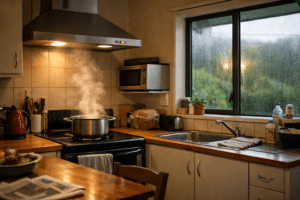
If you have ever wondered where all the moisture in your home is actually coming from, the answer is usually standing in the kitchen or the bathroom.
These two rooms produce more humidity per hour than any other space in the house, and in a typical NZ home during winter, they are the primary drivers of the condensation that shows up on windows and walls throughout the rest of the house.
After more than a decade in ventilation and moisture control across NZ homes, I can say that getting bathroom and kitchen moisture under control is the single highest-impact change most households can make.
The volumes are bigger than people expect, and the flow-on effects reach further than most realise.
Quick Summary
- A single hot shower adds 1 to 1.5 litres of moisture to the air in under ten minutes
- Cooking on a gas hob without lids can add up to 3 litres of moisture per day
- Bathroom and kitchen moisture does not stay in those rooms; it migrates through the house and settles on cold surfaces elsewhere
- Running extractor fans during and for 15 minutes after the activity is the most effective way to capture moisture at the source
- Keeping bathroom and kitchen doors closed during moisture-producing activities stops humidity from spreading to the rest of the home
- Gas cooking produces more moisture than electric because combustion releases water vapour as a byproduct
- Most whole-house condensation problems can be traced back to poor extraction in bathrooms and kitchens
How Much Moisture Bathrooms and Kitchens Produce
The numbers are worth understanding because they explain why these two rooms have such an outsized impact on the rest of the house. Most people underestimate how much water goes into the air from everyday activities.
| Activity | Approximate Moisture Output | Duration |
|---|---|---|
| Hot shower | 1 to 1.5 litres | 10 minutes |
| Full hot bath | Up to 2 litres | While water is exposed |
| Boiling water on stove, no lid | Up to 1.5 litres | 30 minutes |
| Cooking a full meal on gas hob | 1 to 2 litres | 45 to 60 minutes |
| Running a dishwasher (open at end) | 0.5 to 1 litre | When opened hot |
| Wet towels left in bathroom | 0.3 to 0.5 litres | Over several hours |
In a typical household, the combined bathroom and kitchen output can reach 5 to 8 litres per day, and on a cold winter day when the house is sealed up, almost all of that moisture stays indoors.
That is a significant volume of water entering the air with nowhere to escape, and it is a major driver of condensation in NZ homes during the colder months.
Bathroom Moisture in Detail
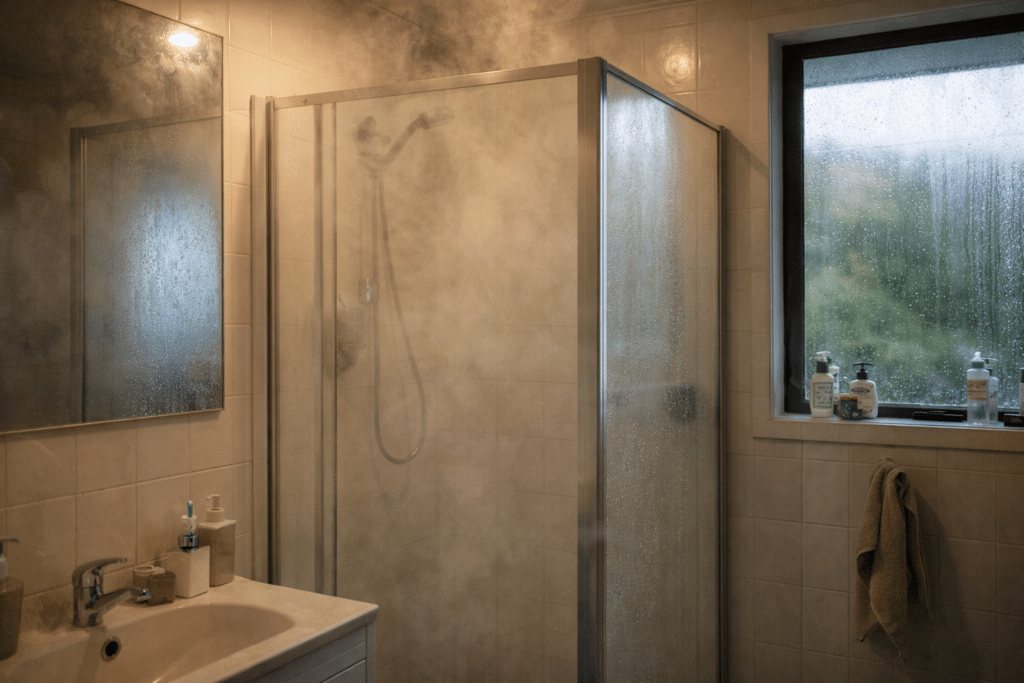
Bathrooms produce moisture in concentrated bursts. A hot shower pumps steam into a small enclosed space very quickly, and if there is no extraction running or the door is open, that moisture spreads through the house within minutes.
The Shower Effect
A ten-minute hot shower produces roughly 1 to 1.5 litres of moisture as steam. In a bathroom that might only be 5 or 6 square metres, that is an enormous amount of humidity packed into a tiny space.
If the bathroom door is open, that warm, humid air drifts straight into the hallway. Within minutes, it can reach bedrooms, living areas, and other rooms with poor airflow.
That is often why people notice window condensation in rooms far from the bathroom, even though the bathroom itself clears quickly once the steam dissipates.
After the Shower
The moisture does not stop when the shower turns off. Wet walls, wet shower screens, and damp towels continue evaporating moisture into the room for a long time after the shower is over.
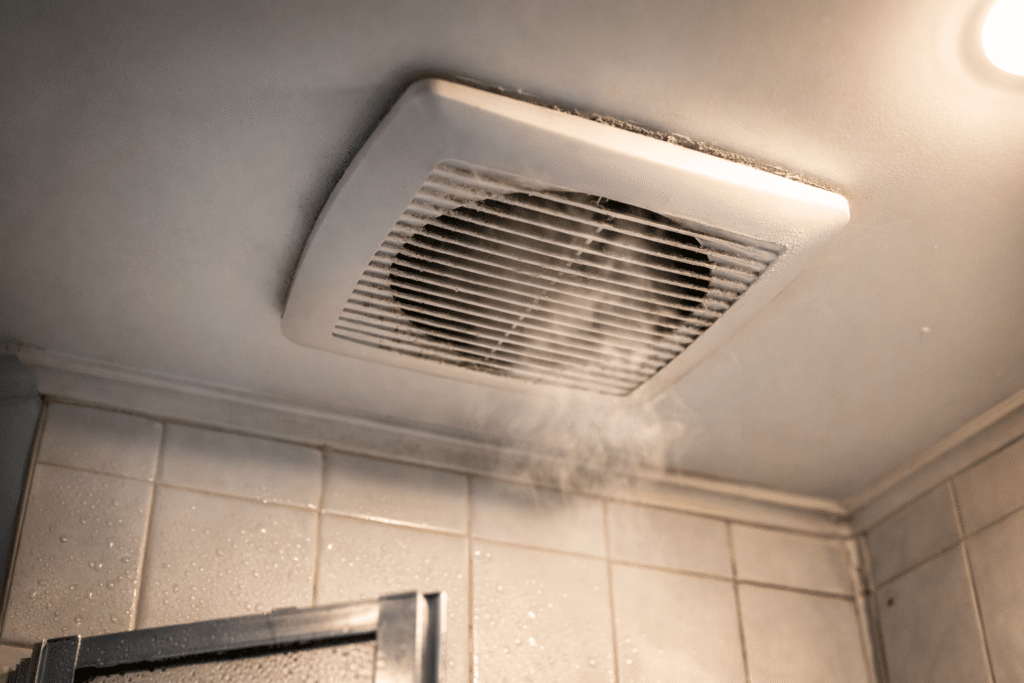
This ongoing evaporation is why running the extractor fan for at least 15 minutes after you finish showering is so important. Stopping the fan the moment you step out leaves most of the moisture still in the air.
Kitchen Moisture in Detail
Kitchens produce moisture differently from bathrooms. Instead of a single burst, cooking tends to produce a steady stream of moisture over a longer period, often unnoticed because the steam is less dramatic than a hot shower.
Gas vs Electric Cooking
This distinction matters. Gas hobs produce water vapour as a direct byproduct of combustion, so for every hour of gas cooking, the burner releases moisture on top of whatever is evaporating from the food.
Electric cooking produces no combustion moisture. In homes with gas cooking and no rangehood, the kitchen can add 2 to 3 litres of moisture per day from meal preparation alone.
The Lid and Rangehood Factor
Two of the simplest kitchen changes make a disproportionate difference. Using lids on pots while cooking traps steam and reduces the moisture released into the room by a significant margin.
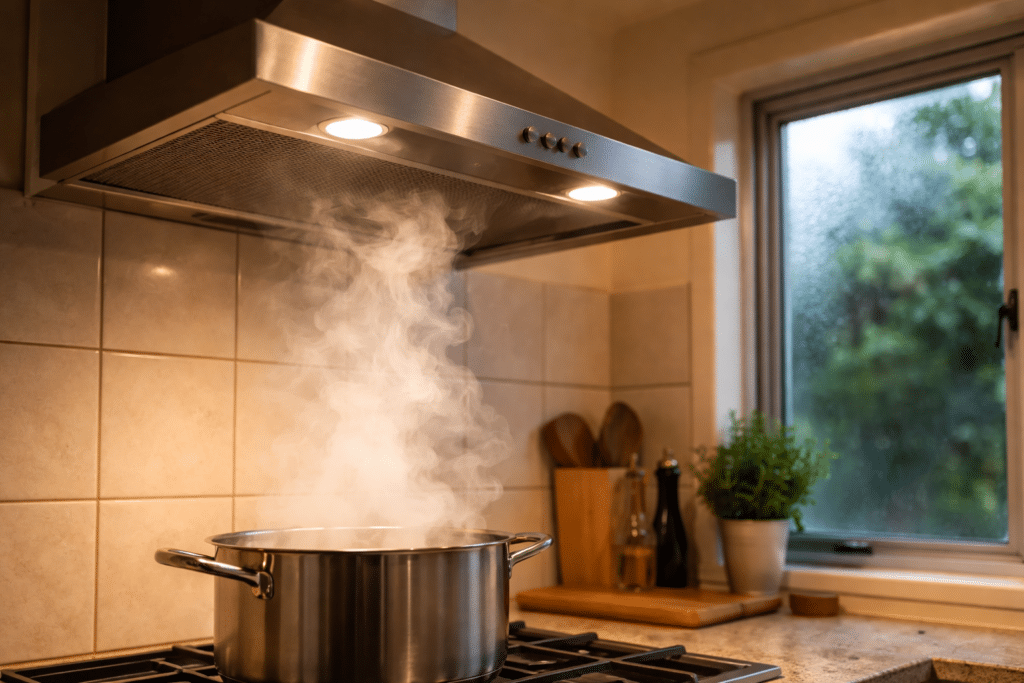
Running the rangehood while cooking captures steam at the source and vents it outside before it can spread.
I see a lot of homes where the rangehood is there, but never gets turned on. Like the bathroom fan, running the rangehood for 10 to 15 minutes after cooking finishes clears the residual moisture that is still hanging in the air.
Where the Moisture Goes
Moisture produced in these rooms does not stay contained. Warm, humid air drifts through doorways, hallways, and gaps under doors, reaching rooms at the other end of the house.
That migrating moisture is why bedroom condensation builds up overnight even when no one has showered or cooked for hours. The humidity from earlier in the day has spread through the house and settled into the air in every room.
When the house cools overnight, that moisture condenses on the coldest surfaces, usually windows first, then walls and ceilings.
Mould that develops on bathroom and kitchen ceilings is a direct result of this moisture cycle. Warm steam rises, hits the cold ceiling surface, and deposits moisture that sits long enough for mould to establish.
Practical Steps to Control It
The good news is that bathroom and kitchen moisture is among the easiest to manage because it is concentrated and predictable. You know when it happens, and the tools to control it are straightforward.
- Run the bathroom extractor fan every time you shower, and leave it on for at least 15 minutes after you finish
- Keep the bathroom door closed during and after showering to contain the moisture in one room
- Use lids on pots and pans while cooking to reduce steam released into the kitchen
- Run the rangehood while cooking and for 10 to 15 minutes afterwards
- Wipe down shower walls and screens after use to remove standing water before it evaporates
- Open the dishwasher carefully at the end of its cycle and let the steam escape toward the rangehood rather than into the room
- Hang wet towels in a ventilated area rather than bunching them in a closed bathroom
None of these costs anything, and in combination, they can cut bathroom and kitchen moisture by a meaningful amount. That reduction flows through to the rest of the house, which is why getting these two rooms right is such an important part of managing condensation through winter.
The Ventilation Connection
In homes with a whole-house ventilation system, the positive pressure supports bathroom and kitchen extraction by keeping air flowing toward those exhaust points.
That means the extractor fans work more efficiently, and moisture is less likely to linger because the overall airflow pattern is working in the right direction.
Without whole-house airflow, the extraction fans work in isolation against still air. They pull moisture out of one room, but the rest of the house may still hold high humidity from earlier in the day.
That is why extraction at the source and whole-house ventilation work best together.
Frequently Asked Questions
Does electric cooking produce less moisture than gas?
Yes. Electric cooking only produces moisture from the food being cooked, while gas hobs also produce water vapour from combustion. The difference can be significant, especially in homes that cook frequently and do not use a rangehood consistently.
How long should I run the extractor fan after showering?
At least 15 minutes after you finish. The air is still loaded with moisture when the shower turns off, and stopping the fan immediately leaves most of that humidity in the room. A timer switch makes this automatic and easy to maintain.
Does opening a kitchen window help with cooking moisture?
It can help, but it is less effective than a rangehood because it relies on passive airflow. On a still day or when the wind is blowing toward the window rather than away from it, an open window does very little. A rangehood actively pulls steam out and is more reliable in all conditions.
Can bathroom moisture cause mould in bedrooms?
Yes, and it does regularly. If the bathroom door is open during or after a shower, the humid air travels down the hallway and into bedrooms where it settles on cold surfaces. Keeping the bathroom door closed and running the fan properly are the two most effective ways to prevent this.