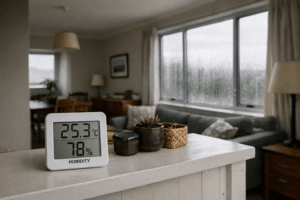
This is one of the questions I get asked most often. Someone is dealing with streaming windows, damp walls, or mould that keeps returning, and they want to know if a dehumidifier will fix it.
The short answer is that a dehumidifier can help manage the symptoms, but on its own, it rarely solves the underlying problem.
After more than a decade working across ventilation, heat pumps, and building performance in NZ homes, I have seen dehumidifiers used well, and I have seen them used as a band-aid that delays a proper fix.
The distinction matters because it affects how much money you spend, how much energy you use, and whether the condensation actually stops.
Quick Summary
- Dehumidifiers reduce moisture in the air, which can reduce condensation on surfaces in the room where they are running
- They do not move air through the home, address cold surfaces, or replace stale air with fresh air
- A dehumidifier in the hallway does very little for a closed bedroom where condensation builds overnight
- Dehumidifiers work best as a supplement to proper ventilation, not as a replacement for it
- In homes with severe condensation, a dehumidifier alone will struggle to keep up with the moisture being produced
- Addressing the root cause, which is usually poor airflow combined with high indoor humidity, delivers more lasting results
How a Dehumidifier Works
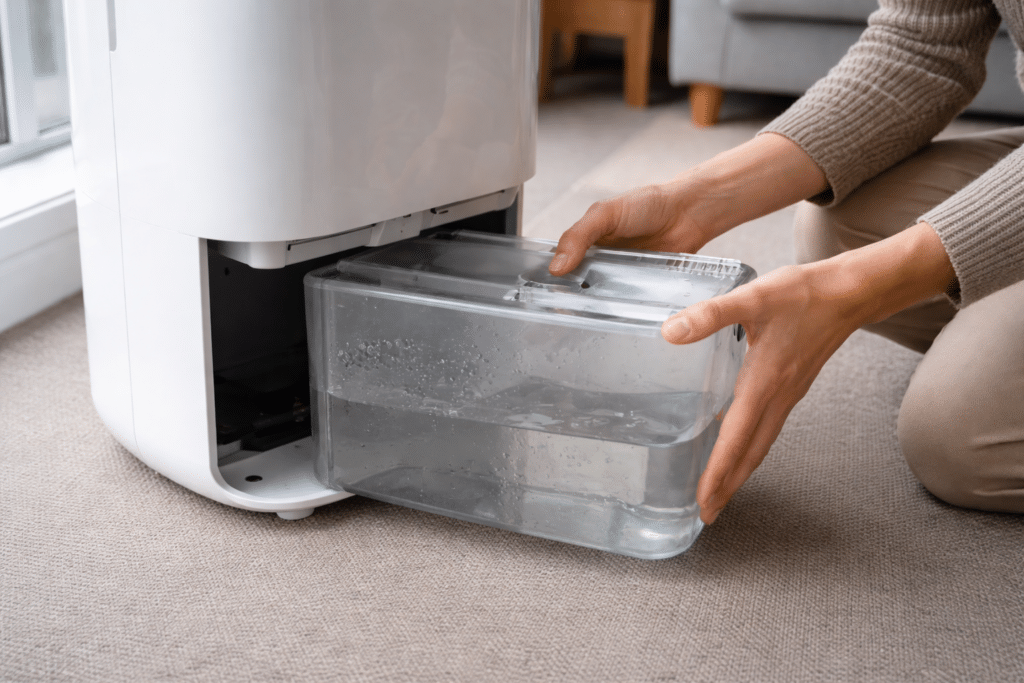
A dehumidifier pulls humid air from the room and passes it over a cold coil inside the unit. The moisture in the air condenses on that coil, just as it does on a cold window, and drips into a collection tank. The drier air is then pushed back into the room.
The result is that indoor humidity drops, and with less moisture in the air, there is less moisture available to condense on cold surfaces.
It is a straightforward process and works in the room where the unit is operating. The limitation is that a dehumidifier only affects the air it can reach. In a closed bedroom down the hallway, or in a bathroom with the door shut, the dehumidifier running in the lounge is having no impact at all on the moisture building up in those spaces.
What a Dehumidifier Can Do
Used in the right context, a dehumidifier genuinely helps. Here are the situations where it makes the most difference:
- Reducing humidity in a specific room where moisture is high, such as a laundry area or a room where clothes are drying indoors
- Taking the edge off winter humidity in the main living area when used alongside heating
- Supporting a home during a short-term moisture event, like after a leak or flooding, where you need to dry the space out quickly
- Supplementing ventilation in a home that already has some airflow but needs a bit more moisture removal in certain areas
In these situations, the dehumidifier is doing what it is designed to do, pulling moisture out of the air in a contained space.
The keyword is supplementing.
It works best when the home already has some form of airflow and the dehumidifier is addressing a specific, localised moisture issue rather than trying to compensate for a whole-house problem.
What a Dehumidifier Cannot Do
This is where the gap between expectation and reality shows up. I regularly visit homes where a dehumidifier has been running for months, and the condensation is still just as bad. That is not because the machine is faulty; it is because it is being asked to do things it was never designed for.
It Does Not Move Air Through the Home
A dehumidifier recirculates air within a room, but it does not bring fresh air in or push stale air out. In a home where the condensation problem is driven by poor ventilation, the dehumidifier is treating a symptom while the cause remains untouched. The stale, moisture-laden air stays in the home, and new moisture from cooking, showering, and breathing keeps being added faster than the dehumidifier can remove it.
It Does Not Warm Cold Surfaces
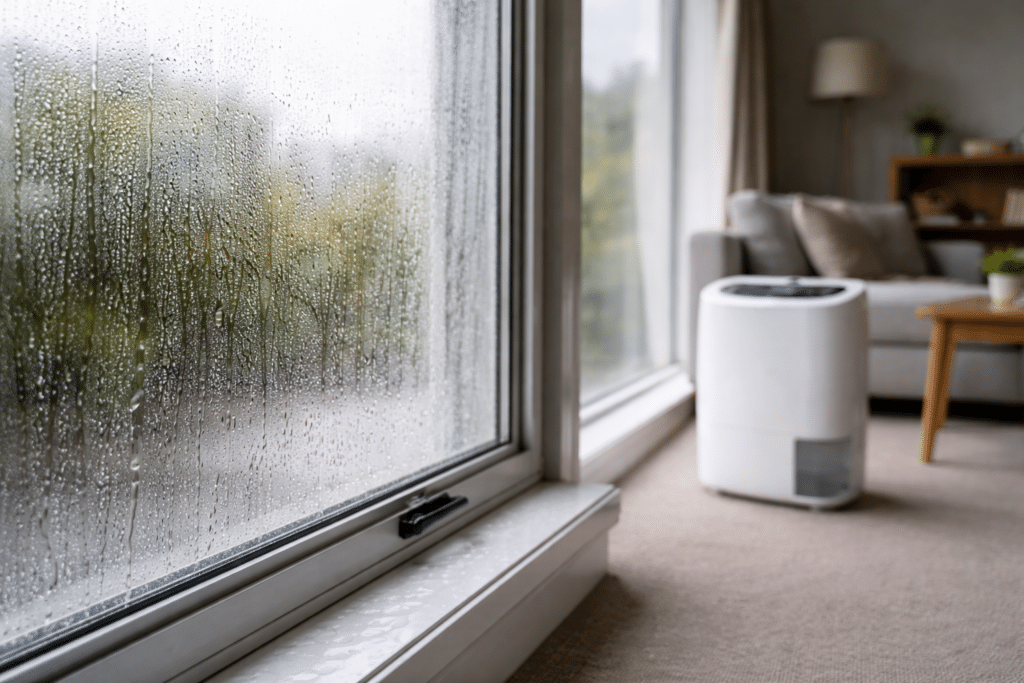
Condensation forms when warm, humid air meets a cold surface. A dehumidifier reduces the humidity side of that equation, but it does nothing about the temperature of the walls, windows, or ceilings. In a home with single-glazed windows and uninsulated walls, those surfaces are still going to be cold enough to trigger condensation even if the humidity is somewhat lower. The dehumidifier lowers the risk, but it does not eliminate it if the surfaces stay cold.
It Only Works Where It Is Running
A dehumidifier in the lounge does not dry the air in the bedrooms. Bedroom condensation builds up overnight because doors are closed and moisture from breathing accumulates in a sealed space. The dehumidifier down the hall cannot reach that air, which means the bedroom windows still stream every morning regardless of what is happening in the rest of the house.
Dehumidifier vs Ventilation
This is the comparison most people are really making when they ask about dehumidifiers. A whole-house ventilation system does something fundamentally different.
Instead of just removing moisture from the air in one room, it continuously exchanges the air throughout the entire home, pushing drier filtered air in and allowing stale humid air to escape.
That means every room benefits, including closed bedrooms overnight, bathrooms after showers, and kitchens during cooking. The air is not just drier, it is also fresher, because stale indoor air is being replaced rather than recirculated.
A dehumidifier is a reactive tool. It deals with moisture that is already in the air. Ventilation is a proactive approach. It prevents moisture from building up in the first place by keeping air moving and maintaining a lower baseline humidity across the whole house.
In homes where condensation peaks through winter, ventilation addresses the root cause while a dehumidifier manages the effect.
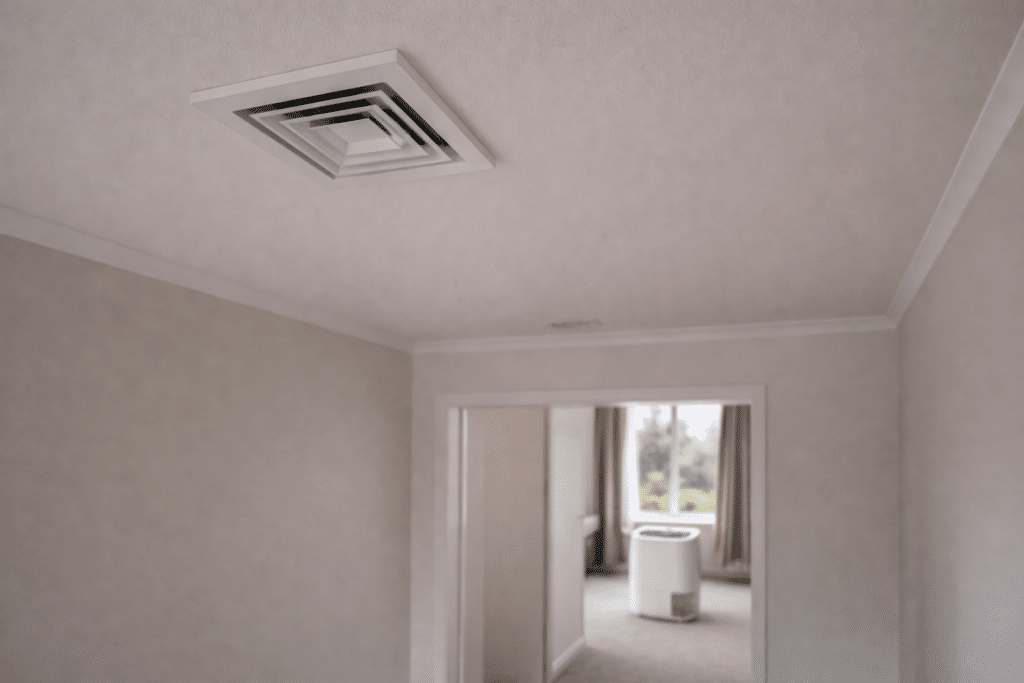
When a Dehumidifier Makes Sense
I am not against dehumidifiers. They are a useful tool in the right situation. A dehumidifier makes sense when you need targeted moisture removal in a specific room, when you are supplementing an existing ventilation setup, or when you need a short-term solution while a more permanent fix is being arranged.
In rental properties where tenants have limited control over the building, a dehumidifier combined with good bathroom extraction habits can make a meaningful difference to daily comfort.
What does not make sense is that it is the only response to a whole-house condensation problem. If every window in the home is streaming, if mould is appearing in multiple rooms, and if the air feels damp and heavy through winter, a dehumidifier in the corner is treating the symptom while the cause grows quietly behind it.
Frequently Asked Questions
Will a dehumidifier stop my windows fogging up?
It can reduce fogging in the room where it is running, but it will not eliminate it if the windows are cold and humidity is high. A dehumidifier lowers the moisture level, but cold surfaces still attract condensation, especially overnight in closed rooms the dehumidifier cannot reach.
Can I use a dehumidifier and a ventilation system together?
Yes, and in some homes that combination works well. The ventilation system handles whole-house airflow and baseline humidity, while the dehumidifier provides extra moisture removal in a specific problem area like a laundry or drying room.
How big a dehumidifier do I need?
That depends on the room size and how much moisture is being produced. For a typical NZ living area, a unit rated for 12 to 16 litres per day is usually sufficient. For larger spaces or very damp homes, a 20-litre-plus unit may be needed, though at that point it is worth considering whether ventilation would be more cost-effective.
Is a dehumidifier cheaper than a ventilation system?
The upfront cost is lower, but the ongoing running costs and limited coverage mean it can end up costing more over time for a partial result. A ventilation system has a higher install cost but lower running costs, covers the whole home, and addresses the root cause rather than just the symptom.