Double glazing is one of the most common upgrades people make when they are trying to fix a condensation problem. And it does help, genuinely.
But I regularly visit homes where brand-new double glazing has been installed and the homeowner is frustrated because condensation is still appearing. The expectation was that new windows would solve the problem. The reality is more nuanced than that.
After more than a decade working across energy auditing, ventilation, and energy efficiency in NZ homes, I have seen this scenario many times.
Double glazing is an excellent improvement, but it addresses one part of the condensation equation while leaving the others untouched.
Quick Summary
- Double glazing keeps the inner glass pane warmer, which significantly reduces condensation on the glass itself
- Aluminium frames without a thermal break still conduct cold and attract condensation even when the glass is dry
- Double glazing does not remove moisture from the indoor air, so if humidity stays high, condensation finds the next coldest surface
- Many homes with new double glazing still get condensation because the indoor humidity has not changed
- The moisture that used to show up on the glass may shift to walls, corners, or ceilings once the windows are upgraded
- Double glazing works best when paired with adequate ventilation and consistent heating
- Windows are the most visible condensation surface, but they are rarely the cause of the underlying moisture problem
What Double Glazing Actually Does for Condensation
A double-glazed window has two panes of glass with an insulating gap between them, usually filled with air or argon gas. That gap prevents the inner pane from getting as cold as a single pane would.
On a winter night when outside temperatures drop, the inner surface of a double-glazed window stays significantly warmer than that of single-glazed windows, which means the air around it needs to be much more humid before condensation forms on the glass.
The improvement is real and measurable. In most conditions, double glazing reduces visible glass condensation by 60-80% compared to single glazing.
That is a substantial difference, and for many homes it is enough to eliminate the worst of the morning window streaming. The problem comes when people assume that eliminating window condensation means they have eliminated the moisture problem.

The Frame Problem
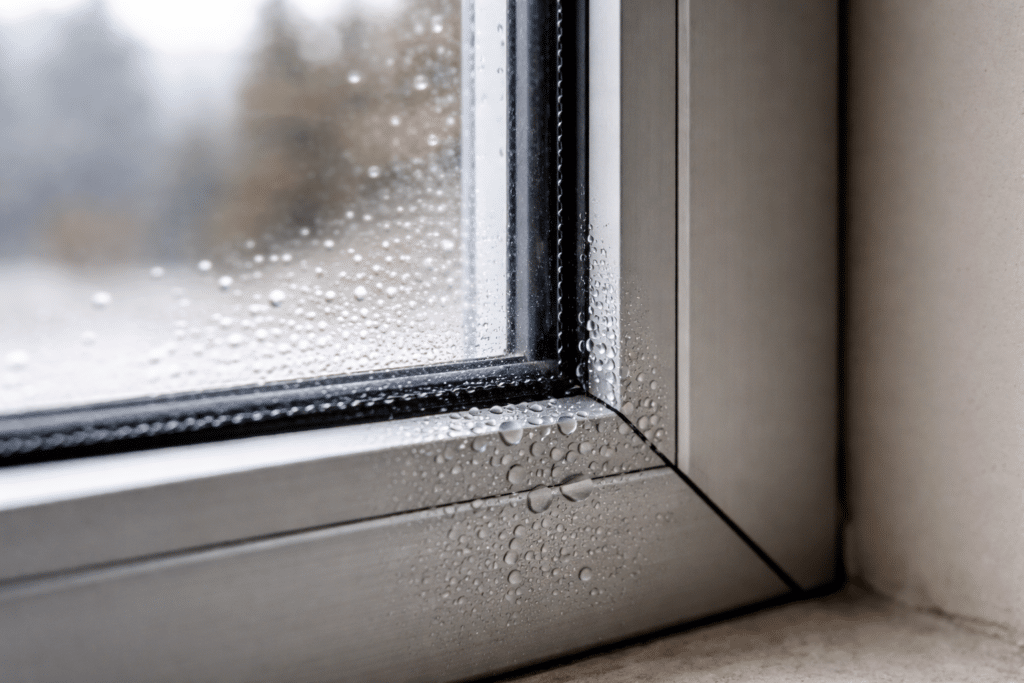
This is one of the most common complaints I hear after a double-glazing upgrade. The glass is clear and dry, but the aluminium frame around it is dripping with condensation. People find this confusing because the window is supposed to be fixed, so why is the frame wet?
The answer is that standard aluminium frames conduct cold extremely efficiently. The frame transfers outside temperature straight through to the inside surface, which means the frame itself stays cold even though the double-glazed glass is warm.
The moisture in the air simply moves from the glass, which is no longer cold enough to trigger condensation, to the frame, which still is.
Thermally broken aluminium frames solve this by incorporating an insulating strip within the frame profile that interrupts the cold path. Timber frames naturally insulate better than aluminium and rarely show frame condensation.
But standard aluminium frames, which are still the most common type installed in NZ, leave the condensation problem partially unresolved even with excellent double-glazed units.
The Humidity Has Not Changed
This is the fundamental point that most people miss. Double glazing changes the temperature of the glass surface. It does not change the amount of moisture in the air.
A household that produces 10 to 15 litres of moisture per day from breathing, cooking, showering, and drying clothes still produces that same volume whether the windows are single- or double-glazed.
With single glazing, the windows were the coldest surface, so they collected the condensation first and most visibly. With double glazing, the windows are warmer, but the moisture is still in the air. It has to go somewhere.
In many homes that upgrade to double glazing without improving ventilation, the condensation shifts from the windows to the next coldest surfaces, which are typically exterior wall corners, ceiling edges, and areas behind furniture where airflow is poor.
The mould that appears on ceilings and in corners after a double glazing upgrade is a direct result of this shift. The moisture that was visible on the glass, where it could be wiped away, has moved to surfaces where it sits unnoticed until mould establishes. In a way, the condensation was easier to manage when it was on the windows because at least it was visible.
Where Condensation Moves After a Glazing Upgrade
The pattern is consistent across the homes I visit. Once the windows are no longer the primary condensation target, the moisture finds alternative surfaces.
| Surface | Why It Gets Condensation |
|---|---|
| Aluminium window frames | Still cold because standard aluminium conducts temperature through the frame |
| Exterior wall corners | Walls lose heat at corners where two cold surfaces meet, creating the coldest spot in the room |
| Ceiling edges along exterior walls | Warm air rises and meets the cold junction between ceiling and wall |
| Behind wardrobes and headboards | Furniture blocks warm air from reaching the wall, creating a cold, still pocket |
| Curtain linings | Heavy curtains trap cold air against any remaining cold surface, absorbing moisture |
None of these surfaces are new condensation targets. They were always vulnerable, but the windows were collecting the bulk of the moisture before the upgrade. With warmer glass, the moisture redistributes across the next tier of cold surfaces.
Important Factors
Double glazing is most effective when it is part of a system rather than a standalone fix. The two pieces that complete the picture are ventilation and consistent heating.
Ventilation
This is the part that actually removes moisture from the air. A whole-house ventilation system continuously exchanges humid indoor air for drier filtered air, lowering the total moisture level across every room.
With less moisture in the air, there is less available to condense on any surface, whether that surface is a window, a wall, or a ceiling.
Even basic steps like opening windows briefly each morning and running extraction fans in bathrooms and kitchens help reduce the humidity that double glazing alone cannot address.
Consistent Heating
Keeping the home at a steady, moderate temperature through the evening and overnight prevents surfaces from cooling to the dew point.
Double glazing keeps the glass warm, but the walls and ceilings still cool down when the heating is off. In bedrooms that seal up overnight, consistent low-level heating prevents the sharp temperature drop that triggers condensation on every surface the glass no longer collects it on.
Is Double Glazing Still Worth It?
Absolutely. Double glazing is one of the most impactful single upgrades for thermal comfort and condensation reduction.
A home with double glazing is warmer, quieter, and far less prone to the heavy morning window streaming that causes condensation in NZ homes through winter.
The glass itself performs dramatically better than single glazing, and that matters for both comfort and protecting window sills and frames from water damage.
The point is not to discourage double glazing but to set realistic expectations. It is an excellent part of the solution. It is not the entire solution. Paired with adequate ventilation and consistent heating, double glazing delivers the results homeowners are hoping for.
Without those two companions, it delivers a partial improvement that can leave people wondering why they still have a moisture problem.
Frequently Asked Questions
Why is my double-glazed window frame wet but the glass is dry?
Standard aluminium frames conduct cold straight through the metal, so the frame surface stays cold even though the insulated glass unit keeps the glass warm. The moisture in the air condenses on the frame because it is now the coldest part of the window. Thermally broken frames solve this by interrupting the cold path through the metal.
Can double glazing make condensation worse in other areas?
It does not create new moisture, but it can redirect where existing moisture settles. If the humidity in the home stays the same after the upgrade, the condensation that was visible on the glass may shift to walls, corners, and ceilings. Improving ventilation prevents this by reducing the total moisture level in the air.
Should I get thermally broken frames?
If condensation control is a priority, thermally broken frames are a worthwhile upgrade. They cost more than standard aluminium but significantly reduce frame condensation, which is the most common remaining issue after switching to double glazing. The combination of double-glazed units and thermally broken frames gives the best overall window performance for NZ conditions.
Will adding ventilation alongside double glazing solve the problem completely?
In most homes, yes. Double glazing keeps the glass warm, ventilation removes excess moisture from the air, and consistent heating keeps remaining surfaces above the dew point. Together, these three changes address the full condensation equation and deliver the dry, comfortable home that most people are hoping for when they invest in new windows.