Musty Smells in Bedrooms
A musty bedroom has a distinct feel. You notice it first thing in the morning, or when you open a wardrobe, pull back curtains, or walk into a room that has been shut overnight.
In most New Zealand homes, that smell is less about dirt and more about moisture sitting too long in still air.
I have seen this across hundreds of homes, from older villas to newer builds, and after years working across energy audits, heat pumps, and ventilation systems, I can usually trace that smell back to the same small group of causes.
Bedrooms are where moisture, low air movement, cool surfaces, and soft furnishings tend to meet.
Quick Summary
- Musty bedroom smells usually point to trapped moisture and stale air rather than a one-off cleaning issue.
- Bedrooms are prone to this because doors stay closed, air movement drops, and moisture builds overnight, especially in New Zealand.
- The smell often gets stronger in winter and early morning because surfaces are colder and condensation lingers longer.
- Soft furnishings, wardrobes, curtains, and cold exterior walls often retain the smell, even when the room looks tidy.
- A musty smell without obvious staining can still mean hidden condensation is forming behind furniture or on window frames.
- Timing matters because smells that fade later in the day usually follow the daily moisture cycle inside the room.
- Quick cover-ups rarely change the underlying pattern if moisture and airflow are left the same.
Why Musty Smells Show Up in Bedrooms
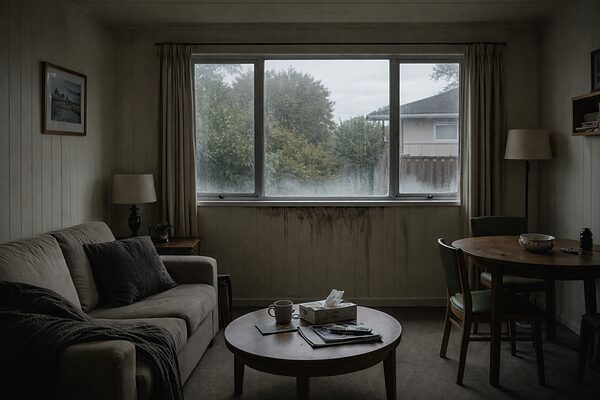
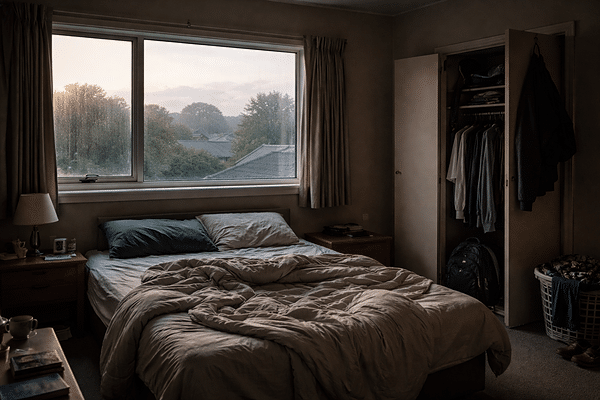
Bedrooms have a moisture pattern that catches people off guard. At night, the room is closed up, breathing adds moisture to the air, bedding holds warmth, and the coolest surfaces in the room, usually windows, wall corners, and parts of the ceiling, start pulling that moisture out of the air.
That is why I see the same pattern in homes already struggling with bedroom condensation, where the smell is strongest after a still night and weaker once the room has aired out. The smell is not random; it follows the room’s overnight moisture cycle.
Bedrooms also collect fabrics more than most rooms. Carpets, curtains, mattresses, clothes, and upholstered bedheads all hold a bit of dampness when humidity stays high for too long, and once that happens, the room starts to smell flat, stale, and slightly earthy even before you see marks on a surface.

Another reason is simple air stagnation. People often assume an open hallway or a cracked window somewhere else in the house is enough, but bedrooms can become little pockets of still air, especially when the door stays shut and there is no steady movement through the room.
The simple version of what ventilation actually does is move stale, moist indoor air out and replace it with drier air. When that exchange is weak, the room keeps recycling the same damp air and the smell hangs around.
What the Smell Is Usually Telling You
A musty smell is a clue, not a diagnosis on its own. In practice, it usually points to one of a few patterns, and the timing of the smell is often the best clue of all.
| Pattern | What I Usually Suspect | Where It Shows Up |
|---|---|---|
| Strongest in the morning | Night-time condensation and stale air | Windows, curtains, bedding, corners |
| Strongest in wardrobes or behind furniture | Low airflow against a cold surface | Exterior walls, backs of drawers, shoe storage |
| Present all day, even in dry weather | Moisture being held in fabrics or hidden surfaces | Carpet edges, blinds, under beds, around frames |
A lot of people mix this up with plumbing leaks or general dampness from elsewhere in the house. In reality, condensation, dampness, and leaks behave differently once you look at timing, location, and whether the smell shifts with weather and room use.
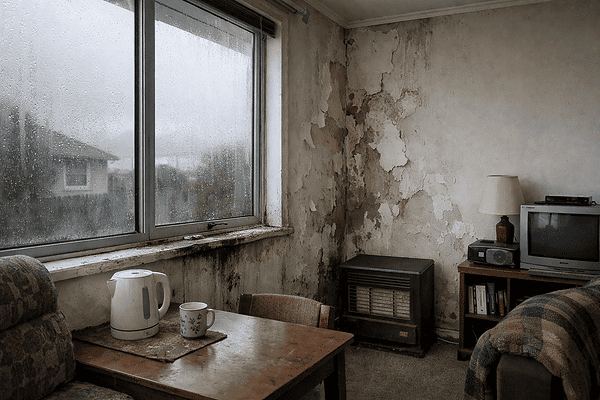
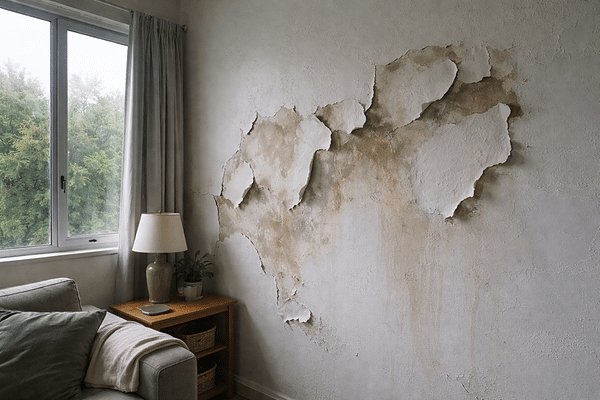
If the room smells musty but looks mostly clean, I start thinking about hidden moisture. That could be the back of a wardrobe, the base of curtains, the lower edge of a wall that stays cool, or window joinery that catches repeated overnight moisture.
That same trapped moisture is what feeds mould in NZ homes, especially in the quiet parts of a bedroom where air movement is weakest. You do not always see it first, but the smell often arrives before the marks become obvious.
Bedroom Features That Make It Worse
Some rooms are set up in a way that almost guarantees musty smells once winter arrives. I see it most often in bedrooms on the south side, which get little sun, have older aluminium joinery, and stay closed for long stretches.
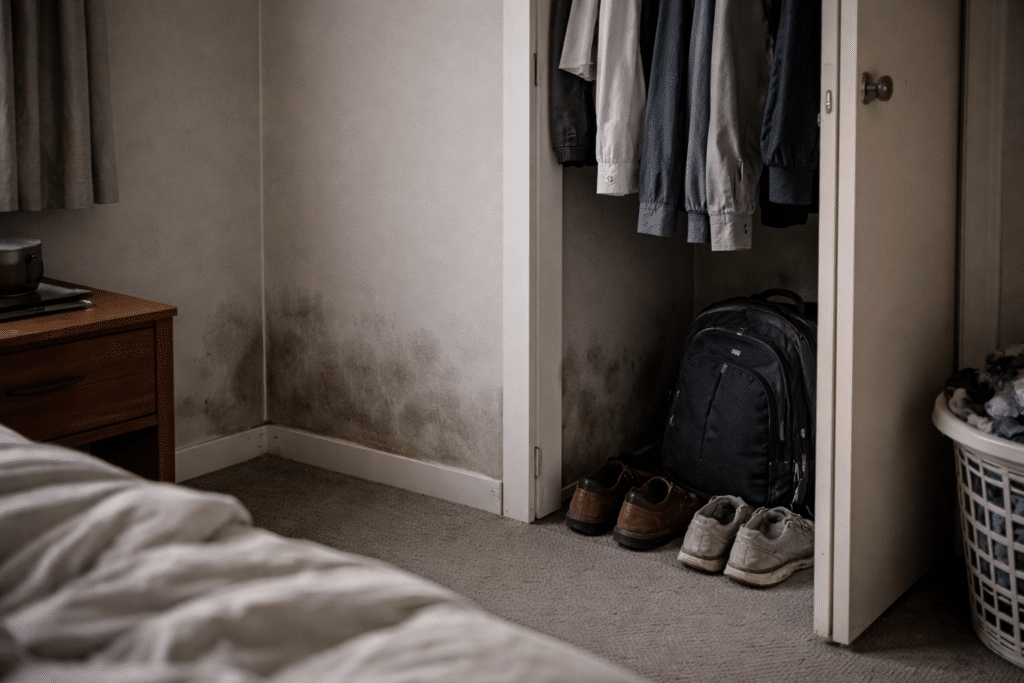
Furniture layout matters more than most people realise. A large bed, heavy curtains, a full wardrobe, or drawers pushed hard against an exterior wall all reduce air movement exactly where the room is already coolest.
The common room features that worsen the smell are usually these:
- closed doors overnight and for most of the day
- thick curtains that trap moisture around windows
- wardrobes and drawers tight against cold exterior walls
- under-heated rooms that never quite dry out
- single glazing or older frames that cool quickly at night
- clothes, shoes, and linen stored in low-airflow spaces
None of those things creates the smell on its own, but together they make a bedroom very good at holding moisture. Once that pattern sets in, the room can smell musty even after a tidy-up, because the issue is built into how the space behaves, not how clean it looks.
Why the Smell Gets Stronger in Winter and Early Morning
Winter sharpens everything. Indoor humidity often rises, windows stay shut longer, drying outside becomes harder, and bedrooms spend more hours sitting cool and still.
That is why so many musty bedrooms follow the same seasonal curve as winter condensation patterns around the home.
Early morning is when the room has had the longest uninterrupted stretch of moisture build-up. The air has been trapped for hours, the glass is cold, bedding has held warmth, and the room has not yet had sun, heating, or an air change to shift the balance.
By late morning, the smell often seems lighter. People sometimes take that as proof that nothing serious is going on, but really, it just means the room has warmed up enough for the moisture pattern to ease for a while.
What I Usually Find When I Inspect These Rooms
When I walk into a musty bedroom, I am not just looking for visible spots. I am reading the room, where the cold surfaces are, where airflow stalls, what the curtains are doing, whether the bed is boxed into a corner, and how the wardrobe sits against the wall.
Very often, the strongest clue is not on the main wall at all. It is behind furniture, inside a wardrobe, around the lower edge of curtains, on the frame of an aluminium window, or in the soft smell coming from the carpet near the exterior wall.
In older homes, the pattern is often more obvious because the room loses heat quickly and surfaces cool down faster. In newer homes, the smell can be subtler, but I still see it where the room is tightly shut and moisture has nowhere consistent to go.
Another common finding is that the rest of the house feels fine, which makes the bedroom smell seem mysterious. That happens because bedrooms are used differently from living areas. They get long closed periods, lower daytime airflow, and plenty of soft materials that hold odours once moisture has repeatedly sat there.
Where a home has whole-house ventilation or well-managed heating and air movement, bedrooms tend to stay much fresher. When the room is left to manage itself, the smell usually returns because the moisture cycle hasn’t really changed.
What Does Not Usually Change the Smell
The first response is often to mask the odour. Air fresheners, scented diffusers, and a quick wipe-down can make the room seem better for a few hours, but they rarely change the pattern that created the smell in the first place.
I also see people rely on one small action and expect the whole room to reset, such as opening a window briefly, running a heater for a short burst, or using a dehumidifier now and then. Those can help at the edges, but if the room still traps moisture overnight, the smell usually comes back.
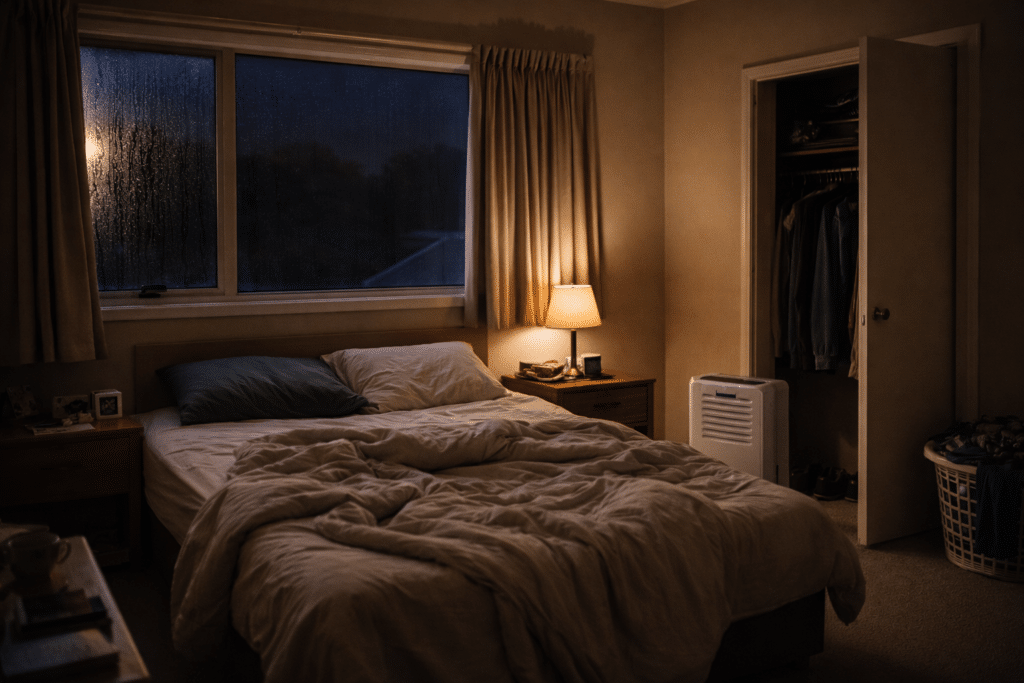
What changes the smell long term is not usually one product or one habit; it is the combination of moisture control, steadier warmth, and better air movement through the room. Once those pieces work together, the bedroom stops holding that damp, stale note.
Frequently Asked Questions
These are the questions I hear most often when a bedroom smells musty but the cause is not obvious yet.
Can a bedroom smell musty even if I cannot see mould?
Yes, quite often. The smell can come from moisture being held in fabrics, carpet, curtains, wardrobes, or on hidden surfaces before visible growth or staining becomes obvious.
Why does the smell seem worse when I first wake up?
That is usually the point when the room has gone the longest without fresh air movement. Overnight moisture has had time to build, cold surfaces have done their work, and the room has not yet warmed or dried out.
Is a musty bedroom always caused by condensation?
Not always, but condensation is one of the most common drivers in New Zealand bedrooms. The key is to look at timing, weather, room temperature, airflow, and whether the smell is strongest near windows, corners, soft furnishings, or storage against outside walls.
Why is the smell often strongest in wardrobes and drawers?
Because those spaces have even less air movement than the room itself. When they sit against a cool wall and stay closed for long periods, they become one of the easiest places for stale, damp air to linger.
In most cases, a musty bedroom is the room telling you it is holding moisture longer than it should. Once you read the pattern properly, the smell stops being random and starts making sense.