
If there is one thing I hear more than anything else, it is “why are my windows always wet?” Streaming glass in the morning, water pooling on sills, foggy panes that take half the day to clear.
It happens in old homes and new builds, in Auckland and Invercargill, and it is by far the most visible sign that something is off with the moisture balance inside the house.
After years working across ventilation, heat pumps, and energy efficiency in New Zealand and internationally, I can tell you that window condensation is almost never a window problem. The glass is just the messenger.
It is showing you what is happening with humidity and airflow inside the home, and once you understand that, fixing it becomes much more straightforward.
Quick Summary
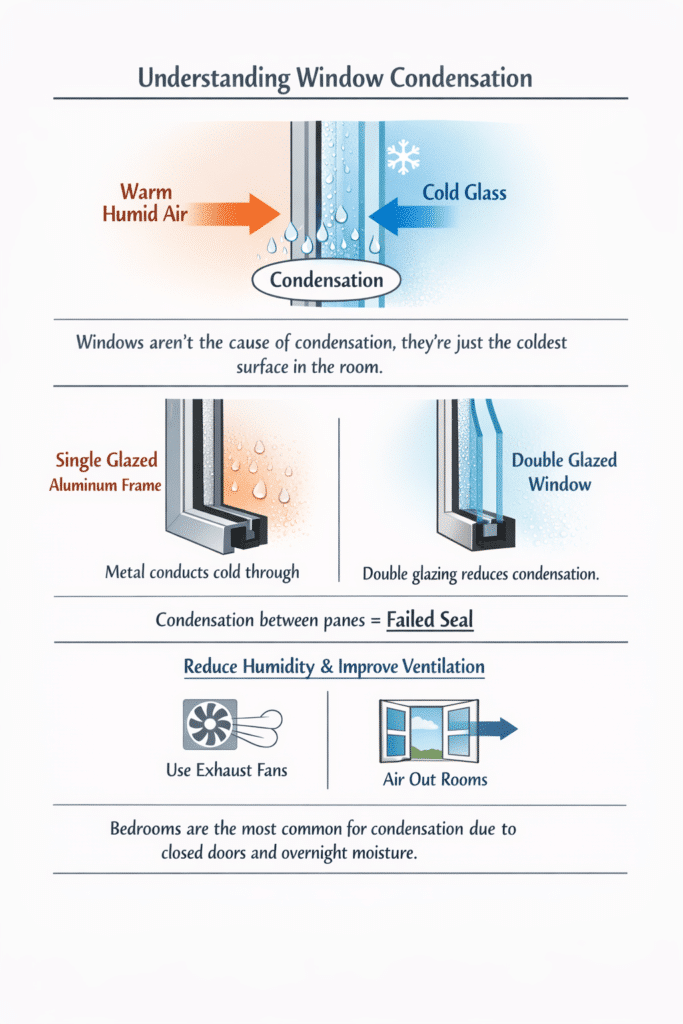
- Window condensation forms when warm, humid indoor air meets cold glass and the moisture turns to liquid water
- Windows are not the cause of condensation, they are simply the coldest surface in the room and show the problem first
- Single-glazed aluminium frames are the worst performers because metal conducts cold straight through
- Double glazing reduces window condensation significantly but cannot eliminate it if indoor humidity is too high
- Condensation between the panes of double glazing means the seal has failed, which is a different issue from surface condensation
- Improving ventilation and reducing indoor moisture sources are the most effective ways to stop windows fogging up
- Bedrooms are the most common room for window condensation because doors stay closed and moisture builds overnight
Why Windows Fog Up
The science is simple. Air can hold a certain amount of water vapour, and warmer air can hold more than cooler air. When warm, moist air inside your home touches a surface that is cold enough, the air cools below its dew point and releases its moisture as liquid water. That is condensation.
Windows are almost always the first surface to show condensation because glass is a poor insulator. It loses heat faster than walls, ceilings, or floors, so it reaches the dew point temperature before anything else in the room. The glass is not creating the moisture, it is just the first place where the moisture becomes visible.
This is an important distinction because it changes how you approach the fix. Replacing windows might help, but if indoor humidity stays high, you will still see moisture appearing on other cold surfaces, walls, corners, and ceiling edges.
The underlying issue is almost always condensation driven by indoor humidity rather than a fault with the glass itself.
Single Glazing vs Double Glazing
The type of window you have makes a big difference to how much condensation forms on the glass, even if it does not change the amount of moisture in the air.
Single-Glazed Aluminium Frames
This is the most common window type in older New Zealand homes, and it is also the worst performer for condensation. A single pane of glass has almost no insulating value, and the aluminium frame conducts cold extremely efficiently.
On a cold winter night, the inside surface of a single-glazed window can drop to just a few degrees above the outside temperature, which means it starts collecting moisture the moment indoor humidity rises even slightly.
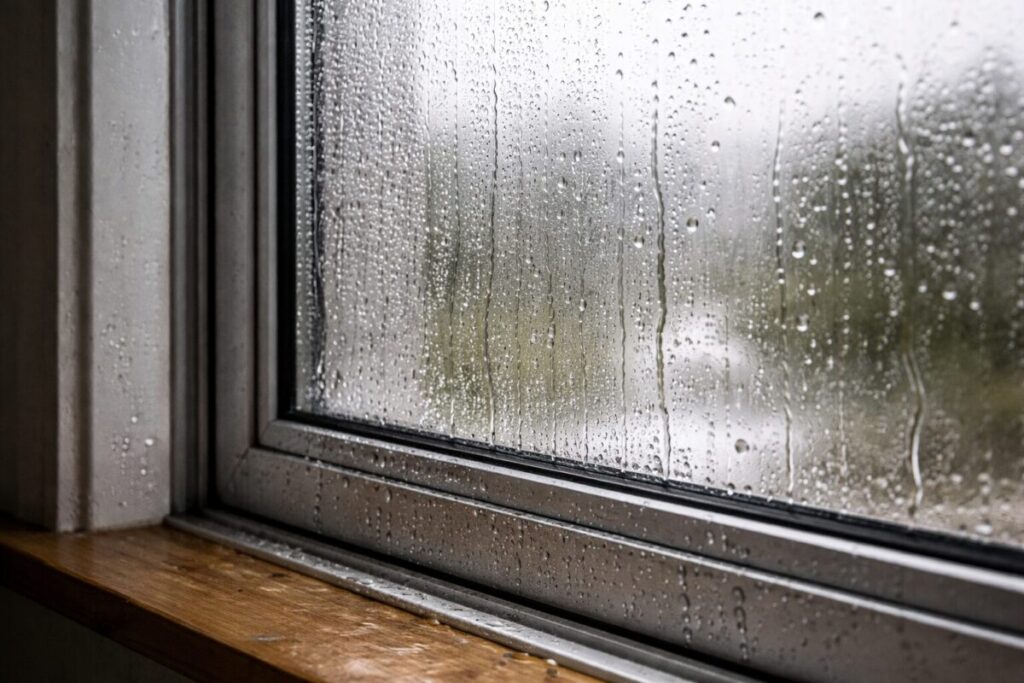
I regularly see single-glazed windows where the condensation is so heavy that water runs off the glass, pools on the sill, and drips onto the floor or into the wall cavity below.
Over time that repeated wetting can cause timber sills to soften, paint to peel, and mould to establish in places that are hard to reach.
Double-Glazed Windows
Double glazing makes a significant difference because the inner pane stays much warmer than single glazing. The air gap between the two panes acts as insulation, so the inside surface does not cool down as far and condensation is much less likely to form on the glass.
That said, double glazing is not a complete solution on its own. If indoor humidity is high, you can still get condensation on the frames, especially if the frames are aluminium without a thermal break.
And in very cold conditions or in rooms with poor ventilation, even double-glazed windows can fog up. It is a big improvement, but it works best alongside good airflow and moisture control.
| Window Type | Condensation Risk | Why |
|---|---|---|
| Single-glazed aluminium | Very high | Glass and frame both conduct cold rapidly |
| Single-glazed timber | High | Glass is cold, timber frame slightly better than aluminium |
| Double-glazed aluminium (no thermal break) | Moderate | Glass stays warmer, but frame still conducts cold |
| Double-glazed with thermal break | Low | Both glass and frame stay warmer |
Condensation Between the Panes
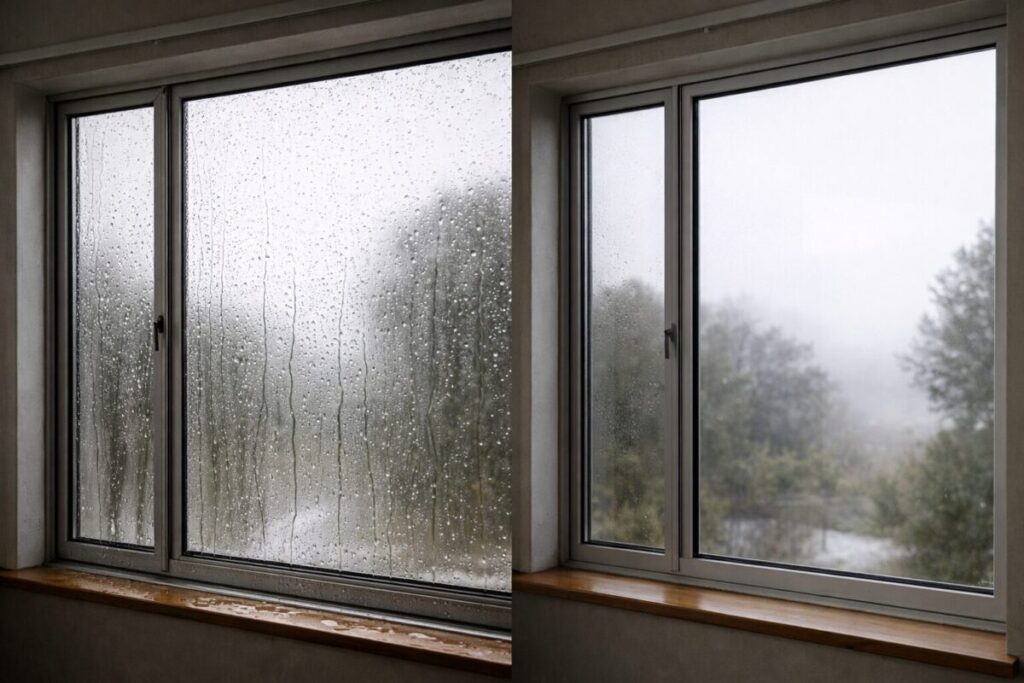
If you are seeing moisture or fogging between the two panes of a double-glazed unit, that is a different problem entirely. It means the seal around the edge of the glass unit has failed and outside air with its own moisture content has gotten into the gap.
This is a manufacturing or age-related issue, not a humidity issue. No amount of ventilation or heating will fix a broken seal. The glass unit itself needs to be replaced, though the frame can usually stay.
It is worth knowing the difference because treating a failed seal like a condensation problem leads to wasted effort and frustration.
Which Rooms Get Hit Hardest
Window condensation does not happen equally throughout the house. Some rooms consistently produce more moisture or have less airflow, and those are the rooms where windows fog up first and worst.
Bedrooms are the number one offender. Condensation builds up overnight in bedrooms because doors stay closed, curtains trap cold air against the glass, and breathing adds moisture steadily for eight hours straight.
Bathrooms are next, with showers producing large volumes of moisture in a short period. Kitchens follow, especially when cooking involves boiling water or steam without a rangehood running.
Rooms that face south or are shaded tend to stay colder for longer, which makes their windows more prone to condensation even when humidity levels are similar to the rest of the house. Older homes with minimal insulation in older construction get hit hardest because every exterior surface runs cold.
How to Reduce Window Condensation
The approach that consistently works is addressing both sides of the equation, reducing the moisture in the air and keeping surfaces warmer. Neither one alone is usually enough, but together they make a real difference.
Improve Ventilation
This is the most effective single change for most homes. Moving humid air out and bringing drier air in lowers indoor humidity and gives moisture fewer chances to settle on glass.
A whole-house ventilation system does this continuously and automatically, which is particularly useful overnight when bedrooms are sealed up and producing the most moisture.
Even simple habits help. Opening windows briefly in the morning to flush out overnight humidity, running bathroom extractor fans during and after showers, and keeping internal doors slightly ajar so air can circulate between rooms all reduce the moisture load that ends up on your windows.
Heat Consistently
Consistent low-level heating keeps the window glass and frames warmer, raising the threshold before condensation can form.
A heat pump running at a steady 18 degrees does more for condensation than blasting heat to 24 degrees for an hour and then switching off. The goal is to prevent surfaces from getting cold enough to trigger moisture drop-out, and that takes steady warmth rather than short bursts.
Reduce Moisture at the Source
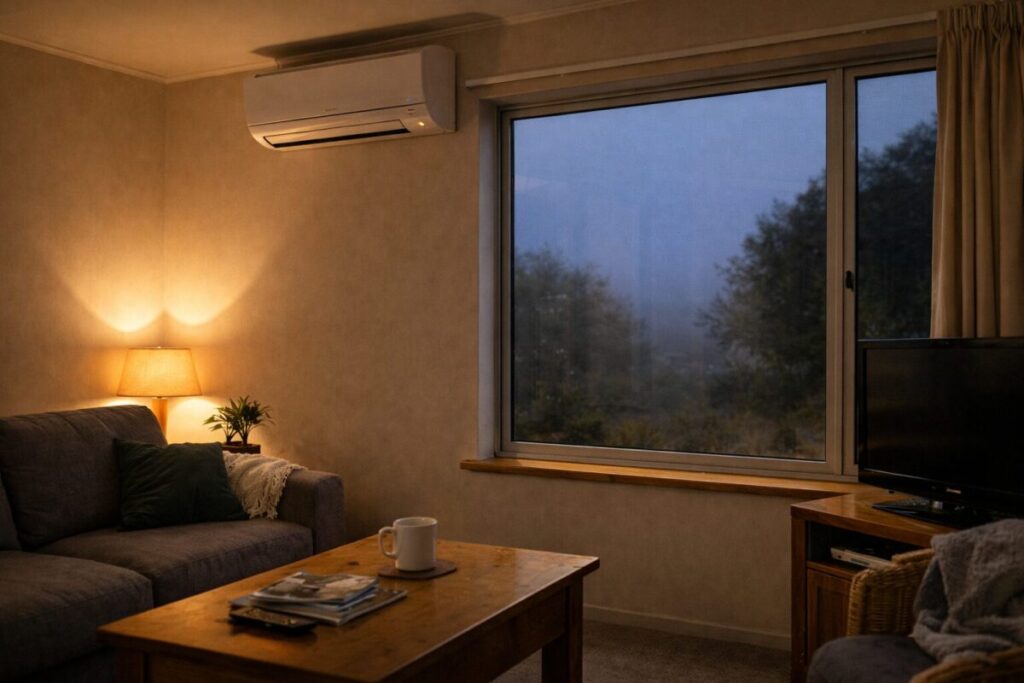
Every litre of moisture you stop from entering the air is a litre that will not end up on your windows. Use lids when cooking, run extraction fans properly, avoid drying clothes indoors, and be aware that bathrooms and cooking produce far more moisture than most people realise. Small adjustments to daily habits can shift the moisture balance enough to noticeably reduce window fogging.
Frequently Asked Questions
Is window condensation a sign of a faulty window?
In most cases, no. Surface condensation on the inside of the glass is caused by high indoor humidity meeting a cold surface, not a defect in the window. The exception is condensation between the panes of a double-glazed unit, which means the seal has failed.
Why do my windows fog up only in winter?
Winter widens the temperature gap between indoor air and the glass surface, making condensation more likely to form. At the same time, homes are sealed tighter, indoor moisture production increases, and natural ventilation drops. All of those factors compound each other.
Will a dehumidifier stop my windows from fogging?
A dehumidifier can reduce indoor humidity, which helps, but it does not address the underlying lack of ventilation in most cases. It works best as a supplement to proper airflow rather than a standalone fix.
Should I wipe my windows every morning?
Wiping removes the water, which stops it from soaking into sills and frames, so it is worth doing as a short-term measure. But it does not reduce the humidity that caused the condensation in the first place, so the moisture will return the next morning unless the underlying conditions change.