Most people do not realise their home has a moisture problem until the signs become impossible to ignore.
The window that weeps every morning, the dark patch growing in the corner, the room that never quite warms up no matter how long the heater runs.
These are not random issues. They are symptoms of the same underlying condition, and they tend to show up together.
After more than a decade working across ventilation and building performance in NZ homes, I have learned to read a house quickly. The signs of excess moisture are consistent, predictable, and once you know what to look for, very hard to miss.
Quick Summary
- Crying windows every morning are the earliest and most visible sign that indoor humidity is too high
- Black mould in corners, on ceilings, or behind furniture indicates moisture has been sitting on surfaces long enough for mould to establish
- A home that feels cold even with the heating running suggests humid air is absorbing heat energy and making the room feel colder than it is
- Rooms that are hard to heat often have poor insulation, no ventilation, or both, which traps moisture and lets surfaces stay cold
- A bathroom with no working extraction fan is one of the biggest single contributors to whole-house humidity
- Homes surrounded by heavy shade from trees or hills stay cooler and damper because sunlight never warms the exterior surfaces
- The more of these signs a home shows, the more likely the moisture issue is systemic rather than isolated to one room
Crying Windows
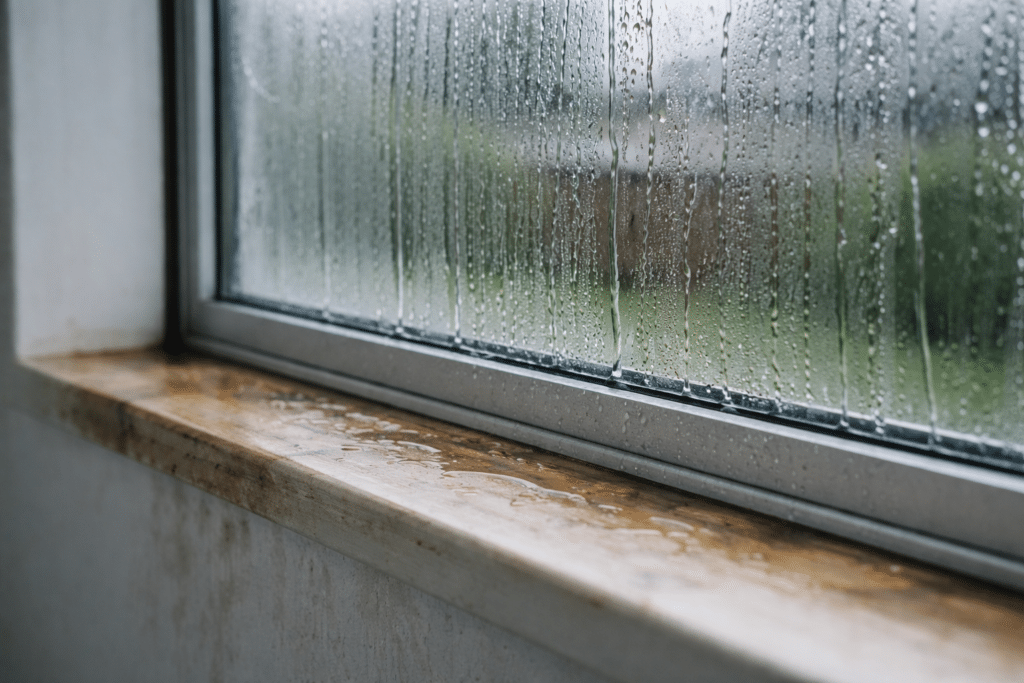
This is usually the first sign people notice. Water streaming down windows every morning, pooling on sills, soaking into timber frames.
It happens because warm, humid indoor air meets the cold glass surface, and the moisture in the air turns to liquid. The heavier the condensation, the higher the indoor humidity.
A light mist on the coldest winter mornings is common even in well-managed homes. But windows that stream with water every single morning from May to September indicate that the home is consistently carrying too much moisture.
The glass is not the problem; it is simply the coldest surface in the room, where condensation forms first. If the windows are wet, the walls and ceilings are absorbing moisture too; you just cannot see it as clearly.
Black Mould Appearing on Surfaces
Mould needs two things to grow: moisture and an organic surface. When indoor humidity stays high enough for long enough, mould establishes on walls, ceilings, window frames, and behind furniture.
The dark patches that people notice in ceiling corners and along exterior walls are typically black mould that has colonised a surface where moisture has been sitting for weeks or months.
The location of the mould tells you about the moisture pattern. Mould on ceilings means warm humid air is rising and condensing on a cold surface. Mould behind wardrobes means furniture is trapping moisture against a cold exterior wall.
Mould around window frames means condensation has been sitting on the timber long enough for growth to start. Each pattern points back to too much moisture in the air with not enough airflow.
A Home That Feels Cold Even With Heating
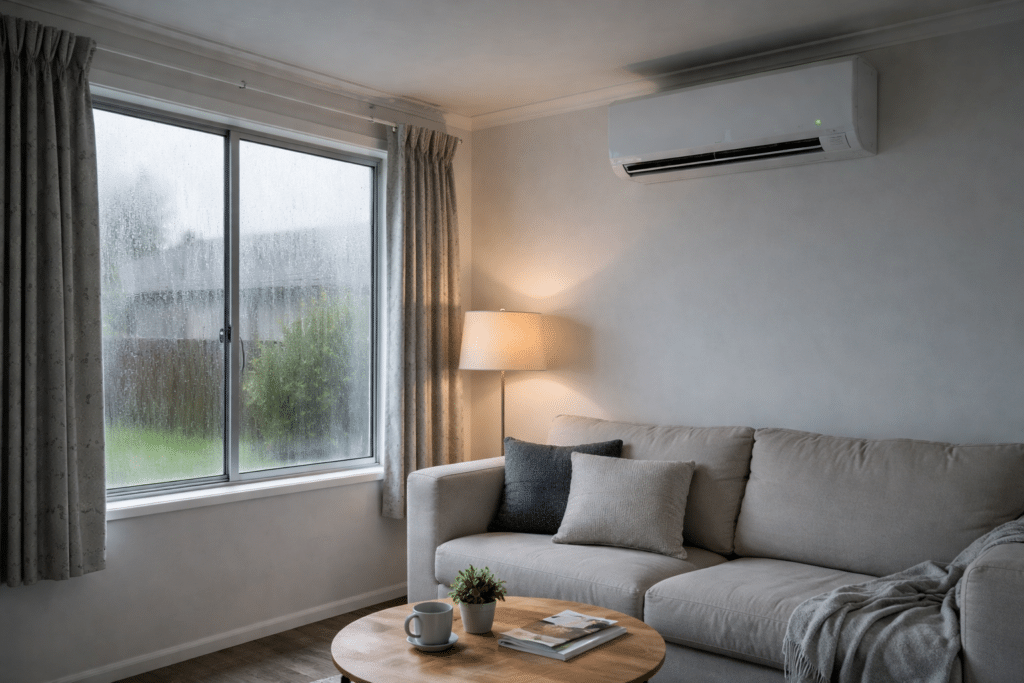
This is one of the less obvious signs of excess moisture, but it is remarkably consistent. Humid air absorbs heat energy, which means a room with high humidity requires more energy to feel warm.
The thermostat might read 20 degrees, but if the air is heavily saturated with moisture, the room feels clammy and cold because the humidity is pulling warmth away from your body.
I see this regularly in homes where the heat pump runs for hours and the room never feels comfortable. People assume the heating is undersized, but often the real issue is that the air carries so much moisture that the heating cannot overcome it.
Reducing humidity through better ventilation is what finally makes the room feel warm at the same temperature setting.
This is a major part of why condensation gets worse through winter, because the heating is fighting both cold surfaces and saturated air.
No Bathroom Extraction Fan
This is one of the most common contributors I find in homes with serious moisture problems. A single hot shower produces over a litre of moisture in under ten minutes.
Without an extraction fan running during and after that shower, all of that steam stays in the house. It drifts down the hallway, settles into bedrooms where it builds overnight, and adds to the humidity load that every other room has to manage.
In homes where the bathroom has no fan at all, or where the fan vents into the ceiling cavity rather than outside, the moisture from every shower goes directly into the indoor air.
Multiply that by two or three showers a day and the bathroom alone can add 3 to 5 litres of moisture daily.
I always look at the bathroom first when assessing a home’s moisture situation, because it is the single room where the biggest volume of concentrated moisture is produced.
Heavy Shade From Trees or Hills
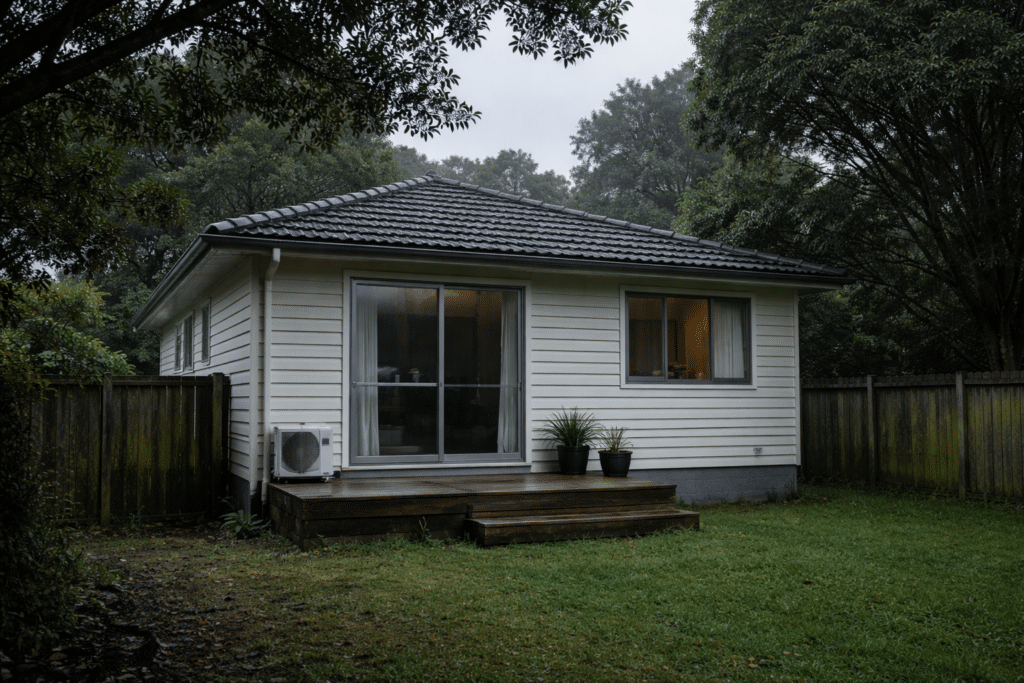
This is a factor that people rarely connect to indoor moisture, but it makes a significant difference. Homes that sit in heavy shade, whether from mature trees, neighbouring buildings, or surrounding hills, do not get the benefit of direct sunlight warming the roof, walls, and exterior surfaces.
That means the building stays cooler through the day, surfaces inside stay closer to outdoor temperature, and the threshold for condensation is reached more easily.
Sunlight on a house does more than provide warmth. It dries exterior cladding, warms the roof cavity, and raises the temperature of walls and glass so that indoor air has a higher humidity threshold before condensation forms.
A heavily shaded home misses all of those benefits, and the result is a building that feels permanently cold and damp through winter.
Other Signs to Watch For
Beyond the major indicators, there are several other signs that point to excess moisture in the home.
| Sign | What It Indicates |
|---|---|
| Musty smell that builds through the week | Moisture embedded in carpets, curtains, or walls long enough for odour compounds to develop |
| Paint peeling on exterior-facing walls | Repeated condensation has broken down the paint bond |
| Damp or clammy bedding | Overnight humidity too high for soft materials to stay dry |
| Mould on leather shoes or bags in wardrobes | Enclosed wardrobe humidity is high enough for mould to grow on organic materials |
| Rust on metal fittings or hinges | Persistent dampness corroding metal surfaces |
| Swollen or warped timber around windows | Repeated moisture absorption from pooling condensation |
The more of these signs a home shows, the more systemic the moisture issue is. A single crying window might be a localised problem. Crying windows, mould, a musty smell, and rooms that will not heat together point to a whole-house humidity imbalance that needs a coordinated response.
What to Do About It
The fix for excess moisture always comes back to three fundamentals: get air moving, heat consistently, and reduce moisture at the source. A whole-house ventilation system addresses the first and most important part by continuously exchanging humid stale air for drier filtered air.
Consistent moderate heating keeps surfaces warmer so condensation has less opportunity to form. And managing daily habits, using extraction fans, drying clothes outside, keeping bathroom doors closed, reduces the total moisture entering the air.
For homes with heavy shade, the ventilation and heating components become even more important because the building does not get the free benefit of solar warming. These homes need to work harder mechanically to achieve what a sun-exposed home gets naturally.
Frequently Asked Questions
How many of these signs need to be present before it is a real problem?
Even one persistent sign, like crying windows every morning, indicates that indoor humidity is too high. But the more signs present, the more systemic the issue. If you are seeing condensation, mould, and rooms that will not heat, the home needs a coordinated approach to ventilation, heating, and moisture control.
Can I measure my home’s humidity level?
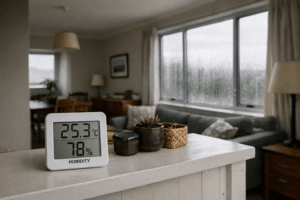
Yes. A simple hygrometer from any hardware store will show the relative humidity in any room. Aim for 40 to 60 percent. Consistently above 65 percent means moisture is building up faster than the home can manage, and the signs described in this article will start appearing.
Is it worth fixing the bathroom fan first?
Almost always, yes. The bathroom is usually the single largest concentrated moisture source in the home. Getting a properly sized extraction fan installed, vented to the outside, and used every time someone showers can make a noticeable difference to the whole house within days.
Does heavy shade mean my house will always be damp?
Not necessarily, but it does mean the home needs more active moisture management. Ventilation and consistent heating become more important because the house is not getting the free warming and drying benefit that sun-exposed homes receive. The problem is manageable with the right approach.