Is It Normal for Bedrooms to Feel Damp?
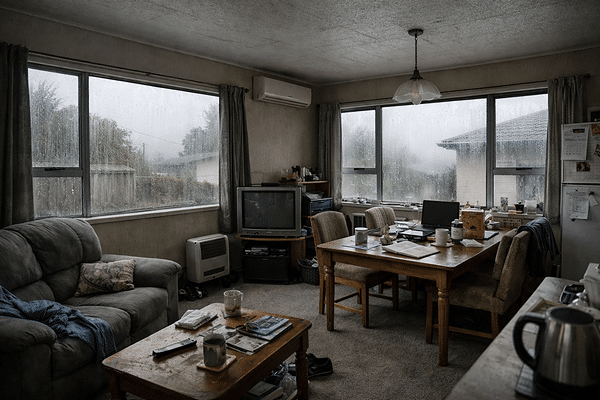
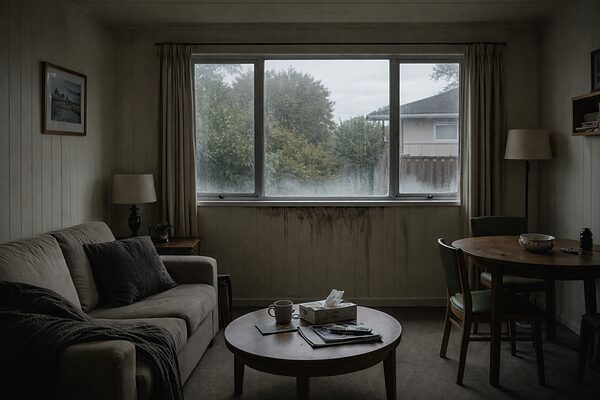
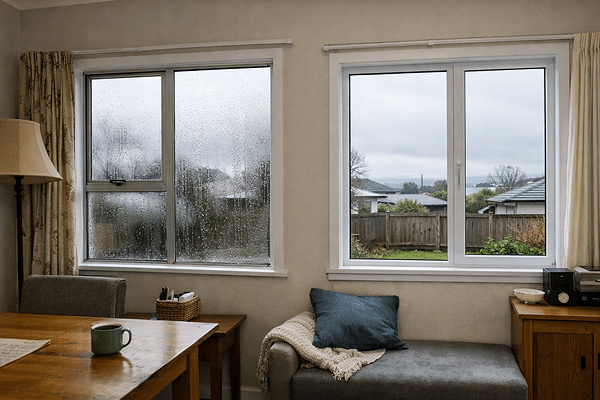
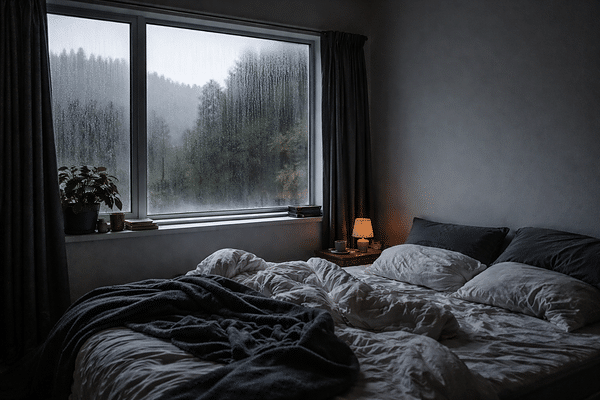
It is one of the most common things people ask me. The bedroom feels clammy when you walk in, the windows are wet, the air has that heavy, stale quality that never quite clears, and the duvet feels slightly damp to the touch. Is this just what NZ bedrooms are like in winter, or is something actually wrong?
After more than a decade working across energy auditing and NZ homes, my answer is always the same.
We are actually creating moisture overnight as we breathe; in a closed room, the moisture builds.
A damp-feeling bedroom is common, but it is not something you should accept as normal. It means humidity is building up faster than the room can handle, and the causes are almost always identifiable and fixable.
Quick Summary
- Damp-feeling bedrooms are common in NZ homes during winter, but they are a sign of a moisture imbalance, not something to accept
- Two adults breathing overnight add over a litre of moisture to a closed bedroom in eight hours
- South-facing bedrooms are more prone to dampness because they receive less direct sunlight, and walls stay colder for longer
- Closed doors with no airflow trap overnight moisture in the room with no way for it to escape
- Bathroom steam that migrates down the hallway adds to bedroom humidity, even when the bedroom itself is not producing moisture
- A musty smell in the morning is a reliable sign that humidity has been too high overnight
- Improving airflow through the bedroom, even slightly, is the most effective single change
Why Bedrooms Feel Damp
The bedroom is a unique room in the house because of how we use it. We close the door, draw the curtains, turn off the heating, and sleep for eight hours. During that time, every breath releases warm, moist air into the room.
Two adults produce roughly 1 to 1.5 litres of moisture overnight from breathing alone, and in a sealed room with no ventilation, that moisture has absolutely nowhere to go.
As the night progresses, the room’s humidity climbs steadily. The air becomes increasingly saturated, and that moisture starts settling on the coldest surfaces, windows first, then exterior walls, ceiling corners, and eventually into soft materials like bedding, carpet, and curtains.
By morning, the room feels damp because it genuinely is damp, the air is carrying more moisture than the space can comfortably hold.
This is the same mechanism that drives condensation in bedrooms across New Zealand, and it follows the same predictable pattern in almost every home I visit during winter.
The South-Facing Bedroom Problem
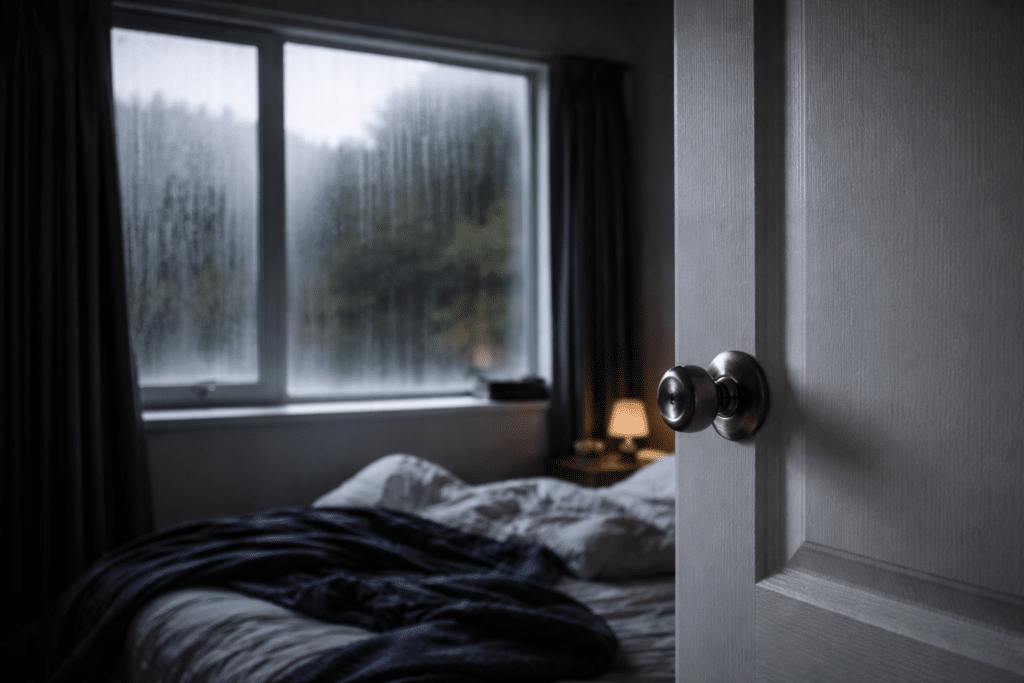
In many NZ homes, the bedrooms are positioned on the south side of the house while the living areas face north to catch the sun. That layout makes sense for daytime living, but it puts the bedrooms at a disadvantage when it comes to moisture.
South-facing rooms receive minimal direct sunlight, especially in winter when the sun tracks low across the northern sky. That means the exterior walls, windows, and even the roof above a south-facing bedroom stay colder for longer through the day.
While the north-facing living room warms up as soon as the sun hits it, the south-side bedroom may not warm meaningfully at all on an overcast winter day.
Cold walls and cold glass are magnets for condensation. The colder those surfaces stay, the less moisture the air needs to carry before condensation begins to form on them.
A south-facing bedroom that was sealed up all night with two people breathing will have cold surfaces and high humidity by morning, which is why these rooms consistently feel the dampest in the house.
Many houses have the lounge on north side to get sun, bedrooms on the south side.
Other Factors That Make It Worse
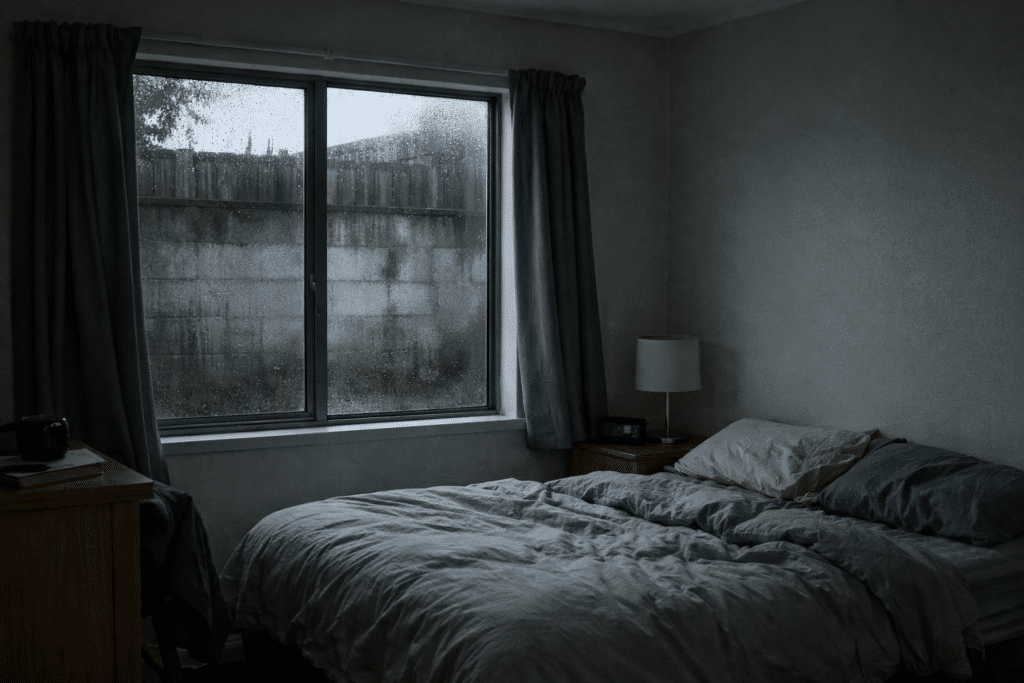
Breathing moisture in a south-facing room is the core issue, but several other factors compound it in most NZ homes.
Migrating Bathroom Moisture
If the bathroom door is left open during or after a shower, the warm, humid air drifts straight down the hallway and into the bedrooms. That additional moisture from bathroom steam adds to what is already being produced by breathing, and in a closed bedroom, that extra load pushes humidity even higher.
Furniture Against Exterior Walls
Wardrobes and headboards pushed flat against exterior walls block warm air from reaching the wall surface and create a cold, still pocket where moisture accumulates and mould can establish behind the furniture without anyone noticing. That trapped moisture contributes to the overall damp feeling in the room.
No Heating Overnight
Most NZ households turn the heating off at bedtime. That means surfaces in the bedroom cool down through the night, and by morning the walls and windows are at their coldest. That sharp drop in surface temperature is exactly when condensation forms most aggressively, because the cold surfaces cannot hold the moisture that the warm evening air was carrying comfortably.
Heavy Curtains Trapping Cold Air
Thick curtains sitting against the window create an enclosed pocket of cold, still air between the fabric and the glass. That pocket concentrates condensation on the window and keeps the glass colder than it would be if warm room air could reach it.
Signs Your Bedroom Dampness Is a Problem
A slightly cool room first thing on a winter morning is one thing. A room that consistently shows the following signs has crossed from normal into territory that needs attention.
| Sign | What It Means |
|---|---|
| Windows streaming with water every morning | Indoor humidity is consistently too high for the room to manage |
| Musty smell that builds through the week | Moisture has been sitting in carpet, bedding, or walls long enough for odour compounds to develop |
| Damp or clammy bedding | Humidity is high enough to saturate soft materials overnight |
| Mould appearing in wall corners or behind furniture | Surfaces have been persistently damp, moisture conditions need to change |
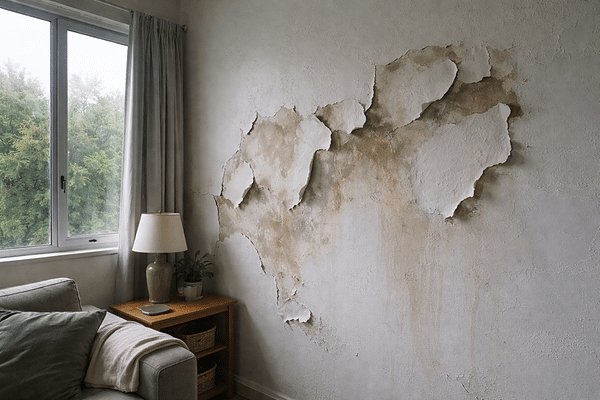
| Paint peeling on exterior-facing walls | Repeated condensation has broken down the paint bond over time |
If the bedroom has a persistent musty smell even after airing the room, that is a strong signal that moisture has embedded into materials and the conditions have been poor for a sustained period.
How to Fix a Damp-Feeling Bedroom
The good news is that most bedroom dampness responds well to practical changes, and most of them cost very little or nothing at all.
Get Air Moving
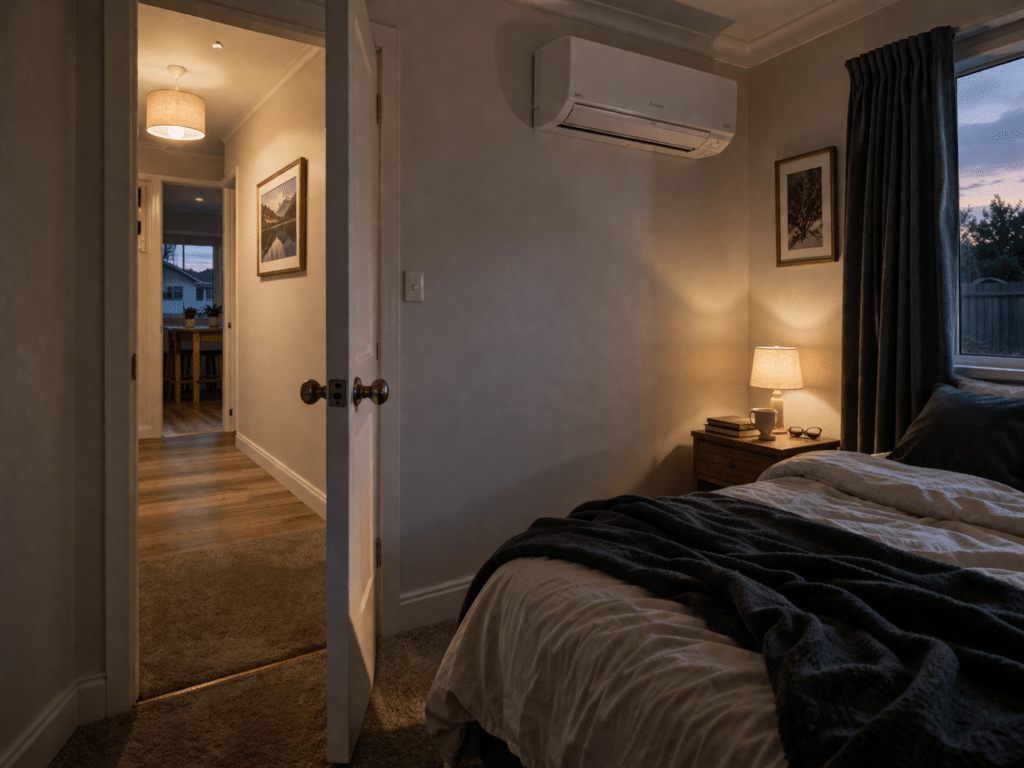
This is the single most effective change. Even a small amount of air exchange overnight reduces the humidity that builds up from breathing.
Leave the bedroom door slightly ajar, crack a window if the weather permits, or use a whole-house ventilation system that pushes filtered drier air into every room continuously, including closed bedrooms.
Positive pressure systems are particularly effective because they work even when doors are mostly closed.
Keep Surfaces Warmer
If the bedroom stays slightly warmer overnight, walls and windows do not drop as far and condensation has less opportunity to form. A heat pump running at a low, consistent temperature through the evening is more effective than blasting heat for an hour and switching off. In south-facing bedrooms where the walls stay cold naturally, consistent warmth is especially important.
Control Moisture From Other Rooms
Keep the bathroom door closed during and after showers so steam does not drift into bedrooms. Run the extractor fan for at least 15 minutes after showering. Avoid drying clothes in or near bedrooms, and pull wardrobes at least 50mm away from exterior walls so air can circulate behind them.
Air the Room Each Morning
Opening the curtains and window for even 10 to 15 minutes after waking flushes the overnight humidity out before it has time to soak into materials. Pull the duvet back to let the mattress breathe, and wipe any condensation off windows and sills before it pools and wicks into the timber.
Frequently Asked Questions
Is a damp bedroom just a winter problem?
It is worst in winter because temperatures are lower and homes are sealed up, but poorly ventilated bedrooms can feel damp in autumn and spring too. Summer is usually fine because windows and doors are open and natural airflow keeps humidity in check.
Will leaving my bedroom door open all night fix it?
It helps significantly. An open or slightly ajar door allows air to circulate between the bedroom and the rest of the house, which dilutes the moisture from breathing. It is one of the simplest and most effective changes you can make at zero cost.
Are south-facing bedrooms always going to be damp?
They are more challenging because they receive less sun and stay colder, but they are not doomed. Consistent heating, good ventilation, and moisture-aware habits can bring a south-facing bedroom to a comfortable level. The room needs more active management than a north-facing one, but the results are achievable.
Should I run a dehumidifier in my bedroom?
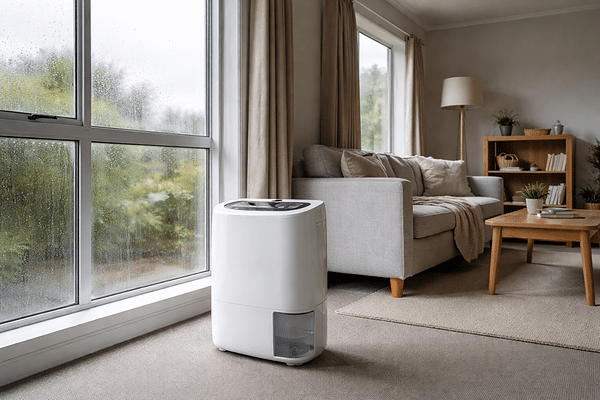
A dehumidifier can help reduce humidity in the room, but it does not move air or address cold surfaces. It works best as a supplement to proper ventilation and consistent heating, not as a standalone solution. For overnight use, some people find the noise disruptive, which limits its practicality in a sleeping space.