Is a Damp House Just a NZ Thing?
It is a question I hear surprisingly often. People assume that damp, cold, mouldy homes are just part of life in New Zealand, something everyone deals with and no one can really fix.
Having worked in ventilation and energy auditing across NZ and abroad for over a decade, I can tell you that damp homes exist in other countries too, but the scale of the problem in New Zealand is genuinely unusual.
The reasons are specific to how NZ homes were built, the climate they sit in, and how people live in them. Let’s also factor in building codes that have evolved in a interesting way, then insulation added to make the chilli bin effect (trapping more moisture and temperature differentials).
None of those reasons is a mystery, and none of them is unfixable. Understanding why NZ homes are so prone to dampness is the first step toward addressing it.
Quick Summary
- Damp homes are not unique to New Zealand, but the combination of climate, housing stock, and living habits makes the problem more widespread here than in most comparable countries
- New Zealand’s maritime climate delivers high ambient humidity for much of the year, which raises the baseline moisture level inside homes
- A large proportion of NZ housing was built before insulation and ventilation were standard, leaving homes with cold surfaces that attract condensation
- Countries with similar climates but better insulated and ventilated housing stock have far fewer damp home issues
- The way New Zealanders heat their homes, often in short bursts rather than consistently, contributes to the conditions that cause condensation
- Damp homes are fixable through ventilation, consistent heating, and reducing indoor moisture sources
- Accepting a damp house as normal leads to cumulative damage that is expensive to repair
Why NZ Homes Are So Prone to Dampness
The short version is that New Zealand has a climate that produces a lot of moisture, a housing stock that was not designed to manage it, and heating habits that leave surfaces cold enough for condensation to form. Those three factors combine in ways that make condensation in NZ homes far more common than it needs to be.
The Climate Factor
New Zealand sits in a maritime climate zone surrounded by the ocean. That means relatively high humidity year-round, frequent rainfall across most regions, and mild but damp winters.
The outdoor air already carries a significant moisture load before it even enters the home, so indoor humidity starts from a higher baseline than in drier continental climates.
Winters are not extremely cold by international standards, but they are cold enough to drop window and wall surfaces to temperatures where condensation forms readily.
The moisture profile varies by region, with coastal and western areas carrying more humidity and inland areas seeing sharper cold, but every part of the country deals with some version of the same equation.
The Housing Stock Factor
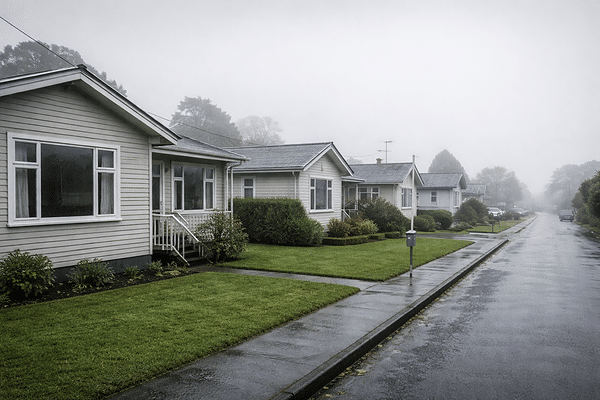
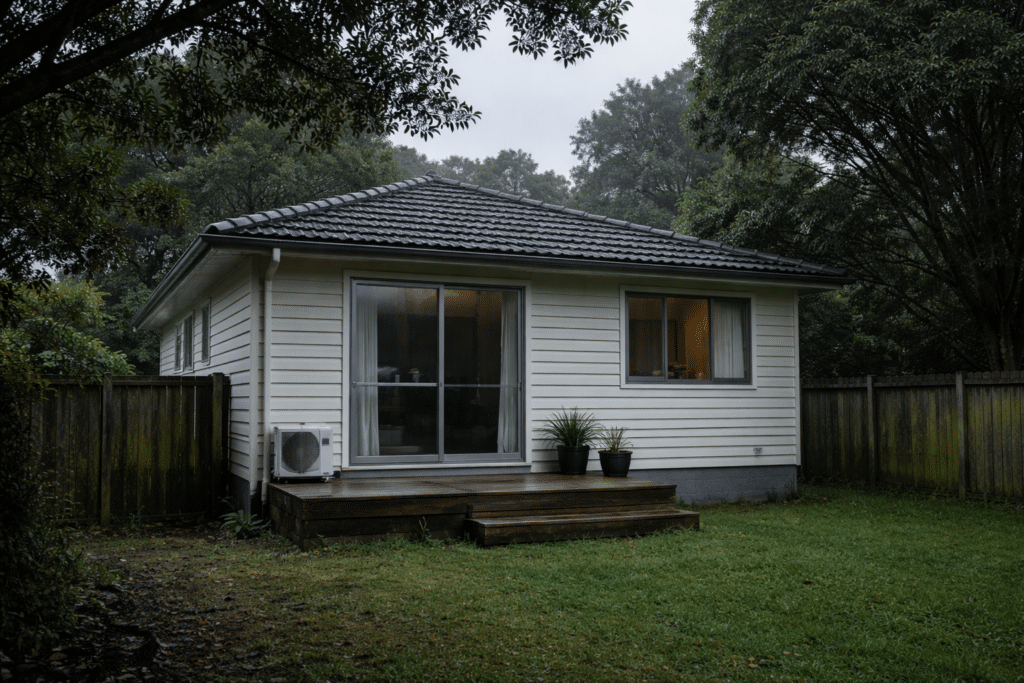
This is where New Zealand really stands apart. A huge proportion of the housing stock was built between the 1920s and the 1970s, before insulation was required and before anyone was thinking about thermal performance or airtightness.
Many of those homes still have no wall insulation, single-glazed aluminium windows, and subfloor spaces that allow ground moisture to rise into the structure.
Older homes with minimal insulation have interior wall surfaces that sit close to the outside temperature on a cold night. That creates a large condensation target, because any warm humid air inside the home will deposit moisture on those cold surfaces.
Countries like Scandinavia and northern Europe have similar or colder climates but far better insulated housing, which is a major reason their homes stay drier.
Even newer NZ homes can struggle. Airtight new builds trap moisture indoors more effectively than older homes, and if ventilation is not adequate for the occupancy level, humidity builds up and condensation appears within the first winter.
The Heating Habits Factor
New Zealanders tend to heat their homes differently from people in colder countries. In much of northern Europe, homes are heated to a consistent temperature throughout the day and evening, keeping wall and window surfaces warm enough to prevent condensation.
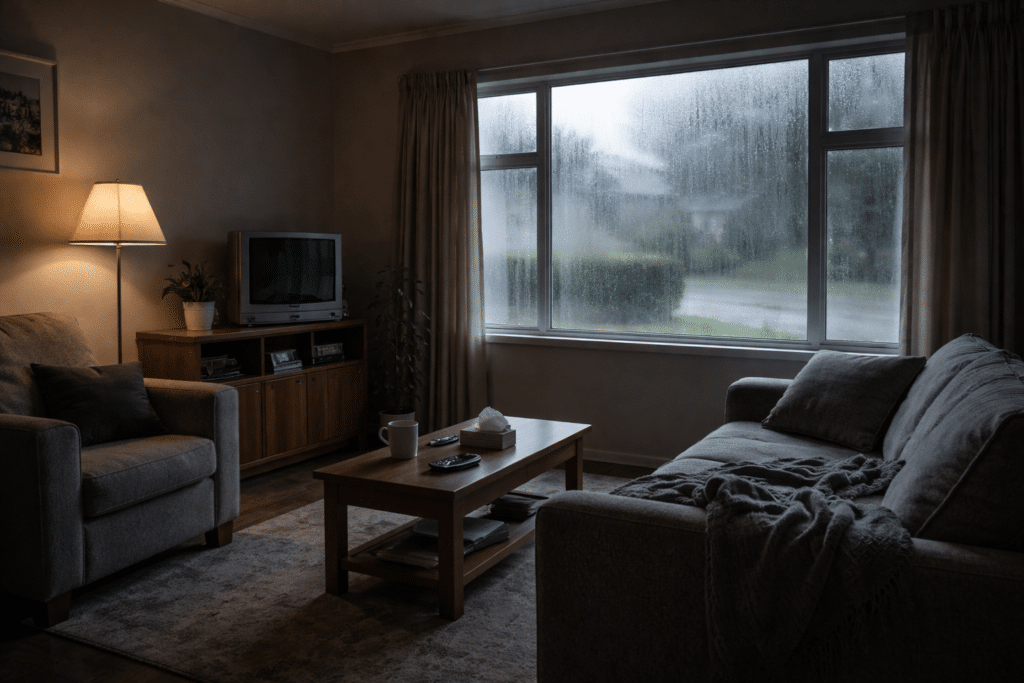
In New Zealand, the more common pattern is to heat the living room for a few hours in the evening, switch it off at bedtime, and let the house go cold overnight.
That heating pattern means surfaces cool down rapidly after the heat turns off, and by morning, the walls and windows are cold enough to attract condensation from the moisture that occupants have been breathing into the air all night.
It is one of the key reasons condensation spikes through the winter months, even in homes that feel warm during the evening.
How NZ Compares to Other Countries
It is worth putting the NZ situation in context, because it helps illustrate that damp homes are not inevitable and that the solutions are well understood.
| Factor | New Zealand (typical) | Northern Europe (typical) |
|---|---|---|
| Climate humidity | High (maritime) | Variable (lower inland, higher coastal) |
| Winter temperatures | Mild to cool (0 to 10°C) | Cold to very cold (-10 to 5°C) |
| Wall insulation | Often absent in older homes | Standard for decades, thick in Scandinavia |
| Glazing | Single-glazed common in older homes | Double or triple glazed standard |
| Ventilation | Often poor or absent | Mechanical ventilation common in newer builds |
| Heating pattern | Short bursts, off overnight | Consistent, often thermostat-controlled 24 hours |
| Indoor condensation | Very common | Less common, well-managed in insulated homes |
The comparison is revealing. Countries with harsher winters have fewer damp home problems because their buildings are better insulated, better ventilated, and heated more consistently. The climate is not the main issue. The building and the habits are.
The “She’ll Be Right” Problem
There is a cultural element to this that I have noticed over the years of working in NZ homes. Many people genuinely believe that a damp, cold house is just what New Zealand homes are like.
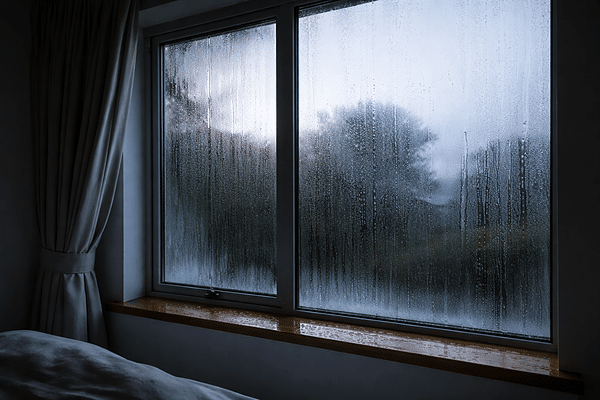
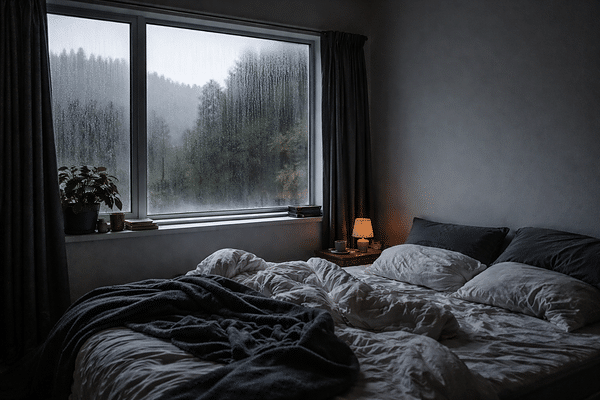
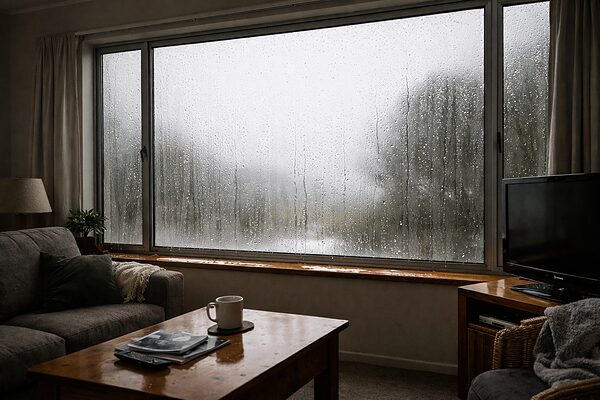
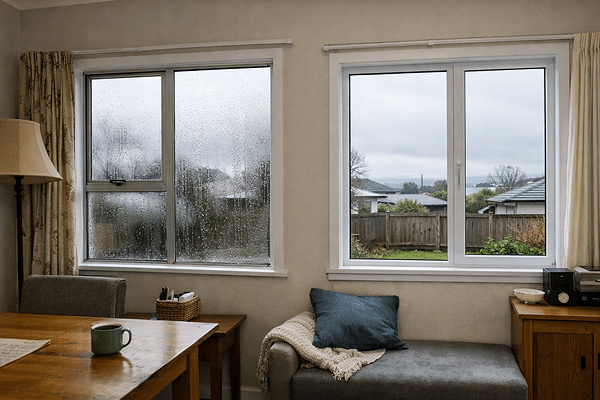
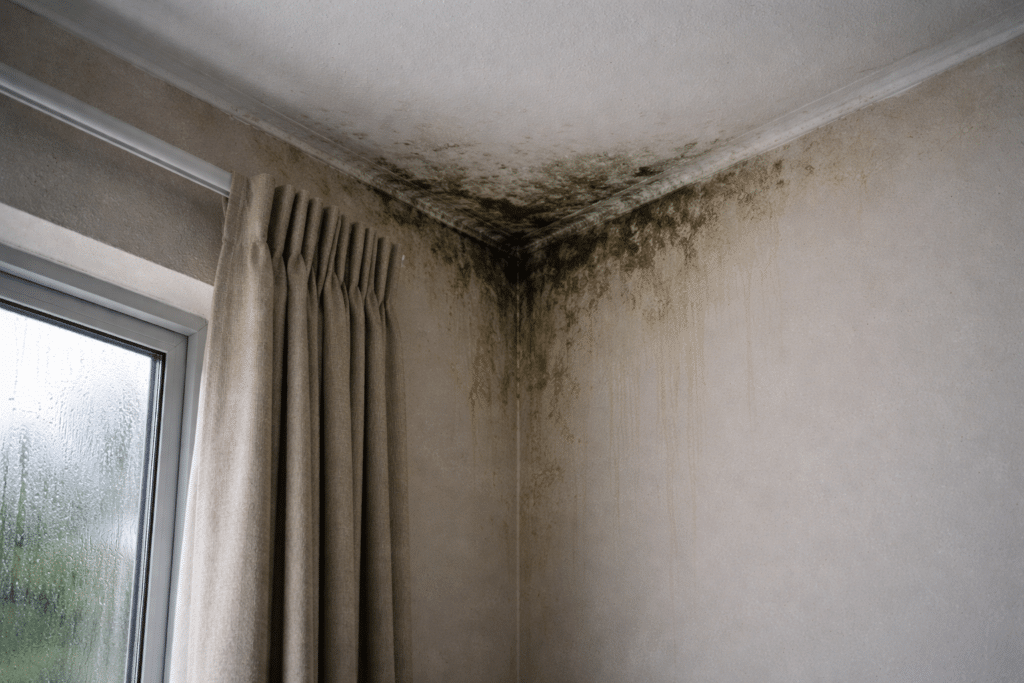
Streaming windows, musty wardrobes, mould in the corners, it gets treated as normal wear and tear rather than a fixable problem.
That acceptance means the damage compounds year after year. Timber softens, paint peels, mould establishes in hard-to-reach places, and the cumulative effects of condensation end up costing far more than addressing the root cause would have. The longer it goes unchecked, the more expensive the eventual fix becomes.
The irony is that most of the fixes are straightforward and affordable relative to the damage they prevent. Better airflow, consistent heating, and simple daily habits shift the moisture balance enough to make a real difference in most homes.
What Actually Makes the Difference
The same three fundamentals that work in every country work in New Zealand. The difference is that in NZ, more homes need them because the building stock and habits have not caught up with what the climate demands.
Ventilation
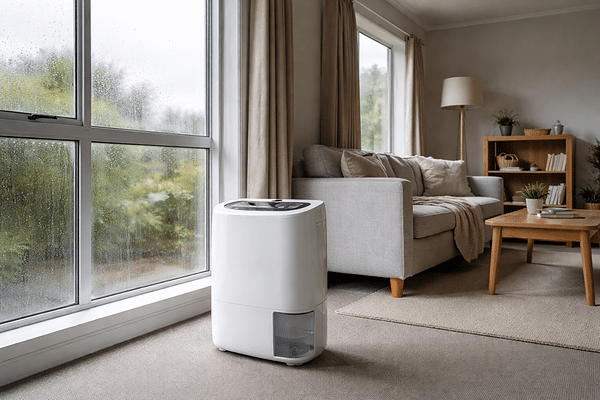
Getting air moving through the home is the most effective single change for reducing dampness. A whole-house ventilation system continuously exchanges humid, stale air for drier, filtered air, lowering indoor humidity throughout the home. Even simple habits like opening windows briefly each morning and running extraction fans properly make a measurable difference in homes that currently have no mechanical ventilation.
Consistent Heating
Shifting from short heating bursts to steady, moderate heating through the evening and overnight keeps surfaces warmer and reduces the cold spots where condensation forms. A heat pump running at 18 degrees consistently prevents more condensation than one running at 24 degrees for an hour. The goal is to stop surfaces dropping to the dew point, not to make the room hot.
Daily Habits
Using extraction fans when showering and cooking, keeping bathroom doors closed after showers, drying clothes outside, and leaving bedroom doors slightly ajar at night are all free changes that reduce the total moisture load inside the home. These habits work in any climate and form the foundation that ventilation and heating build on.
Frequently Asked Questions
Do other countries have damp homes too?
Yes, damp homes exist everywhere, particularly in older housing in the UK, Ireland, and parts of Australia. The difference is that countries with better insulation standards and more consistent heating habits tend to have far fewer widespread dampness issues even with similar or worse climates.
Is it the climate or the house that causes the problem?
Both contribute, but the building is the bigger factor. Countries with colder, harsher climates than New Zealand have drier homes because their buildings are better insulated and ventilated. The NZ climate sets the conditions, but it is the home's performance that determines whether moisture becomes a problem.
Will insulating my home fix the dampness?
Insulation helps by keeping surfaces warmer, which reduces condensation. It is most effective when combined with ventilation and consistent heating. Insulation alone will not fix a dampness problem if indoor humidity stays high and air does not move through the home.
Should I just accept that my house will be damp in winter?
No. Accepting dampness means accepting cumulative damage to your home and belongings. Most NZ homes can be significantly improved with practical changes to ventilation, heating habits, and daily moisture management. The problem is common, but it is not something you have to live with.