How to Fix Mould on Curtains and Blinds
Mould on curtains and blinds is one of the most common complaints I hear during winter. Dark spots appearing along the bottom edge of curtains, black specks on roller blinds, or a musty smell that clings to the fabric even after airing the room out. It is frustrating, and most people assume the curtains themselves are the problem.
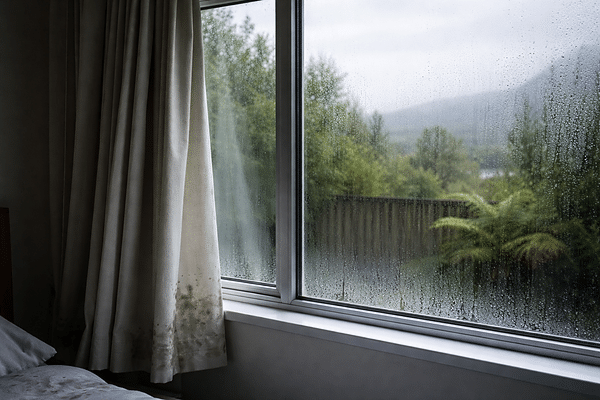
They are not. Having worked across ventilation and moisture control in NZ homes for over a decade, I can tell you that moldy curtains are almost always a symptom of what is happening on the window behind them. The curtain is just the surface where the moisture lands and stays long enough for mould to take hold.
Quick Summary
- Mould on curtains and blinds is caused by moisture from window condensation soaking into the fabric
- Heavy curtains that sit tight against the glass create a cold, still pocket where condensation concentrates
- Machine-washable curtains can usually be cleaned with a cool wash and white vinegar or a mild solution
- Non-washable fabrics and blinds need spot treatment with a damp cloth and gentle cleaning agent
- Cleaning the mould off without addressing the window condensation means it will return
- Improving airflow between the curtain and the glass is one of the simplest and most effective changes
- Reducing indoor humidity and keeping the room slightly warmer both help prevent the moisture that feeds curtain mould
Why Curtains and Blinds Get Moldy
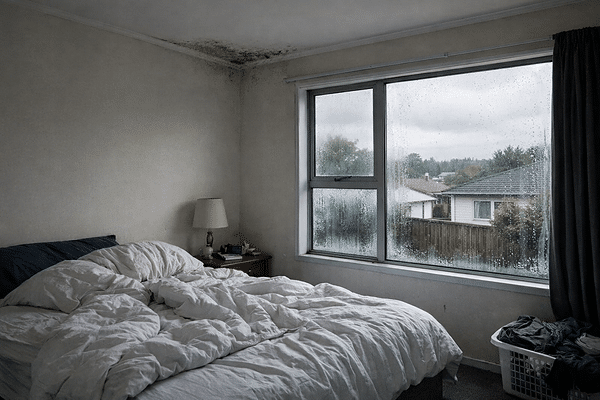
The mechanism is straightforward. When warm, humid indoor air hits a cold window, moisture condenses on the glass. If a curtain or blind is sitting right against that glass, the condensation wicks into the fabric.
The fabric stays damp, often for hours at a time, and that prolonged dampness is exactly what mould needs to establish.
Heavy, lined curtains make this worse because they create an enclosed pocket of cold, still air between the fabric and the window. That pocket traps moisture, blocks warmth from the room reaching the glass, and keeps the window surface even colder than it would be otherwise.
The result is more condensation, not less, and a curtain that absorbs moisture from both the glass and the humid air trapped behind it.
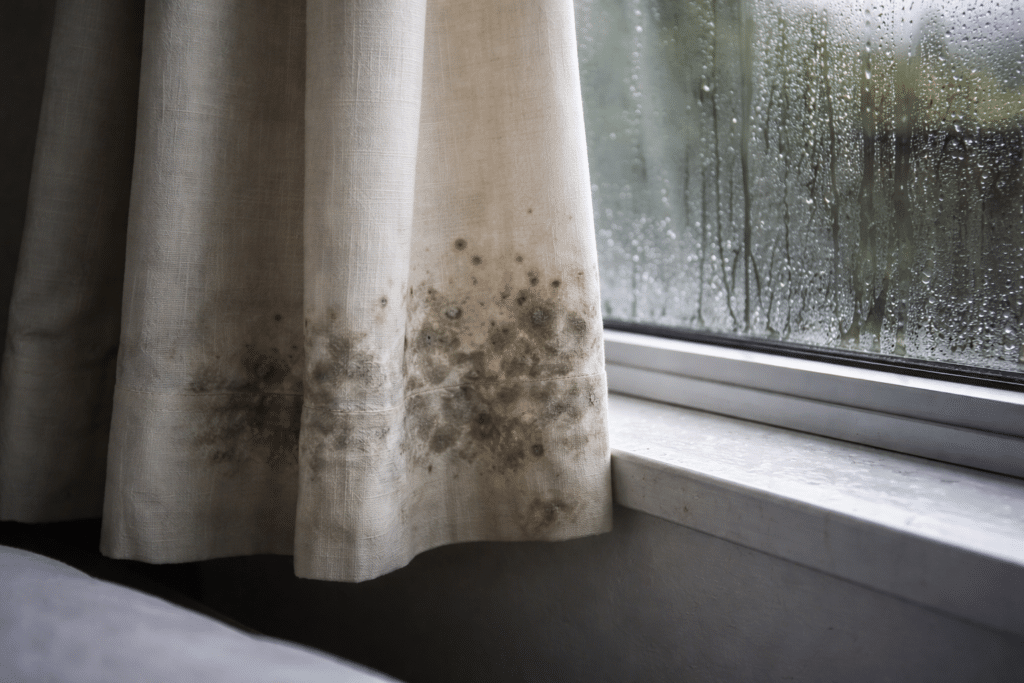
This is why mould on curtains tends to appear along the bottom edge and sides where the fabric makes contact with the sill or presses against the glass.
It follows the same pattern as window condensation because the curtain is absorbing the moisture that would otherwise pool on the sill.
How to Clean Mould Off Curtains
The cleaning approach depends on the fabric type. Getting the method right matters because some fabrics are easily damaged by the wrong cleaning agent.
Machine-Washable Curtains
For machine-washable curtains, the process is relatively simple. Take them down, shake off any loose mould outdoors, and wash on a cool or warm cycle with your normal detergent. Adding a cup of white vinegar to the rinse cycle helps break down mould residue and reduces the musty smell.
After washing, dry them outdoors in direct sunlight if possible. UV light is effective at killing residual mould spores, and the fresh air helps clear any remaining odor. Avoid tumble drying on high heat unless the fabric label specifically allows it, as some curtain materials shrink or warp.
Non-Washable or Delicate Curtains
Heavier-lined curtains, silk, or curtains with specialized coatings often cannot go in the machine. For these, take the curtain outside if practical and brush off any loose mould with a soft brush.
Then spot-treat the affected areas with a cloth dampened in a mild solution of water and white vinegar, working gently to lift the mould without saturating the fabric.
Let the curtain air dry completely before rehanging. If the mould has been present for a long time, it may have stained the fabric permanently, especially on lighter colours. Deep-set mould on delicate fabrics may require professional cleaning.
Roller Blinds and Venetians
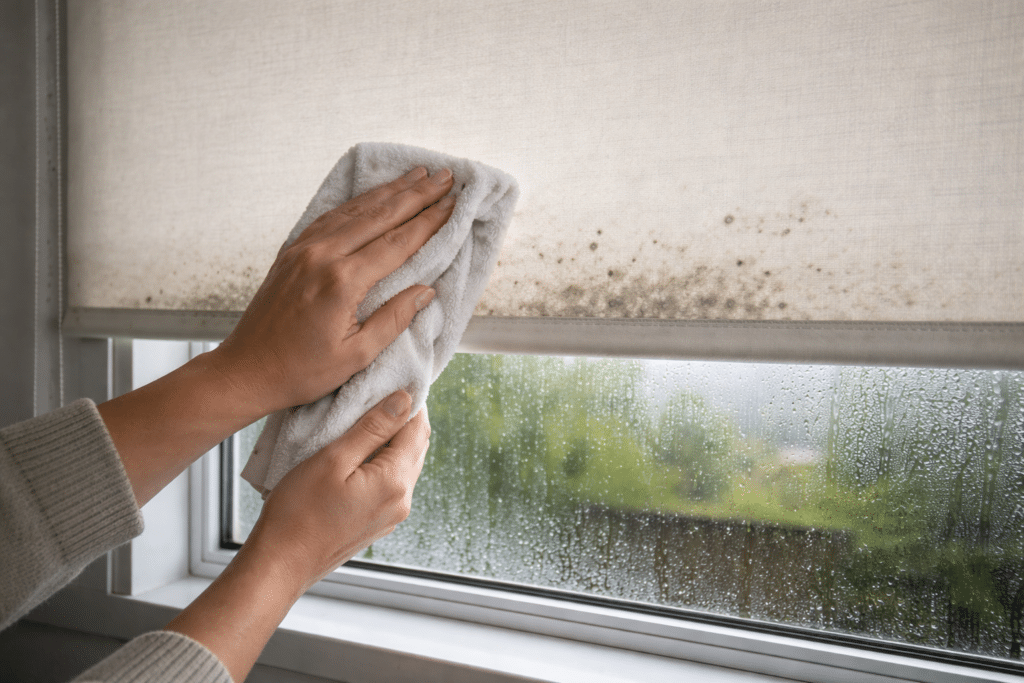
Roller blinds develop mould differently because the fabric rolls up, trapping moisture against itself. Unroll the blind fully, wipe the surface with a damp cloth and mild detergent, then leave it extended to dry completely before rolling it back up. For venetian blinds, wipe each slat individually with a damp cloth.
If the mold gets too developed, it’s often not possible to remove it.
Pay attention to the cords and mechanisms where moisture can collect unnoticed.
| Curtain or Blind Type | Cleaning Method | Key Caution |
|---|---|---|
| Machine-washable curtains | Cool wash with detergent, vinegar in rinse | Check label for temperature limits |
| Lined or heavy curtains | Outdoor brush, spot treat with vinegar solution | Do not saturate, may need professional clean |
| Silk or delicate fabrics | Gentle spot treatment only | Mould stains may be permanent |
| Roller blinds | Wipe unrolled with damp cloth and detergent | Dry fully extended before rolling |
| Venetian blinds | Wipe each slat individually | Check cords and mechanisms for hidden moisture |
How to Stop It Coming Back
Cleaning the mould is only half the job. If the conditions that caused it remain, the mould will return within weeks.
The reason mould keeps coming back after cleaning is always the same, the moisture source has not been addressed.
Create a Gap Between Curtain and Glass
This is the simplest change and often the most effective. If the curtain sits tight against the window, pull it back slightly so there is a gap of at least 20-30mm between the fabric and the glass.
That gap allows air to circulate behind the curtain, which helps moisture dissipate rather than getting trapped in a still pocket.
Some curtain tracks and rails can be adjusted or repositioned to create more clearance. Even tying the curtains back slightly at the bottom or using holdbacks can make a noticeable difference.
Improve Room Ventilation
Reducing indoor humidity is the most effective long-term fix. A whole-house ventilation system keeps air circulating and humidity lower throughout the house, which means less moisture available to condense on windows and soak into curtains. Even opening the curtains briefly each morning and letting air circulate behind them helps dry out any overnight dampness before mould can take hold.
Wipe Windows and Sills in the Morning
If condensation is forming on the windows overnight, wiping it off in the morning removes the moisture before it soaks into the curtain fabric throughout the day. It is a manual task, but it takes less than a minute per window and significantly reduces the moisture exposure your curtains and blinds are dealing with.

Keep the Room Consistently Warm
Warmer window surfaces produce less condensation. If the room is heated consistently through the evening and overnight rather than in short bursts, the glass and frame stay slightly warmer and less moisture settles.
This is particularly relevant in bedrooms where condensation builds overnight while the occupants sleep and the heating is off.
When Curtains Need Replacing
Sometimes the mould has been present too long and the damage is beyond what cleaning can fix. If the fabric is deeply stained, if the mould smell persists after washing, or if the lining has degraded, replacement is the practical option.
When choosing new curtains for a room with a history of condensation, lighter-weight fabrics that do not press tightly against the glass are a better choice than heavy, full-length lined curtains that trap moisture.
It is also worth considering whether the condensation driving the problem can be reduced before investing in new window treatments, because replacing curtains without fixing the moisture issue just starts the cycle again with fresh fabric.
Frequently Asked Questions
Can I use bleach to remove mould from curtains?
Bleach can remove mould and stains from white or very light fabrics, but it will damage or discolor colored and patterned materials. A white vinegar solution is gentler and effective for most fabrics. Always test on a small hidden area first before treating a visible section.
Why does mould only appear on the bottom of my curtains?
The bottom of the curtain is where the fabric makes the most contact with the window sill and sits closest to condensation pooling along the bottom of the glass. It is also where gravity pulls moisture down, making it the dampest section and the first place mould establishes.
Will shorter curtains help prevent mould?
Curtains that stop above the sill rather than pooling on it tend to stay drier because they are not in direct contact with the condensation that collects on the sill. The trade-off is less insulation from the curtain, but for windows with heavy condensation, it can be a practical compromise.
Do thermal curtains make condensation worse?
Thermal curtains can increase condensation on the glass because they insulate the room from the window more effectively, which keeps the glass surface colder. The room feels warmer, but the window behind the curtain gets colder, and more moisture condenses on it. It is a trade-off between room warmth and window moisture.