Mould in Bedrooms: Causes & Fixes
Bedrooms are the room I get called about most when it comes to mould.
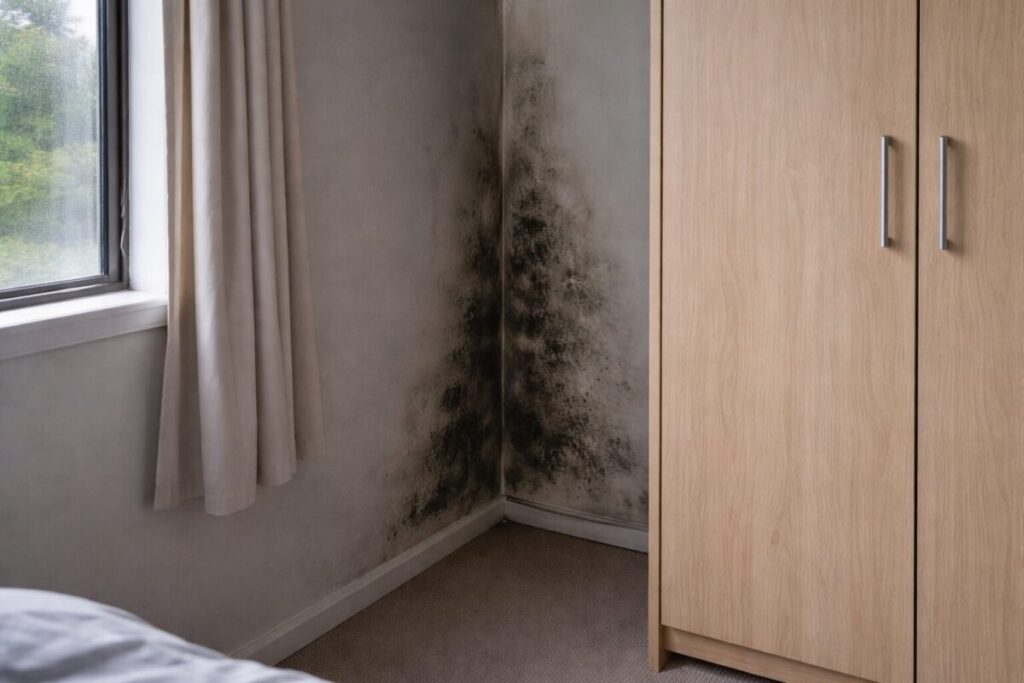
Dark patches in the corners, musty smells that build through winter, mould creeping behind wardrobes that only get discovered when someone moves furniture. It is remarkably consistent across NZ homes, old and new suprisingly.
The causes are well understood, the patterns repeat from house to house, and the fixes are practical once you know what is driving it.
Quick Summary
- Bedrooms are the most common room for mould because doors stay closed overnight while occupants breathe moisture into a sealed space
- Two adults sleeping for eight hours can add over a litre of moisture to bedroom air
- Mould appears first in the coldest spots, upper wall corners, behind furniture against exterior walls, and around window frames
- Furniture pushed hard against exterior walls creates hidden damp zones where mould establishes unnoticed
- The connection between bedroom condensation and bedroom mould is direct, condensation provides the moisture that mould needs to grow
- Improving airflow through the bedroom, even slightly, is the most effective single change
- Cleaning mould without fixing the moisture conditions means it will return, often within weeks
Why Bedrooms Are So Prone to Mould
The bedroom creates a perfect environment for mould because of how we use it. We close the door, draw the curtains, turn off the heating, and sleep for eight hours.
During that time, breathing adds 1 to 1.5 litres of moisture to the air for every two adults in the room. The air has nowhere to go because the room is sealed.
As the night goes on, that humid air meets the coldest surfaces in the room. Window glass fogs up first, then exterior wall surfaces start collecting moisture, especially in corners and behind anything that blocks airflow.
By morning, the room has been sitting in high humidity for hours, and the surfaces that attracted moisture have been damp long enough for mould spores to start establishing.
This cycle repeats every single night through winter. The condensation that builds up overnight in bedrooms is the direct driver of mould growth, which is why bedrooms consistently show mould before other rooms in the house.

Where Bedroom Mould Shows Up
Mould does not appear randomly. It targets specific spots based on temperature and airflow, and once you know the pattern, you can predict exactly where it will show up in almost any bedroom.
Upper Wall Corners
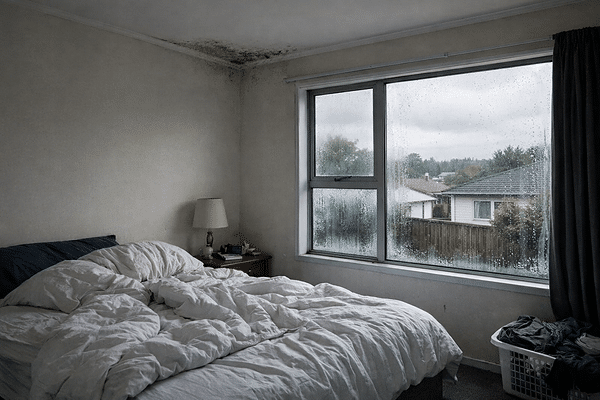
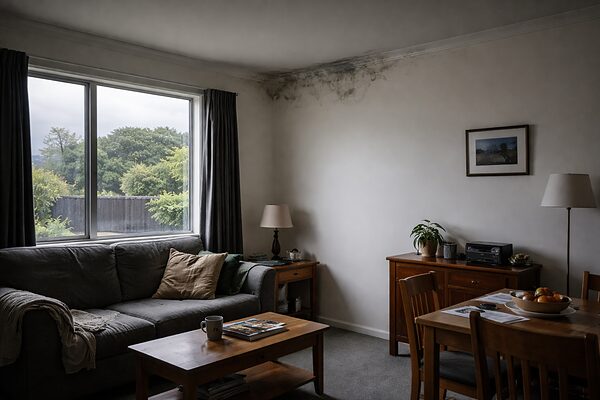
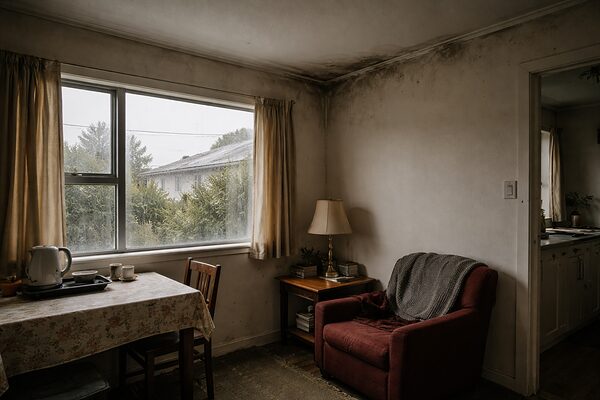
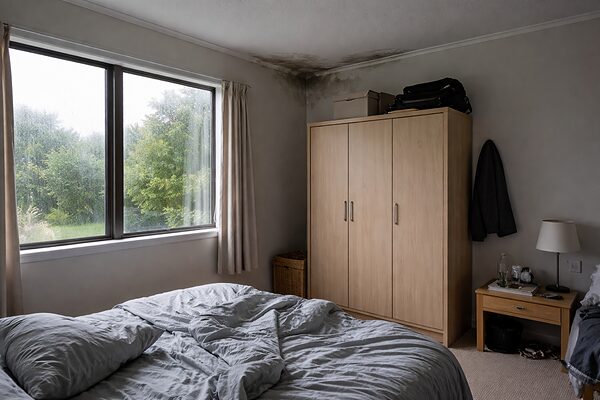
The corner where two exterior walls meet the ceiling is a thermal bridge, a point where cold transfers through the building structure more efficiently. That makes it the coldest spot in the room and the first place moisture condenses. Mould in these corners is the most visible and most common pattern I see.
Behind Furniture on Exterior Walls
Wardrobes, headboards, and dressers pushed flat against an exterior wall block both warmth and airflow from reaching the wall surface.
The space between the furniture and the wall becomes a cold, still pocket where moisture accumulates and mould grows unnoticed for months. I regularly find extensive mould behind furniture that homeowners had no idea was there.
Leaving even a 50mm gap between furniture and exterior walls allows air to circulate and makes a significant difference. It is one of the simplest changes and one of the most effective.
Around Window Frames
Window frames, especially single-glazed aluminium, are condensation magnets. Water pools on the sill, drips into the frame corners, and soaks into any nearby timber or sealant.
Corners of wooden framed windows are also slightly more permeable.
Over time, repeated wetting creates ideal conditions for mould around the frame edges, underneath the sill, and on the wall immediately below the window.
Homes dealing with persistent window condensation almost always develop mould in these spots eventually.
On Ceilings
Warm, moist air rises, and if the ceiling is cold or poorly insulated, it becomes another condensation surface
Mould on bedroom ceilings tends to appear in the corners first and then spread outward as conditions persist. It is more common in older homes where ceiling insulation is thin or unevenly distributed.
The Condensation Connection
Bedroom mould and bedroom condensation are two sides of the same coin. The condensation provides the moisture, and the mould is what grows when that moisture sits on a surface long enough.
You cannot fix the mould without fixing the condensation, and you cannot fix the condensation without addressing humidity and airflow.
This is why cleaning mould off a bedroom wall without changing anything else is a temporary fix at best. The conditions that created the mould are still present every night, and the mould will return, often in the exact same spots. Understanding why mould keeps returning is the first step toward breaking that cycle for good.
| What You See | What It Means | Priority Action |
|---|---|---|
| Fogged windows every morning | High overnight humidity in a sealed room | Improve airflow, leave the door ajar, and get a ventilation system. |
| Mould in upper wall corners | Cold surface meeting humid air | Improve insulation or consistent heating |
| Improve airflow, leave the door ajar | Blocked airflow against cold wall | Pull furniture 50mm from wall |
| Mould around window frame | Repeated condensation pooling | Wipe condensation daily, improve ventilation |
| Musty smell even without visible mould | Hidden moisture or mould behind surfaces | Check behind furniture and inside wardrobes |
Practical Fixes That Work
The good news is that bedroom mould responds well to practical changes, and most of them cost very little. It comes down to reducing the moisture in the air, keeping surfaces warmer, and getting air moving.
Get Air Moving Through the Room
This is the single most effective change. Even a small amount of air exchange overnight can dramatically reduce the humidity that drives both condensation and mould.
Simple ways to improve air exchange include:
- leaving the bedroom door slightly ajar
- opening a window a crack if the weather allows
- using a whole-house ventilation system that pushes filtered, drier air into every room continuously
Positive-pressure systems are particularly effective in bedrooms because they continue to work even when doors are mostly closed.
Keep the Room at a Steady Temperature
Cold surfaces are where condensation forms and mould establishes. If you can keep the bedroom slightly warmer overnight, wall and ceiling surfaces stay above the dew point and moisture does not settle.
A heat pump running at a low, consistent temperature through the evening is more effective than heating hard for an hour and then switching off.

Move Furniture Away From Exterior Walls
Even a 50mm gap between the back of a wardrobe and the wall allows air to circulate and prevents the hidden damp zones where mould thrives. If the room layout makes this difficult, at least check behind furniture regularly so you catch any mould before it becomes established.
Control Moisture From Other Rooms
Bathroom steam that drifts down the hallway into bedrooms adds to the overnight moisture load. Keep the bathroom door closed during and after showers, run the extractor fan for at least 15 minutes after showering, and avoid drying clothes in or near bedrooms. These habits reduce the total moisture that bedrooms have to deal with overnight.
Frequently Asked Questions
Is bedroom mould normal in New Zealand?
It is very common, especially in winter and in homes with single glazing or poor ventilation. Common does not mean unavoidable though. Most bedrooms can be improved significantly with better airflow and consistent heating habits.
Will leaving the bedroom door open stop mould?
It helps a lot. An open or slightly ajar door allows air to circulate between the bedroom and the rest of the house, which dilutes the moisture that builds up overnight. It is one of the simplest and most effective changes you can make.
Should I clean mould off or leave it?
Clean it off, but understand that cleaning alone will not prevent it from returning. Removing the visible mould is a good first step, but the lasting fix requires addressing the moisture and airflow conditions that allowed it to grow.
Can a dehumidifier stop bedroom mould?
A dehumidifier can reduce humidity in the room, which helps, but it does not move air or address cold surfaces. It works best as a supplement to proper ventilation and heating, not as a standalone solution.