Bathroom Moisture Issues, and Solutions
Bathrooms create more moisture per square metre than any other room in the house. A single hot shower can push well over a litre of water into the air in under ten minutes, and in a small enclosed space with limited airflow, that moisture has to go somewhere.
Having worked across ventilation and moisture control in NZ homes for over a decade, I can say that bathrooms are where most whole-house condensation problems actually start.
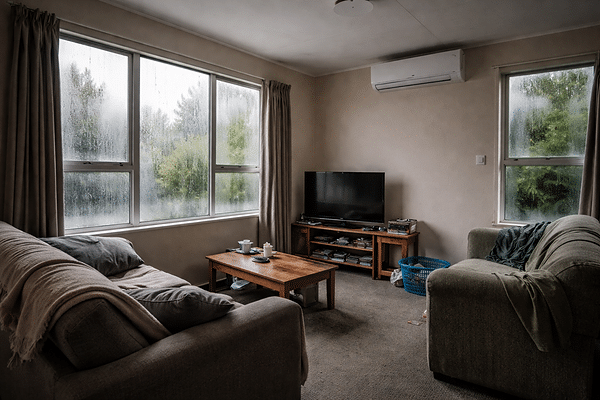
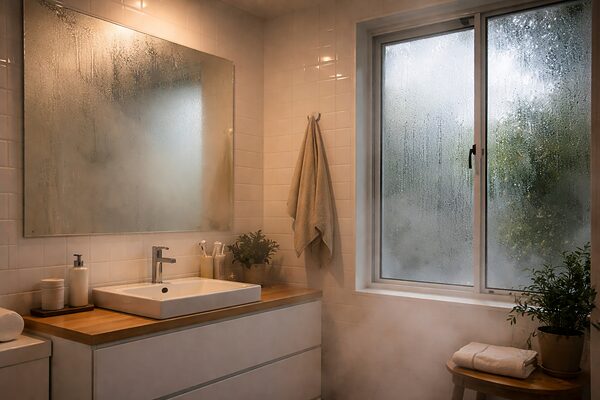
The moisture produced during showers and baths does not stay in the bathroom. It drifts through the house, settles on cold surfaces, and contributes to the fogged windows and damp walls that people notice in bedrooms and living areas hours later.
Quick Summary
- A single shower can add over a litre of moisture to the air, and baths produce even more
- Bathroom moisture does not stay in the bathroom; it migrates through the house and settles on cold surfaces elsewhere
- Extractor fans are the most important tool for managing bathroom moisture, but most people do not run them long enough
- Running the fan for at least 15 minutes after the shower ends removes significantly more moisture than stopping it immediately
- Opening a window during a shower can help, but is less effective than a properly sized extractor fan
- Bathrooms without any extraction are a major contributor to whole-house condensation problems
- Keeping the bathroom door closed during and after showering stops moisture from spreading to the rest of the home
Why Bathrooms Produce So Much Moisture
The numbers are worth understanding because they explain why bathrooms have such an outsized impact on the rest of the house.
A ten-minute shower with hot water produces roughly 1 to 1.5 litres of moisture as steam. A full bath can produce closer to 2 litres as the hot water surface evaporates into the room.
That might not sound like much, but consider what happens in a typical household. Two or three people showering in the morning, another shower in the evening, and suddenly the bathroom has added 4 to 6 litres of water into the air in a single day.
| Bathroom Activity | Approximate Moisture Output |
|---|---|
| 10-minute hot shower | 1 to 1.5 litres |
| Full hot bath | Up to 2 litres |
| Running hot tap for handwashing (5 mins) | 0.1 to 0.2 litres |
| Wet towels left hanging in bathroom | 0.3 to 0.5 litres over several hours |
This is why bathrooms are such a critical piece of the puzzle when it comes to condensation in NZ homes overall. Even if you do everything right in the rest of the house, an uncontrolled bathroom can undermine all of it.
Where Bathroom Moisture Goes
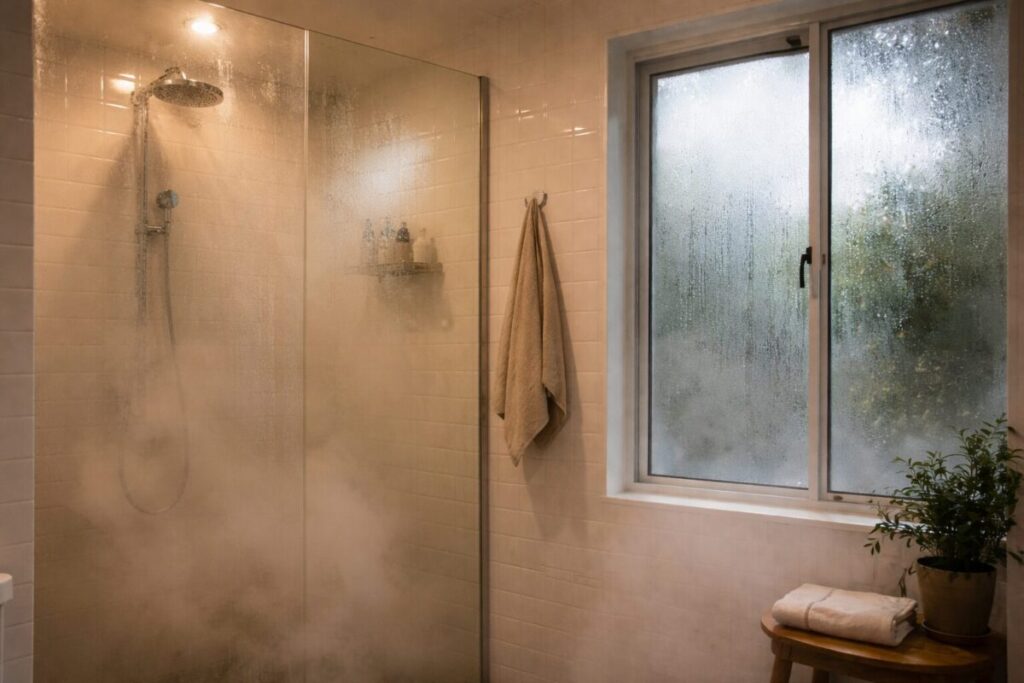
This is the part most people do not think about. The steam you see fogging up the mirror does not just disappear when the mirror clears. It enters the air as water vapour and, unless it is removed, it moves through the house, seeking cold surfaces to settle on.
If the bathroom door is open during or after a shower, that warm, moist air drifts straight down the hallway. Within minutes, it can reach bedrooms, living areas, and any room with poor airflow.
That is often why people notice window condensation in other rooms even though the bathroom itself looks fine once the steam clears.
The bathroom ceiling is another hotspot. Warm moist air rises, hits the ceiling, and if the ceiling is cold or poorly insulated, condensation forms there first.
Over time, repeated wetting of bathroom ceilings allows mould to establish in hard-to-reach, easy-to-ignore spots.
Extractor Fans: The Most Important Tool
A properly working extractor fan is the single most effective way to manage bathroom moisture. Its job is simple: pull the moist air out of the room and push it outside before it has a chance to spread through the house.
The problem I see in most NZ homes is not that the fan is missing, it is that it is undersized, poorly positioned, or not used properly. Even a good fan cannot do its job if it only runs for the length of the shower.
How Long Should the Fan Run?
This is one of the simplest changes that makes the biggest difference. Most people switch the fan off the moment they step out of the shower, but the air is still loaded with moisture.
Running the fan for at least 15 minutes after you finish showering allows it to clear the remaining humidity before it can migrate.
Timer switches are ideal for this because they remove the need to remember. You set the run-on time once, and the fan handles the rest. It is a small investment that pays for itself quickly in reduced moisture throughout the house.
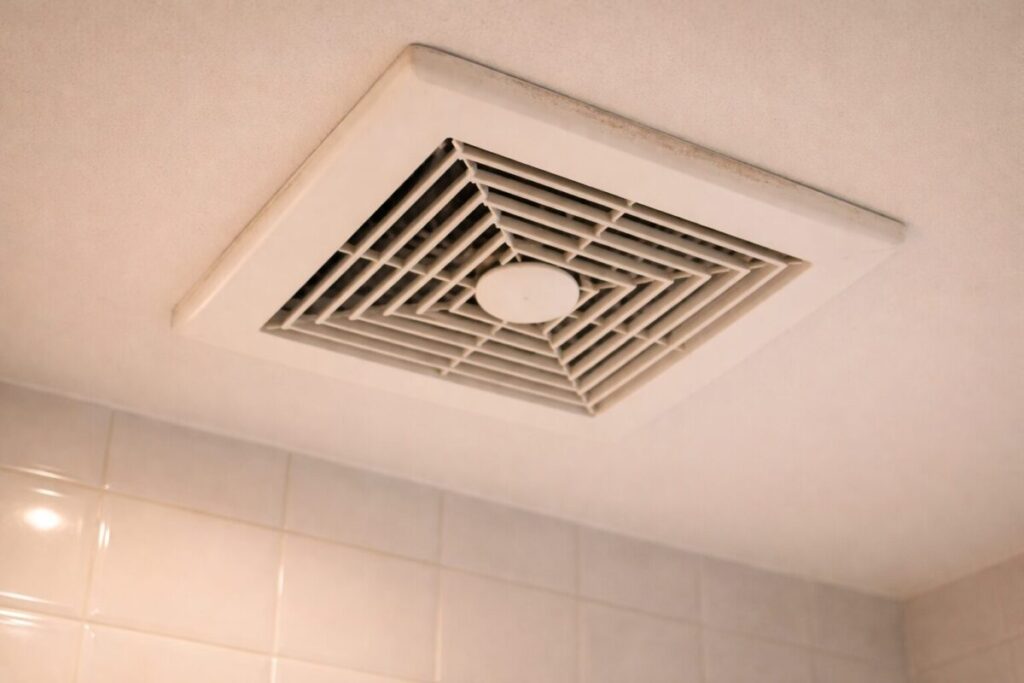
Fan Positioning Matters
The fan should ideally be positioned as close to the shower or bath as practical, and as high on the wall or ceiling as possible. Warm moist air rises, so a fan mounted high catches the moisture at its source before it spreads across the room.
What About Opening a Window?
Opening a bathroom window during a shower does help, and it is certainly better than doing nothing. But it is not as reliable as a fan for a few reasons.
First, window ventilation depends on wind and outdoor conditions. On a still, humid day, opening the window does very little.
Second, in winter most people are reluctant to open a window while showering because it makes the room cold, which means the moisture stays trapped. Third, an open window allows moist air to escape passively, but it does not actively pull it out the way a fan does.
The ideal setup is both a fan running to actively extract and a small gap or trickle vent that allows replacement air to enter the room. Without that air intake, the fan has to pull air through gaps under the door, which reduces its effectiveness.
Bathroom Habits That Reduce Moisture
Beyond extraction, a few simple daily habits can significantly reduce the moisture load coming out of the bathroom:
- Keep the bathroom door closed during and for at least 15 minutes after showering so moisture does not drift into the hallway
- Use the extractor fan every time, not just when you remember or when the mirror fogs
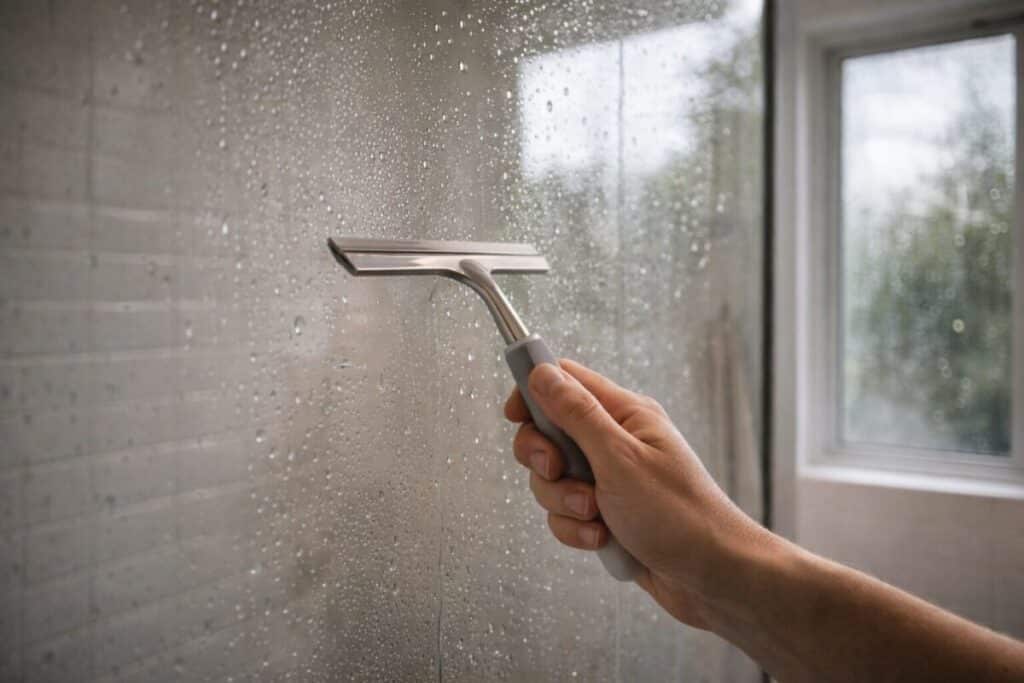
- Wipe down the shower walls and glass after use, removing standing water before it evaporates into the air
- Hang wet towels in a ventilated area rather than leaving them bunched in the bathroom where they add moisture as they dry
- Shorter showers and slightly cooler water temperature both reduce the total moisture output
None of these require spending money, and together they can cut bathroom moisture contribution by a meaningful amount.
That reduction flows through to the rest of the house, which is why bathroom habits are such an important part of managing condensation through winter when everything else is already working against you.
How Bathroom Moisture Connects to Whole-House Ventilation
In homes with a whole-house ventilation system, the positive pressure created by the system helps push stale air toward extraction points, including the bathroom fan.
This means the bathroom fan does not have to work as hard, and moisture is less likely to linger or spread because there is already a gentle, continuous flow of drier air moving through the house.
Without any whole-house airflow, the bathroom fan operates in isolation. It extracts air from the bathroom, but there is no controlled replacement air coming in.
That is why I always look at bathrooms as part of the bigger picture rather than treating them as a standalone problem.
Frequently Asked Questions
Is bathroom condensation normal?
Some moisture during a hot shower is completely normal. What is not normal is persistent fogging, water running down walls, or a bathroom that never fully dries between uses. Those signs point to inadequate extraction.
Can bathroom moisture cause problems in other rooms?
Yes, and it does regularly. Moisture that escapes the bathroom travels through the house and settles on cold surfaces in bedrooms, living areas, and hallways. Keeping the bathroom door closed and running the fan properly are the two most effective ways to stop this.
Do I need an extractor fan if I have a window?
A window helps, but it does not actively pull moisture out the way a fan does. In winter especially, when opening a window is uncomfortable and outdoor air may be still, a fan is far more reliable for managing bathroom moisture consistently.
How do I know if my extractor fan is working properly?
Hold a single sheet of tissue paper near the fan while it is running. If the paper is pulled toward the fan and held there, air is moving. If it barely moves or falls away, the fan may be too weak, blocked, or the ducting may have an issue that is reducing airflow.