
Condensation in New Builds Explained
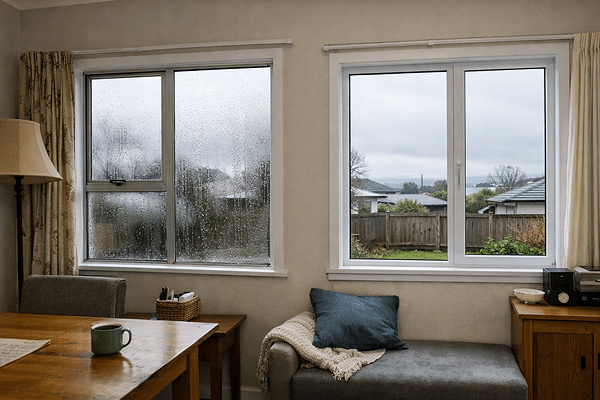
I’ve heard many mention and done moisture reading in new houses, the owner says “The house is new, why are the windows wet?” It catches people off guard because new builds look dry, smell fresh, and feel sealed up tight, so condensation feels like something that should only happen in older homes.
After over a decade in energy auditing, ventilation, and heat pump work across a range of climates, I have learned a simple truth, airtight homes can hold on to moisture, and that moisture has to go somewhere.
The good news is that most new build condensation has a clear cause, and once you understand the pattern, you can reduce it without turning your home into a cold, draughty place.
Quick Summary
- New builds can get condensation because airtight construction holds moisture indoors, we produce moisture in many forms
- Most condensation shows up when warm indoor air hits colder surfaces like glass and frames
- Everyday moisture from showers, cooking, and drying clothes builds faster than many owners expect
- Condensation is often worse overnight in closed rooms with little air movement
- Heating helps, but short bursts of heat can still leave moisture behind
- Targeted extraction in wet areas and steady ventilation usually make the biggest difference
Why New Builds Still Get Condensation
New homes are designed to be more airtight than many older houses, and that is a big part of why they feel warmer and quieter.
The trade-off is simple: if moisture is created faster than it is removed, indoor humidity rises, and you start seeing water on the coldest surfaces.
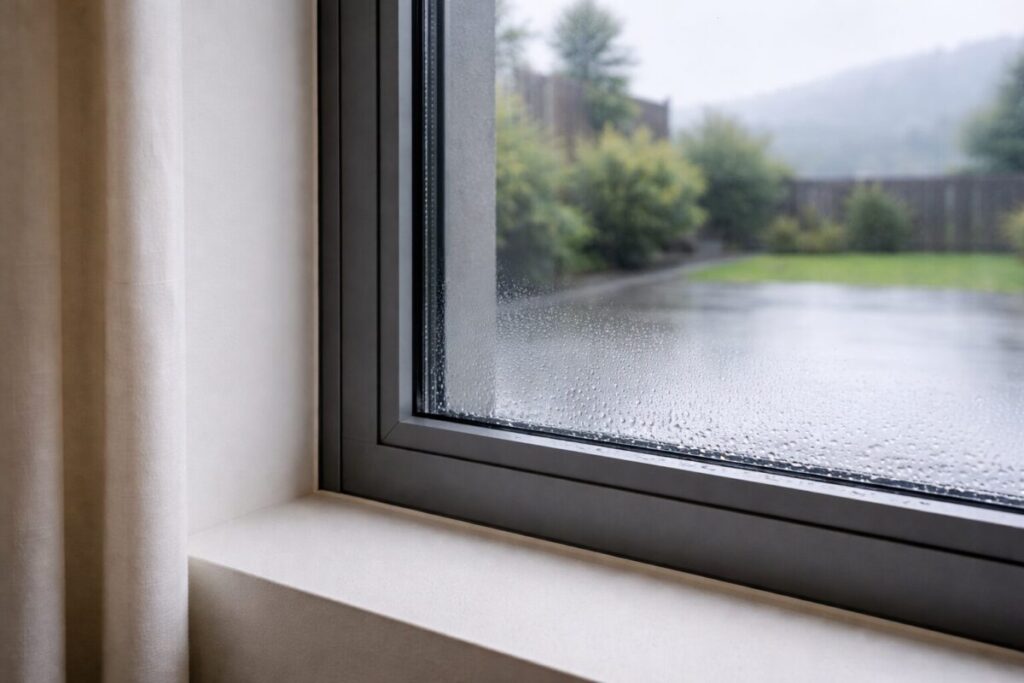
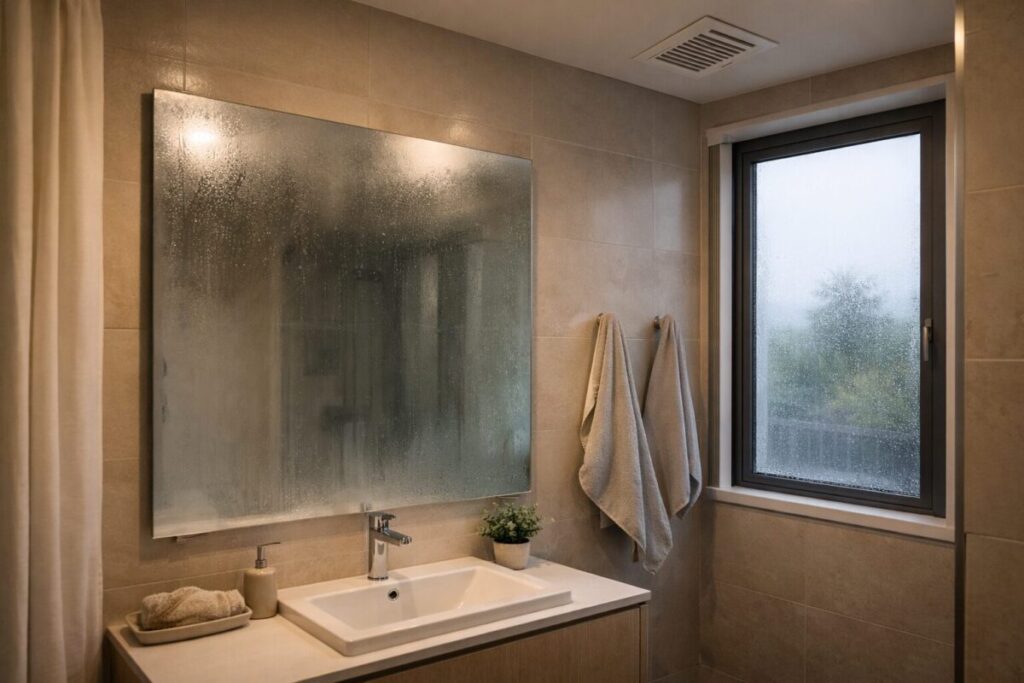
In practice, the first place most people notice it is the windows, because glass cools down quickly on cold nights and becomes the meeting point where warm, moist indoor air turns back into liquid water.
Airtightness Changes the Moisture Escape Routes
In older NZ homes, there were plenty of unplanned gaps around floorboards, through older joinery, and up into the roof space. That is not ideal for comfort or energy use, but it did let moisture drift out in the background.
New builds reduce that background leakage, so moisture does not quietly disappear. It stays in the living space until you remove it intentionally, usually through extraction and ventilation.
This is why the same family can move from an older place into a new build and suddenly think something is wrong.
The habits stayed the same, but the house behaves differently, and the patterns align closely with what we see in condensation in NZ homes across the country.
New Materials Can Release Moisture Too
Another detail people miss is that a brand-new house can still release moisture for a while as fresh materials settle into normal living conditions. That does not mean the house is defective; it means the home may need a stronger ventilation routine in the first months, especially during winter.
I’ve often done structural moisture tests and have seen this result.
What Condensation Is, and What It Is Not
Condensation is water that forms when moist air touches a cooler surface, and the air cannot hold as much water vapour. It is a physics problem, not a mystery.
Where people get stuck is confusing condensation with other moisture problems, because the signs can overlap.
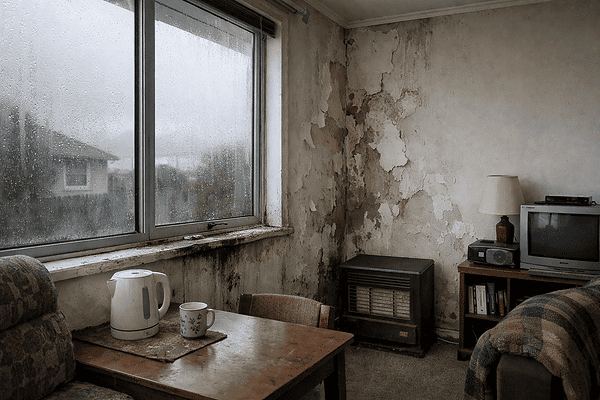
Water on the inside of windows in the morning is classic condensation, but staining on a wall or constant damp patches can point to something else, and the distinctions between condensation, damp, and leaks can save a lot of wasted time.
Quick “What You See” Guide
Here is a simple reference I use when talking people through it on-site.
| What You Notice | Most Common Meaning | Why It Happens |
|---|---|---|
| Window misting in mornings | Condensation | Cold glass meets humid indoor air |
| High humidity plus a very cold surface | Heavy condensation | High humidity plus very cold surface |
| Fogging in one room only | Local humidity build-up | Door closed, little air movement |
| Persistent moisture in wet areas | Extraction shortfall | Moist air not removed at source |
Where the Moisture Comes From in a New Build
People often underestimate how much water a normal household produces. Most of the moisture I trace back to three areas, bathrooms, kitchens, and laundry habits. Bedrooms come next, not because they create a lot of moisture, but because they often trap it overnight.
Bathrooms, Kitchens, and Laundry Add Up Fast
Bathrooms are an obvious source, hot showers create a lot of moisture quickly. Kitchens are similar, boiling water and cooking without lids pushes moisture into the room, and it tends to spread through the house if there is no clear exit path.
Laundry is the wildcard. Drying clothes indoors, even occasionally, can lift humidity enough to tip a new build into window condensation territory, especially on cold, still evenings.
Bedrooms Often Show the First Clear Clue
Bedrooms are where patterns become obvious. Doors closed, curtains drawn, two people breathing overnight, and very little air movement.
If you are seeing it mainly in sleeping spaces, the problem is rarely the windows and more often the overnight humidity build-up, which is why the same issue appears repeatedly in homes dealing with window condensation.
Why It Gets Worse in Winter, Even in New Homes
Winter makes condensation easier to trigger because outdoor temperatures drop and surfaces inside the home cool down more. When glass and frames are colder, the air does not need to be extremely humid for water to form. Many new build owners do short sharp heating, then turn it off overnight, and that can leave surfaces cold enough for moisture to settle even though the air felt warm earlier.
Practical Checks Before Changing Anything
Before you spend money or start changing routines, it helps to get clear on what is actually happening day to day.
Look for Timing and Location
Try to answer a few questions without guessing: is the condensation mainly first thing in the morning or all day, is it limited to one or two rooms or spread across the house, and does it spike after showers and cooking. Those three points often tell me whether this is a source control issue, a ventilation issue, or both.
Check Wet Area Extraction Habits
A common setup in new builds is decent extraction, but inconsistent use. If fans are off or run for too short a time, moisture leaves the bathroom and drifts into the rest of the home. In the kitchen, lids and rangehood use matter more than most people think.
Ventilation: What Actually Helps in an Airtight Home
What matters is whether your home is getting a steady exchange of air, without relying on random leaks, and without turning winter living into a freezing routine. It helps to understand what ventilation actually does, because people sometimes treat it like a heater or a dehumidifier, and then get disappointed.
Positive Pressure Systems in Plain Terms
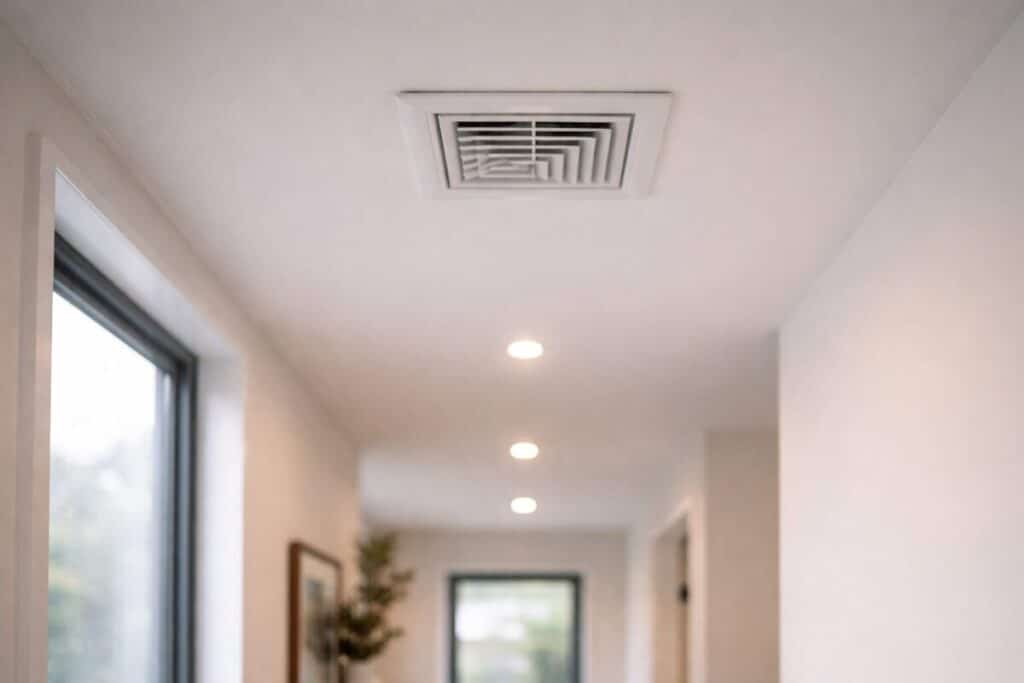
In a lot of NZ homes, a positive pressure system takes air from the roof cavity, filters it, and gently pushes it into the living areas. That incoming air helps move stale, moist air out through controlled pathways. It is not magic, it is just airflow applied in a steady, practical way.
Other Ventilation Options
Some homes suit different approaches, and the best answer depends on layout and daily habits. When homeowners ask for a straight comparison, it is helpful to look at ventilation system comparisons and then bring the decision back to the basics.
Small Behaviour Tweaks That Make a Big Difference
The goal is to reduce moisture spikes, keep air moving, and stop humidity building unnoticed:
- Keep wet area fans doing the heavy lifting, especially after showers
- Use lids when boiling, and keep the rangehood on when cooking
- Avoid drying clothes indoors when the weather is cold and still
- Let air move through bedrooms, even if doors are mostly closed overnight
- Heat consistently rather than in short bursts, so surfaces stay warmer
None of these are dramatic, but together they change the indoor moisture balance, which is what condensation responds to.
Frequently Asked Questions
Why is condensation worse in some rooms than others?
It usually comes down to two things, how much moisture is being produced in that space, and how much air movement the room gets. Bedrooms and bathrooms often top the list because moisture builds quickly and doors are commonly shut.
Will opening windows fix condensation in a new build?
It can help in short bursts when the outdoor air is drier, but it is not always practical in winter. In tighter homes, a more consistent approach that controls moisture at the source and keeps air moving tends to be easier to maintain.
Does heating stop condensation?
Heating helps because warmer air can hold more moisture, and warmer surfaces reduce the chance of water forming on glass. If heating is brief or uneven, humidity can still build, especially overnight.
What is the most practical first step to reduce new build condensation?
Start with reducing moisture where it is created, bathrooms and kitchens, then make sure there is consistent air movement through the house. That combination usually delivers the clearest change without guesswork.