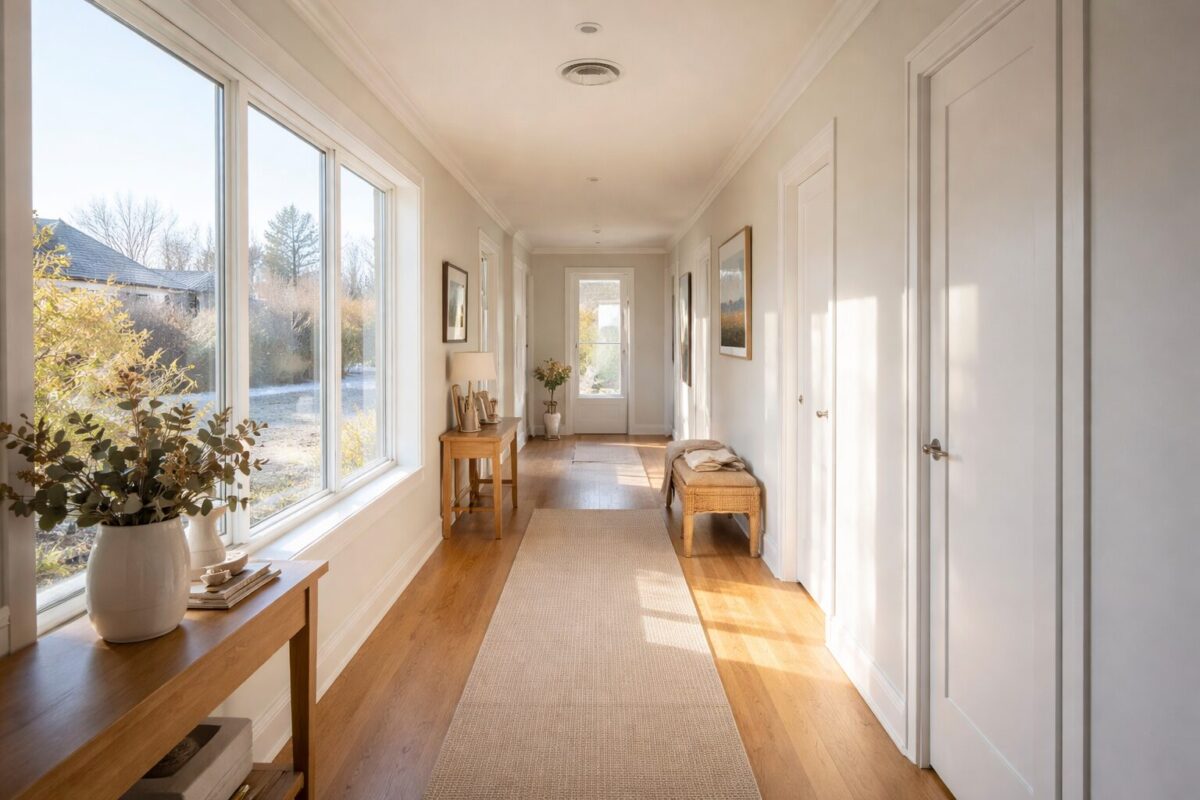
What a Ventilation System Does To Your Home
Ventilation is one of those topics that sounds strange, like, is it a vent? It has a vent, but it’s a lot more than just a vent.
Most people understand that fresh air is a good thing, but very few realise just how much difference a proper ventilation system makes to a New Zealand home.
I have worked in energy auditing, renewable energy, ventilation, and heat pump/HVAC industries. The change I see in homes before and after is consistently one of the most noticeable improvements you can make to a property. People feel the difference, especially in winter.
This is not about fancy technology or complicated engineering. A ventilation system does something very simple: it moves air.
But in an NZ where homes are often closed up tight through winter, where moisture builds up fast, and where mould and condensation are a fact of life, that simple act of moving air changes everything.
Wall material, framing, Trees, gardens, hills, and many aspects of how a house is built will factor into the condensation issue that ventilation solves.
Drier air means less moisture to condense in your home
Quick Summary
- A home ventilation system moves air to push out moist, stale indoor air and bring in drier, filtered air.
- It helps reduce condensation by lowering indoor humidity, so it’s drier.
- It helps stop mould from spreading by removing the moisture that mould needs to thrive
- Homes often smell fresher and feel less musty after a few weeks because moisture drops in soft furnishings.
- It works more consistently than opening windows because it can run automatically 24/7, even in winter (thermostat-controlled).
- It is not a heater and will not fix building leaks. It is mainly for moisture control and airflow.
How a Home Ventilation System Works
The most common type of home ventilation system in New Zealand is a positive pressure system.
The concept is simple. A unit sits in the roof cavity, draws air from that space, filters it, and pushes it down into the home’s living areas through ceiling-mounted diffusers (vents).
The air in your roof cavity is almost always drier than the air inside your living spaces, because it is naturally ventilated through the eaves and ridge line.
By pushing that drier, often warmer, filtered air into the home, you create a slight positive pressure inside the house.
This gently displaces the moist, stale air already inside, pushing it out through gaps in windows, doors, and the natural openings in every house.
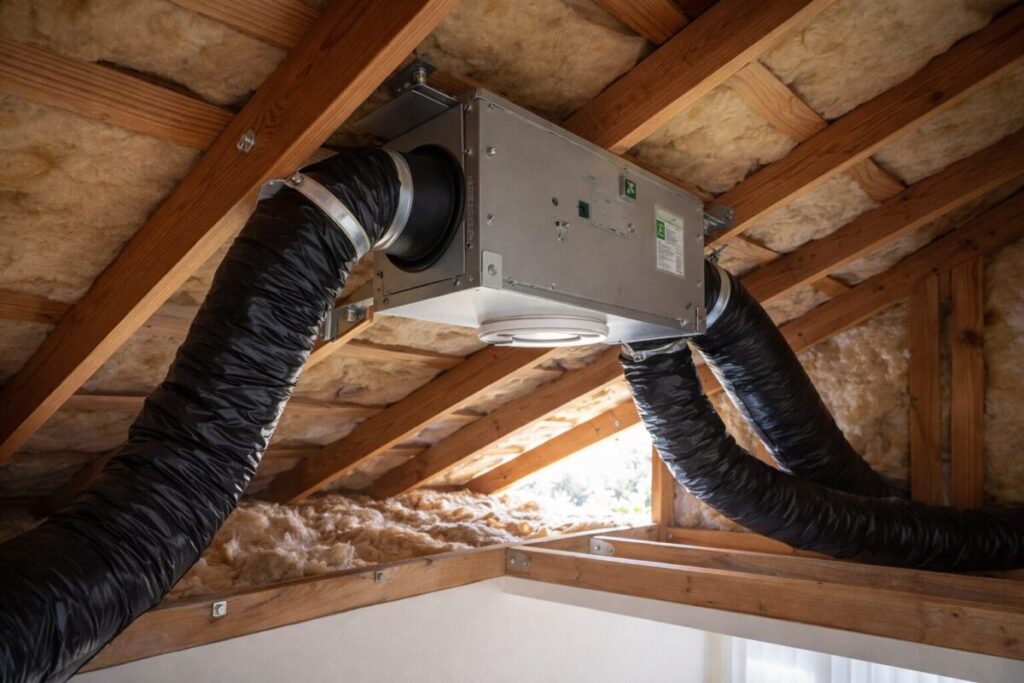
It runs quietly in the background, usually on a thermostat or humidity sensor, so it adjusts automatically without you needing to think about it. Some systems also include a small heating element for the coldest nights, warming the incoming air slightly before it enters the house.
A positive pressure system does not recirculate the air already in your home. It introduces fresh, filtered air from the roof space and displaces the old, moisture-laden air outward.
What Changes When You Add Ventilation
The difference a ventilation system makes is not always dramatic overnight, but within a few weeks the signs are hard to miss. Here is what I typically see happen in the homes I work on.
Condensation Drops Significantly
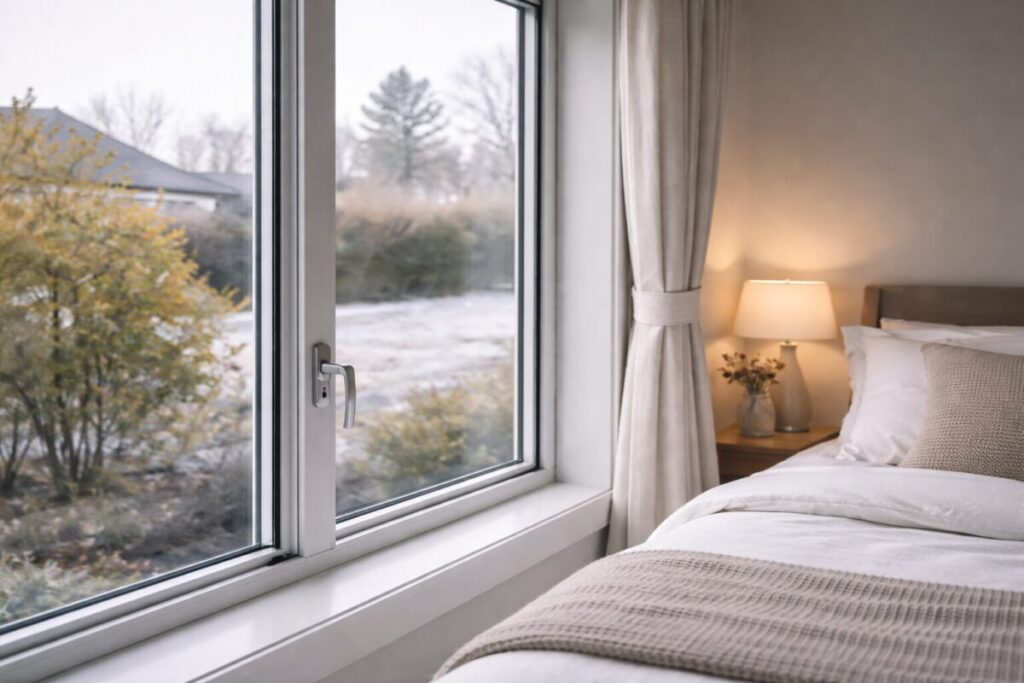
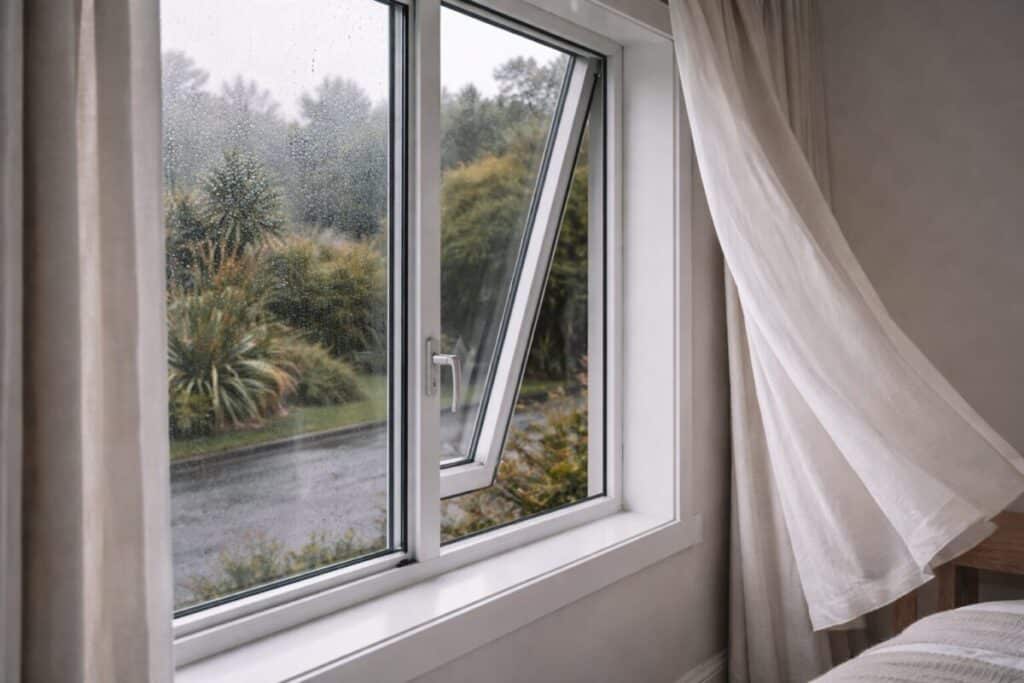
This is usually the first thing homeowners notice. Windows that used to stream water every morning are starting to dry up.
Often, the ‘feeling’ of the home changes due to the drier, filtered effect of ventilation systems.
The condensation that builds up in NZ homes is almost always a result of high indoor humidity meeting cold surfaces, and ventilation tackles that directly by lowering the moisture content of the indoor air.
I have had people send me photos of their windows a week after installation, genuinely surprised that they are dry for the first time in years. It is not magic, it is just physics. Drier air means less moisture to condense.
Mould Stops Spreading
Once the moisture levels drop, mould loses the environment it needs to grow. Mould in NZ homes is almost always tied to excess moisture and poor airflow, so when you fix both of those with ventilation, the mould stops spreading. Existing mould still needs to be cleaned off, but the key difference is that it does not come back.
I see this most clearly in bedrooms and bathrooms, the two areas where moisture tends to concentrate. Bedrooms where condensation used to build up overnight often clear up completely once a diffuser is installed in the hallway or in the room itself.
Especially on Southern ends of houses, which often don’t get much sun.
The House Smells Different
This is something people do not always expect. That stale, musty smell that lingers in many NZ homes, particularly in winter, is the result of moisture sitting in the air, in carpets, in curtains, and in soft furnishings.
I’ve done a lot of structural moisture readings. It’s surprising: regardless of whether a house is newly built or 100 years old, structural moisture is often detected in the walls and carpets.
Once the air starts moving and the moisture levels come down, that smell fades. It does not happen overnight, but within a few weeks, the difference is noticeable.
Surfaces Stay Drier
Walls, window sills, and ceilings that used to feel damp or cold to the touch start to dry out.
This matters because persistent dampness is what leads to peeling paint and moisture damage over time. By keeping surfaces drier, ventilation protects the fabric of the house itself.
Ventilation vs Opening Windows
A question I get asked constantly is whether opening windows does the same job. The short answer is yes, in theory. If you opened every window in the house for 15 to 20 minutes a day, you would get a decent air exchange and lower the humidity inside. If the outside environment is of course drier!
The problem is that almost nobody does this consistently, especially not in winter. When it is cold, wet, and blowing a southerly, opening windows feels counterproductive.
And in many parts of New Zealand, the outdoor air is already quite humid, which limits how much moisture you can actually shift by opening up.
| Factor | Opening Windows | Positive Pressure System |
| Time Spent | Relies on daily habit | Runs automatically 24/7 |
| Winter use | Impractical in cold, wet conditions | Works regardless of weather |
| Air filtration | No filtration | Filters dust and pollen |
| Moisture control | Variable, depends on outdoor humidity | Consistent, uses drier roof air |
| Cost | Free | Installation cost plus minimal power use |
A ventilation system takes the guesswork out of it. It runs whether you are home or not, whether the weather is good or terrible, and it filters the air before it enters the house. That consistency is what makes the real difference over time.
Do All NZ Homes Need a Ventilation System?
Not every home has the same level of need, but most New Zealand houses benefit significantly from some form of mechanical ventilation. Older homes with single glazing, no insulation, and draughty joinery get the most obvious benefit because they tend to have the worst condensation and mould problems.
Newer builds are a different situation. They can be well insulated and airtight, which is great for warmth, but can actually trap moisture inside if there is no way for it to escape. I’ve seen this numerous times also.
I see a surprising number of modern homes, some only a few years old, with mould appearing in wardrobes and bedrooms because the houses are so well sealed that normal daily moisture from cooking, showering, and breathing has nowhere to go.
The homes that typically benefit most from ventilation include those with visible condensation on windows most mornings, recurring mould in bathrooms, bedrooms, or wardrobes, musty smells that persist even after cleaning, and older homes with minimal insulation and single-glazed windows.
8 to 9 out of 10 homes I’ve dont energy audits on have the ‘crying windows’ issue in winter.
What a Ventilation System Does Not Do
It is worth being clear about what ventilation will not fix.
A ventilation system is not a heating system. It moves air and reduces moisture, but it does not warm a cold house on its own. It has a secondary heating (and cooling in summer effect) effect, I’ve often found it to be 2-3°C warmer in winter months with positive pressure ventilation.
Pairing ventilation with consistent heating, such as a heat pump, gives the best overall result.
And ventilation will not remove mould that is already there. It prevents new growth by controlling the conditions, but existing mould needs to be physically cleaned first. Think of ventilation as the long-term fix, not the immediate cleanup.
It will very often create a drier home, a warmer secondary effect, and help remove allergy triggers.
Frequently Asked Questions
How much does a ventilation system cost to run?
Most positive pressure systems use very little power, comparable to running a light bulb. You are looking at a few dollars a month in electricity at most, which makes them one of the most cost-effective ways to manage indoor moisture.
How noisy is a home ventilation system?
Modern systems are designed to run quietly. You might hear a gentle hum if you stand directly under a diffuser, but in day-to-day life the system runs in the background without being noticeable.
Can I install a ventilation system in a rental property?
Yes, and many landlords choose to because it helps protect the property from moisture damage. A ventilation system in a rental can reduce maintenance costs over time by keeping condensation and mould under control.
Does a ventilation system work in summer too?
It does. While condensation is mostly a winter problem, ventilation still helps in summer by keeping air circulating and reducing stuffiness. Some systems switch to a summer mode that draws in cooler air during the evening to help regulate indoor temperatures.