Mould in NZ Homes: Identify, Remove, Prevent
If you have lived in a New Zealand home for any length of time, there is a good chance you have dealt with mould. It is a common issue I come across all across the country, from older villas in Dunedin through to newer builds in Auckland.
Born in Dunedin, studied in Christchurch, lived all over New Zealand from Auckland to many places in between.
The frustrating thing for most people is not just finding the mould, but the fact that it keeps coming back, no matter how many times they clean it off.
The reality is that mould is a symptom, not the core problem. Until you address what is causing it, you will be stuck in a cycle of scrubbing and repainting. With possibly other flows on the effectiveness of allergies and other aspects.
In this article, I will walk through what mould actually needs to grow, where it shows up most in NZ homes, and what works to stop it for good.
Quick Summary
- Mould is a symptom of excess moisture and poor airflow, not the core problem in itself
- Mould needs three things: moisture, a food source, and still air. If you remove moisture or improve airflow, it cannot keep growing
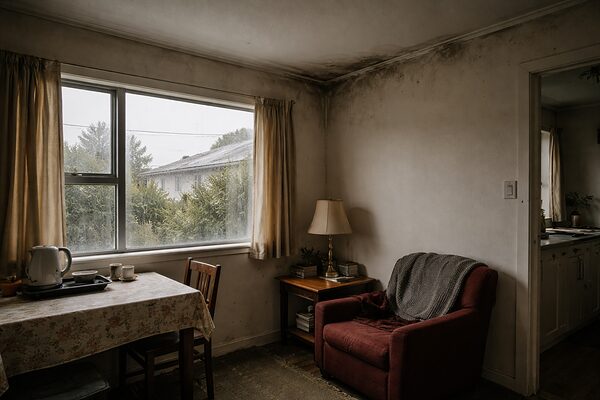
- The most common mould zones in NZ homes are bedroom corners, ceilings (especially bathrooms and kitchens), wardrobes on exterior walls, and window frames/surrounds
- It keeps coming back because cleaning removes what you can see, but does not change the damp conditions, and mould spores are always present in the air
- The best long-term fix is consistent ventilation and airflow, especially in closed-up winter homes
- Cut moisture fast by using extractor fans, cooking with lids, drying clothes outside, and avoiding moisture-heavy heating options like unflued gas heaters
- Heat helps when it is steady and consistent, because warmer surfaces collect less condensation, which feeds mould
What Mould Needs to Grow
Mould is not complicated. It needs three things to thrive, and New Zealand homes tend to provide all three in abundance.
| Factor | What It Means in a NZ Home |
| Moisture | High indoor humidity from cooking, showering, breathing, and drying clothes inside |
| A food source | Organic materials like timber framing, wallpaper, carpet, curtains, and even dust |
| Still air | Poor airflow that allows damp air to sit in one spot long enough for mould to establish |
Take away any one of those three, and the mould cannot grow. In practice, the food source is the hardest to eliminate because it is built into the house itself. That leaves moisture and airflow as the two things you can actually control.
Where Mould Shows Up Most in NZ Homes
I could almost predict where the mould will be before I walk through the front door. Certain areas are hit over and over again because of how NZ homes are built and how we live in them.
Bedrooms
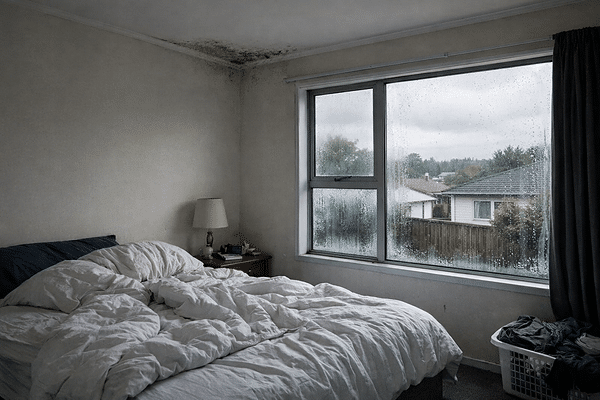
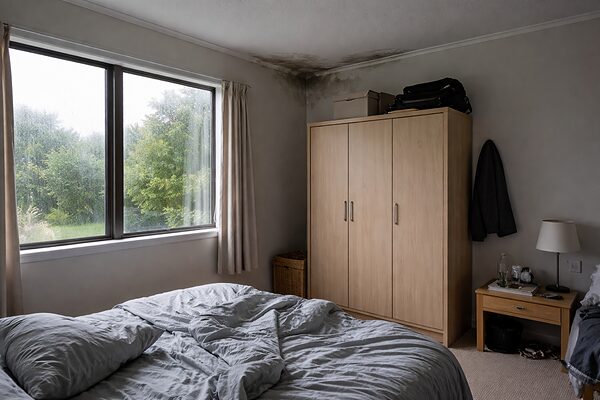
Bedrooms are one of the worst spots, especially in homes where doors stay closed overnight. Two people sleeping in a closed room for eight hours can release close to half a litre of moisture into the air, just through breathing!
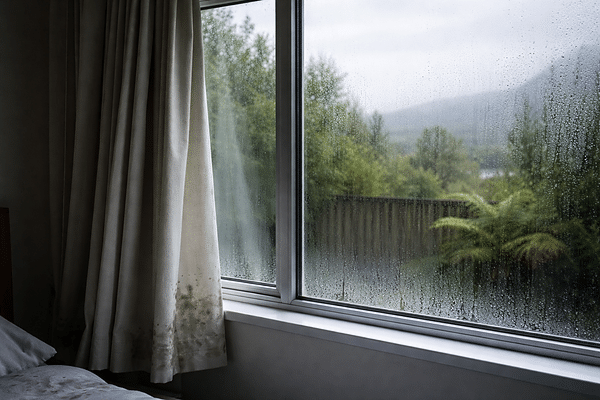
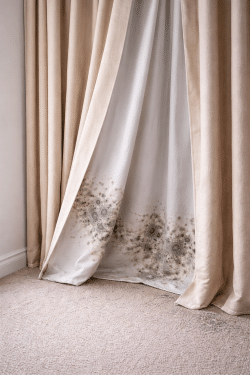
That moisture settles on the coldest surfaces, usually the exterior walls and windows, and mould in bedrooms tends to cluster in corners, behind furniture pushed up against outside walls, and along the bottom edge of curtains.
Closests with natural material clothes can also be an area of concern.
The fix is almost always about getting air moving through the room. Leaving a gap between furniture and walls helps, but without some form of active airflow, the moisture just sits there.
Ceilings and Upper Walls
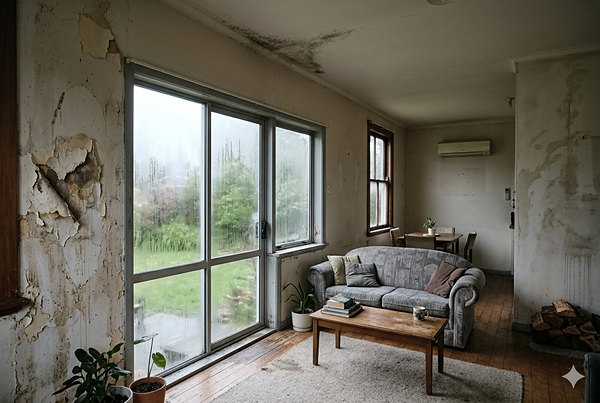
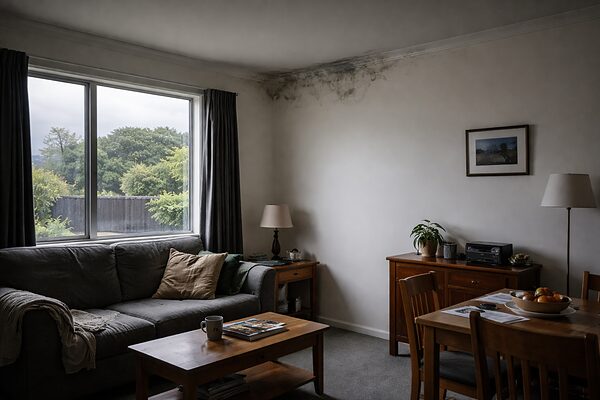
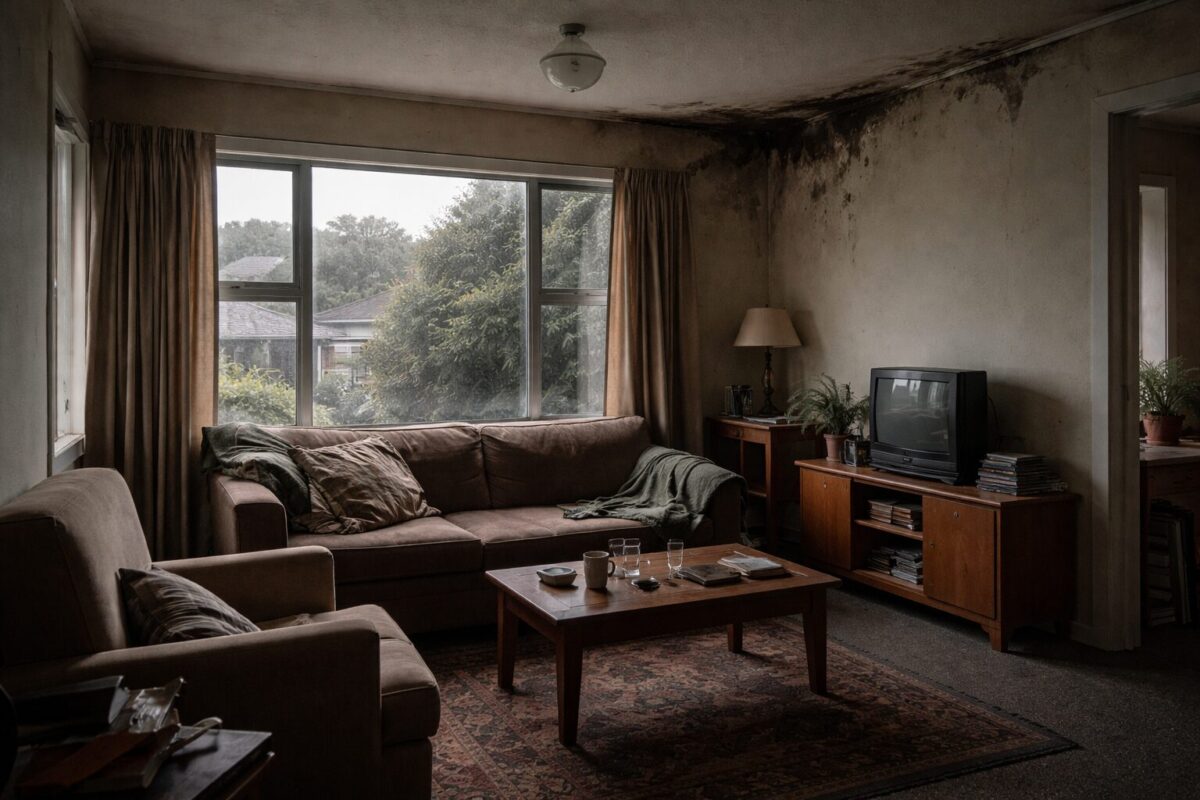
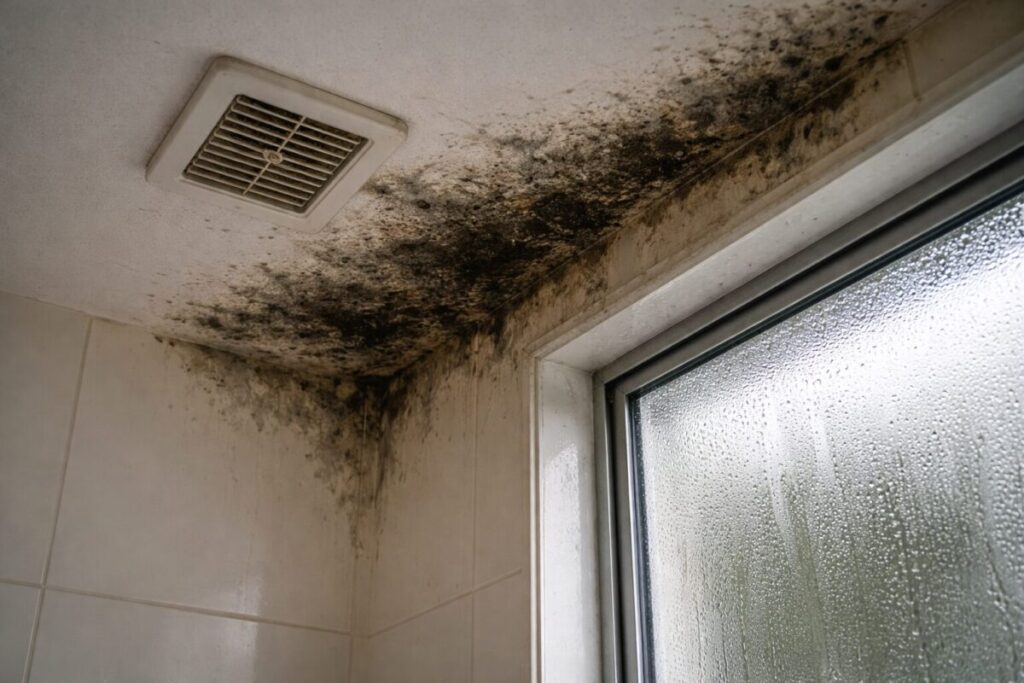
Warm, moist air rises. That is basic physics, and it is why mould on ceilings is so common in NZ homes, particularly in bathrooms, kitchens, and rooms with poor ventilation.
You will often see it following the line of the ceiling joists, because the timber behind the plasterboard creates a slightly colder strip where condensation forms first.
In bathrooms without a properly ducted extractor fan, the ceiling can be almost permanently damp through winter. That is prime mould territory.
Wardrobes and Enclosed Spaces
Wardrobes built into exterior walls are a classic problem in New Zealand. The back of the wardrobe sits against a cold, often uninsulated wall, and because the doors are usually closed, there is almost no airflow.
Moisture builds up, and before long, you find mould on shoes, leather bags, and clothing. It catches people off guard because they assume the wardrobe is a dry, protected space.
Window Frames and Surrounds
Single-glazed aluminium windows are still everywhere in NZ, and they are a magnet for condensation. Water pools along the sill, runs into the frame, and the surrounding timber or plasterboard stays damp long enough for mould to take hold.
Window condensation is one of the earliest visible signs that a home has a moisture problem, and if it is left unchecked, the mould spreads outward from the window into the wall.
Why Mould Keeps Coming Back
This is the question I get asked more than any other. Someone scrubs the mould off with bleach or a commercial spray, it looks clean for a few weeks, and then it is right back in the same spot.
The reason is simple. Cleaning removes the visible mould, but it does nothing to change the conditions that caused it. If the moisture remains and the airflow has not improved, the mould will return. Every single time.
Mould spores are always present in the air, both indoors and outdoors. You cannot eliminate them. The only way to stop mould growth is to control the environment it needs to establish itself.
I have seen homeowners go through three or four rounds of repainting over mould before finally addressing the underlying moisture issue. It is a common and understandable cycle, but it is also completely avoidable once you understand that the mould is not the problem, the moisture is.
How to Actually Stop Mould
Stopping mould comes down to two things: reducing moisture inside your home and improving airflow so moisture does not sit on surfaces long enough to cause problems.
Get Air Moving
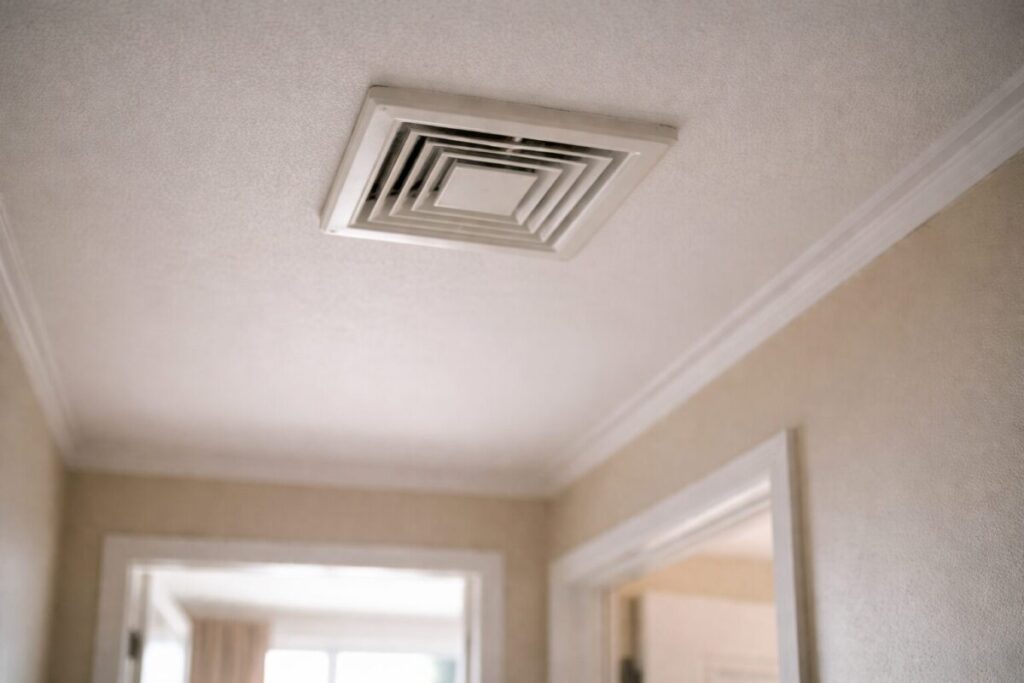
Ventilation is the single biggest factor in controlling mould in most NZ homes. Stale, damp air needs to be replaced with drier air, and that does not happen on its own in a closed-up house.
Positive pressure ventilation systems work by drawing drier, filtered air from the roof cavity and pushing it through the home. This creates a constant, gentle airflow that displaces the moist air and keeps surfaces drier. I have seen homes go from persistent mould problems to completely clear within a few months of installing a system, with no other changes.
Opening windows is the simplest option, but it relies on you remembering to do it, and it is not practical in the middle of a cold, wet winter. A mechanical system takes the guesswork out of it.
Control Moisture at the Source
Some of the biggest sources of moisture inside a home are everyday activities. Here is a rough guide to how much moisture common activities add:
| Activity | Approximate Moisture Output |
| Showering (per person) | 1 to 1.5 litres |
| Cooking (gas hob, no lids) | Up to 3 litres per day |
| Drying clothes indoors | Up to 5 litres per load |
| Unflued gas heater (per hour) | Up to 1 litre |
Running extractor fans during and after showers, using lids when cooking, and drying clothes outside whenever possible are all simple steps that make a measurable difference.
Bathrooms and kitchens produce the bulk of indoor moisture, so getting extraction right in those rooms has a big impact on the rest of the house.
If you are using an unflued gas heater, that is worth looking at closely. These heaters pump moisture directly into the air as they burn, and in a closed-up home through winter, they can push humidity levels well above what the house can handle.
Heat Consistently
Cold surfaces attract condensation, and condensation feeds mould. Keeping your home at a consistent temperature, rather than letting it get cold overnight and blasting the heat in the morning, reduces the temperature swings that cause moisture to settle on walls and windows.
Heat pumps are a good option here because they warm the air without adding moisture. The key is consistency. Even a modest, steady temperature through the night is more effective at preventing mould than a short burst of intense heat.
Frequently Asked Questions
Does bleach kill mould permanently?
Bleach can remove visible mould from hard, non-porous surfaces, but it does not prevent regrowth. If the conditions that caused the mould are still present, it will come back. On porous surfaces like timber or plasterboard, bleach often only lightens the surface staining without reaching the roots.
Why is mould worse in winter?
Winter brings colder surfaces, less natural ventilation because windows stay closed, and more indoor moisture from heating and drying clothes inside. That combination creates the ideal environment for mould, which is why condensation and mould peak during the colder months across most of the country.
Is some mould normal in a New Zealand home?
A small amount of surface mould in high-moisture areas like bathrooms is common, especially in older homes. But widespread mould across walls, ceilings, or inside wardrobes is a sign that the moisture levels are too high and the home needs better ventilation, heating, or both.
Will a dehumidifier stop mould?
A dehumidifier can help reduce moisture in a specific room, but it treats the symptom rather than the cause. Without proper ventilation and heating, the moisture keeps building. Dehumidifiers work best as a support alongside a ventilation system, not as a standalone fix.